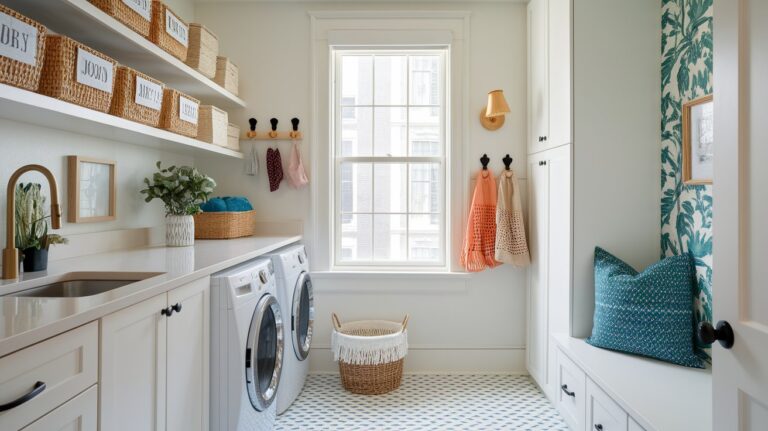
20 Laundry Room Organization Ideas That Make the Most Ignored Room Look Intentional
The laundry room is the most ignored room in the average rental and the most reliable source of low-grade daily stress.
Branded packaging competing for attention on every shelf, dryer sheets escaping from a ripped box, a damp towel on the floor since Tuesday. None of these things are expensive problems. They are organization problems.
Here are 20 organization ideas for a small laundry room or laundry closet that cost less than one month of stress and take less than a weekend to implement.
1. Clear Everything Out Before You Organize Anything

Every successful organization project starts by removing everything and making genuine decisions about what comes back. You cannot build a good system around existing chaos.
- Pull out every product, container, and item in the laundry space
- Throw away anything almost empty, expired, or unused in six months
- Consolidate duplicates: three half-empty detergent bottles become one full one
- The quantity that remains after editing is always less than you started with, and that smaller quantity is what you actually need to organize
2. Transfer Detergent Into Glass Dispensers

Replacing branded detergent bottles with uniform glass containers is the single change that most dramatically transforms the visual quality of a laundry space. Branded packaging is designed to attract attention in a retail environment, which is exactly what you don’t want in a home storage context.
- An IVIZA glass laundry dispenser and storage set includes glass jars with bamboo lids, a pump dispenser, and waterproof labels: one purchase converts the entire product display from chaotic to composed
- Label each container clearly: function and aesthetics are the same goal here
- Transfer only a portion of the product into the display container and store the bulk refill in a cabinet: keep what’s seen small and intentional
- Keep all containers in the same material family: glass and bamboo together, or all ceramic. Mixing materials undercuts the uniformity
3. Use a Woven Hamper Instead of a Plastic Bin
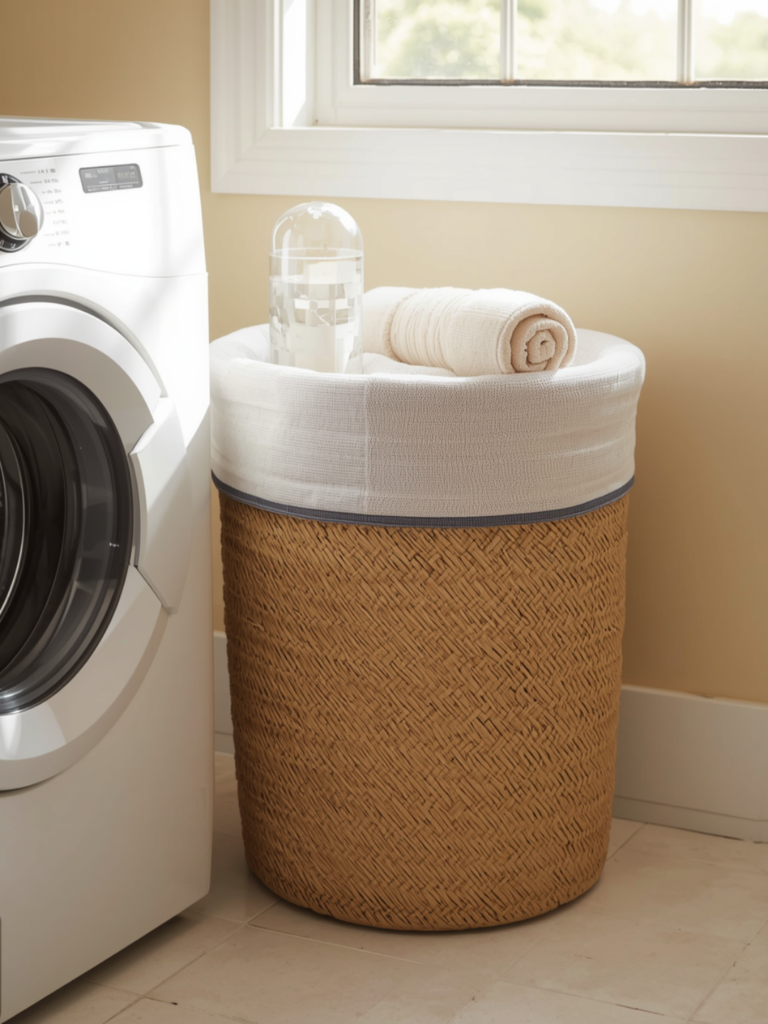
The laundry hamper is in view every single day and almost no one thinks carefully about what it looks like. A seagrass or cotton rope hamper performs the same function as a plastic bin and reads as a deliberate material choice rather than a default container.
- A seagrass laundry hamper with a removable liner is durable, holds a full load, and fits visually in any room rather than reading as utility infrastructure
- Two smaller hampers (lights and darks sorted at the point of deposit) take the same floor space as one large one but eliminate sorting at the machine
- Choose hampers with handles: you’ll carry them to the machine and a handle makes that easier
4. Install Floating Shelves Above the Machines
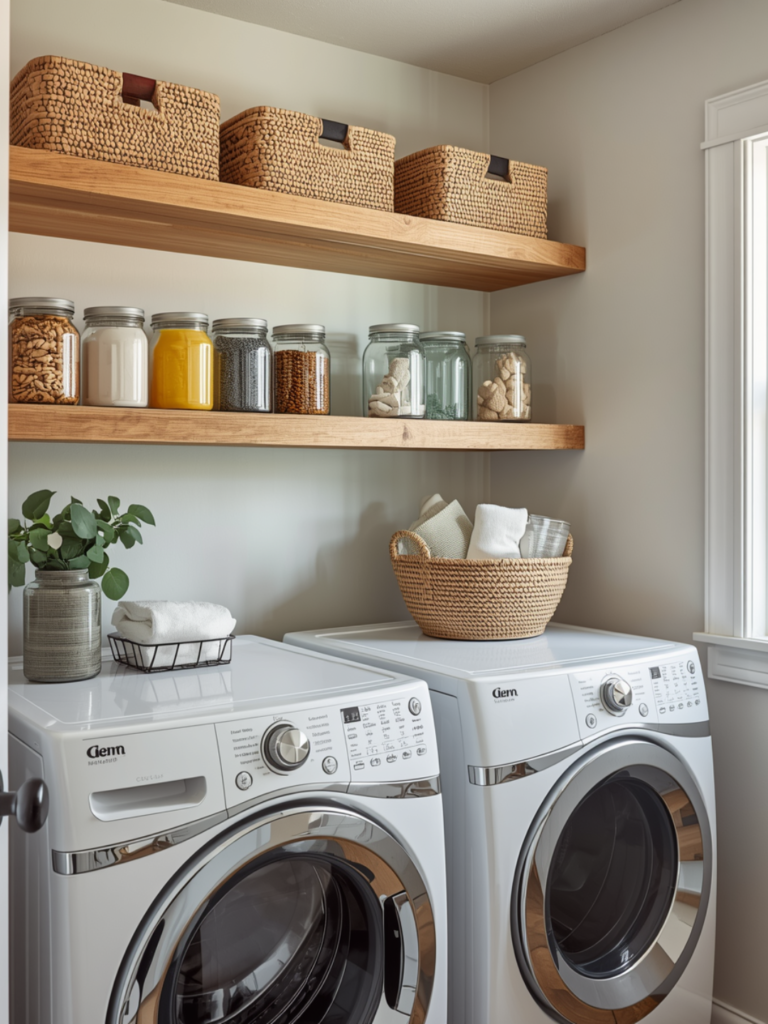
The wall space above the washer and dryer is almost always underused. A floating shelf at the right height turns dead vertical space into organized storage and display surface.
- The shelf closest to eye level holds daily-access items: the glass dispensers, dryer sheets in a ceramic jar, stain remover pen
- Upper shelves hold bulk supplies accessed less frequently: refill bottles, extra linens, seasonal items
- Line the upper shelf with woven baskets to contain and visually close off the bulk storage while the display shelf remains open and composed
5. Decant Dryer Sheets Into a Ceramic Jar
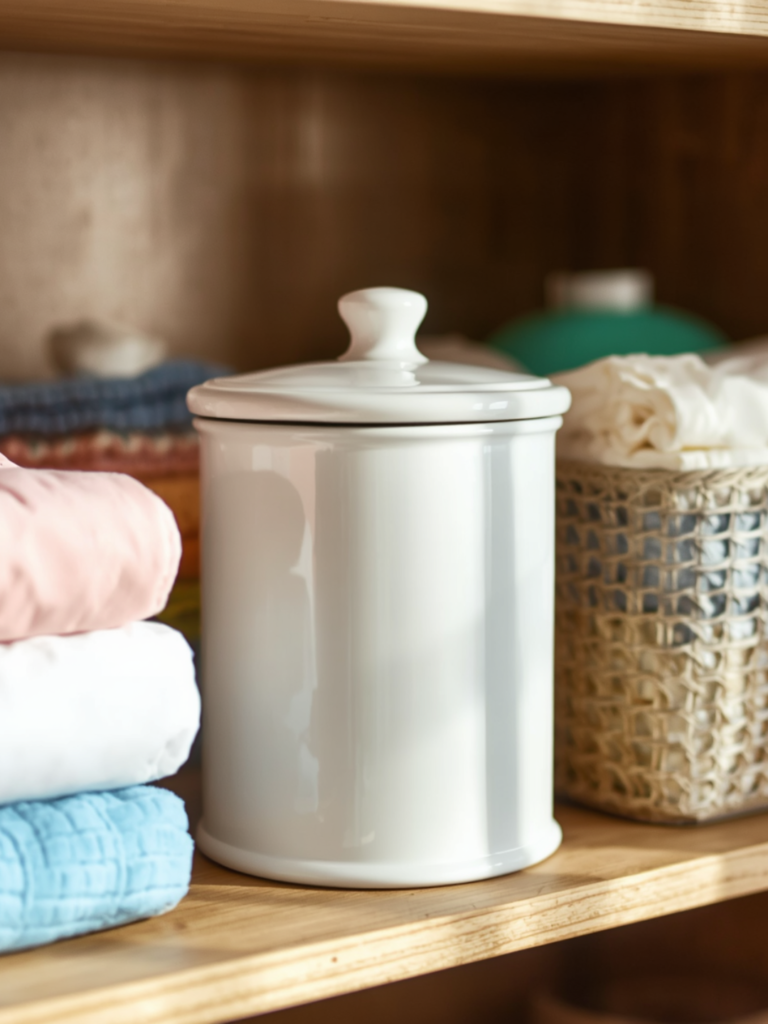
A box of dryer sheets on the shelf is a box of dryer sheets. The same dryer sheets in a small ceramic jar with a lid read as a considered choice and take up less visual space while taking the same shelf space.
- Any lidded ceramic jar or canister with an opening wide enough for one hand works
- A label on the jar reads as part of the organization system rather than as a workaround
- Refill from the box, stored in the cabinet below: what’s displayed should always be small and intentional
6. Mount a Wall-Mounted Drying Rack
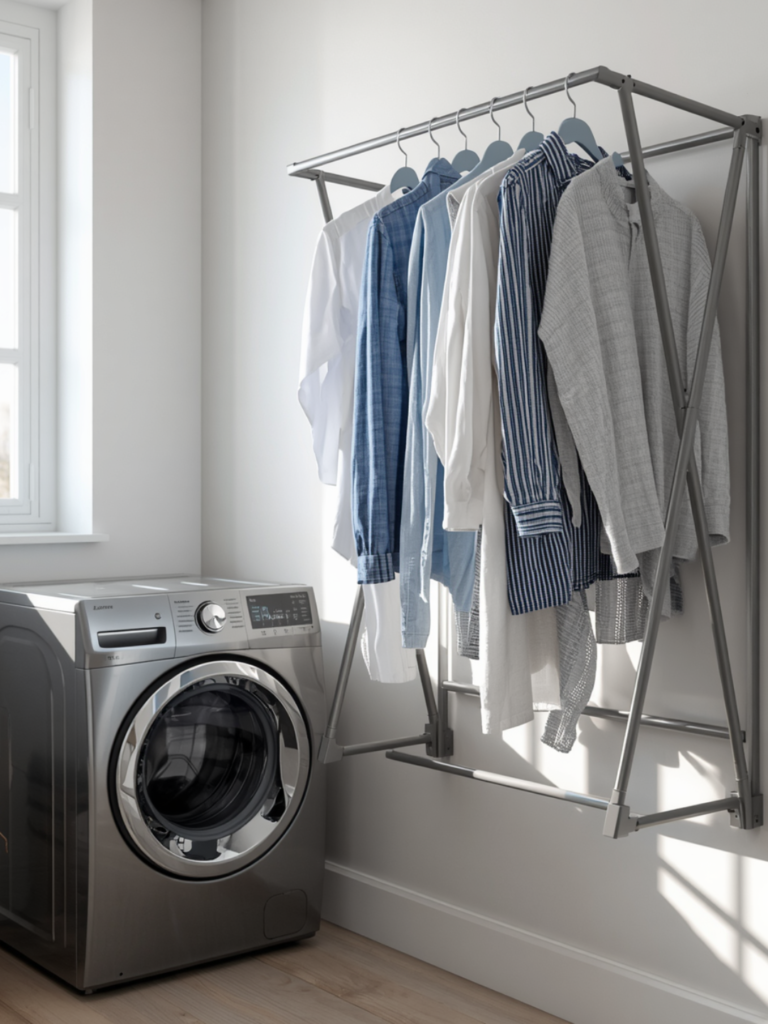
A floor-standing drying rack pulled out and opened in the middle of the room every time is one of the most space-inefficient and visually intrusive laundry room problems. A wall-mounted folding version solves both.
- Wall-mounted folding racks extend horizontally when needed and fold completely flat against the wall when not in use: they take zero usable space at rest
- Mount it on the wall beside the machines or on the back of the laundry room door if the door is solid enough
- A retractable clothesline between two walls is the most minimal space solution for a very narrow laundry closet
7. Add a Small Shelf Tray for Loose Items

Safety pins, a stain pen, scissors, and spare change that accumulates in pockets: these small items make a laundry shelf look chaotic when scattered. A small tray or a shallow dish corrals them without requiring individual containers for each category.
- One tray for all small items is the goal: not one container per category of item, just one container for all of them
- A small woven or ceramic tray reads as part of the intentional display rather than as overflow
- Edit the contents regularly: when the tray starts to fill, remove anything that doesn’t belong in the laundry room
8. Keep the Floor Completely Clear
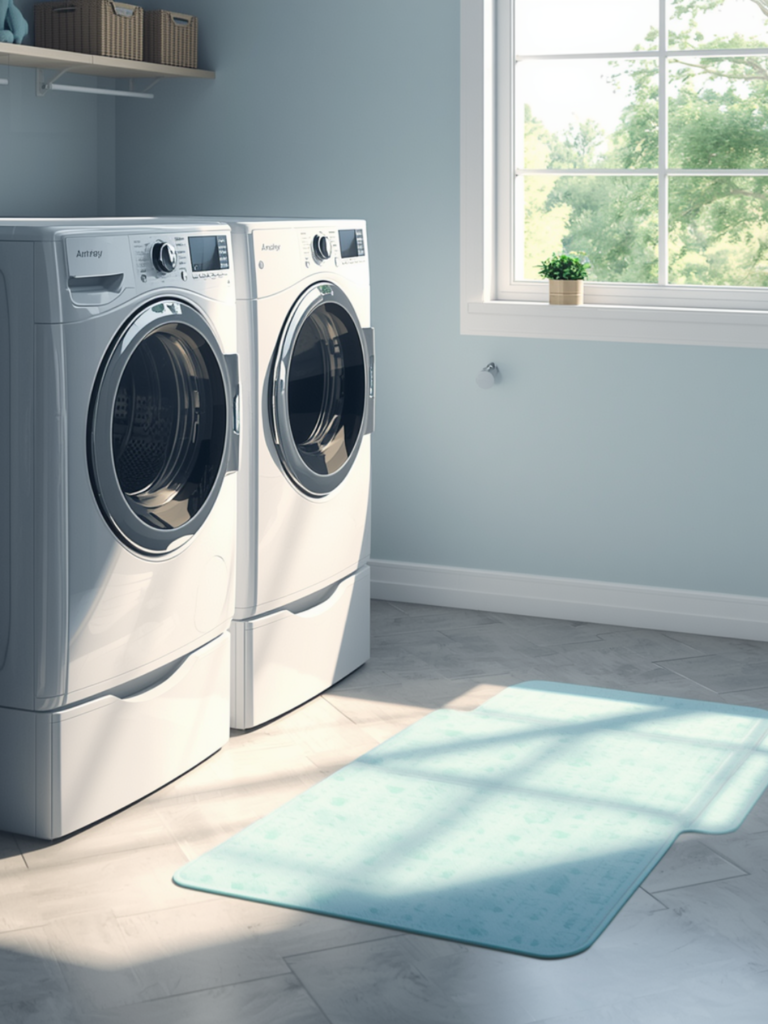
A laundry room floor that is visible makes the space feel significantly larger. Everything currently on the floor, whether a spare mop, a laundry bag, or a box of cleaning products, should move to a shelf, a hook, or another room entirely.
- Furniture on legs or floating shelves that lift storage off the floor make the same amount of floor space feel more open
- One small anti-fatigue mat in front of the machines is the only floor object that belongs in the laundry space
- If the machines are on pedestals, install pull-out drawer pedestals or use flat rolling storage in the space below
9. Label Everything in the Display Zone
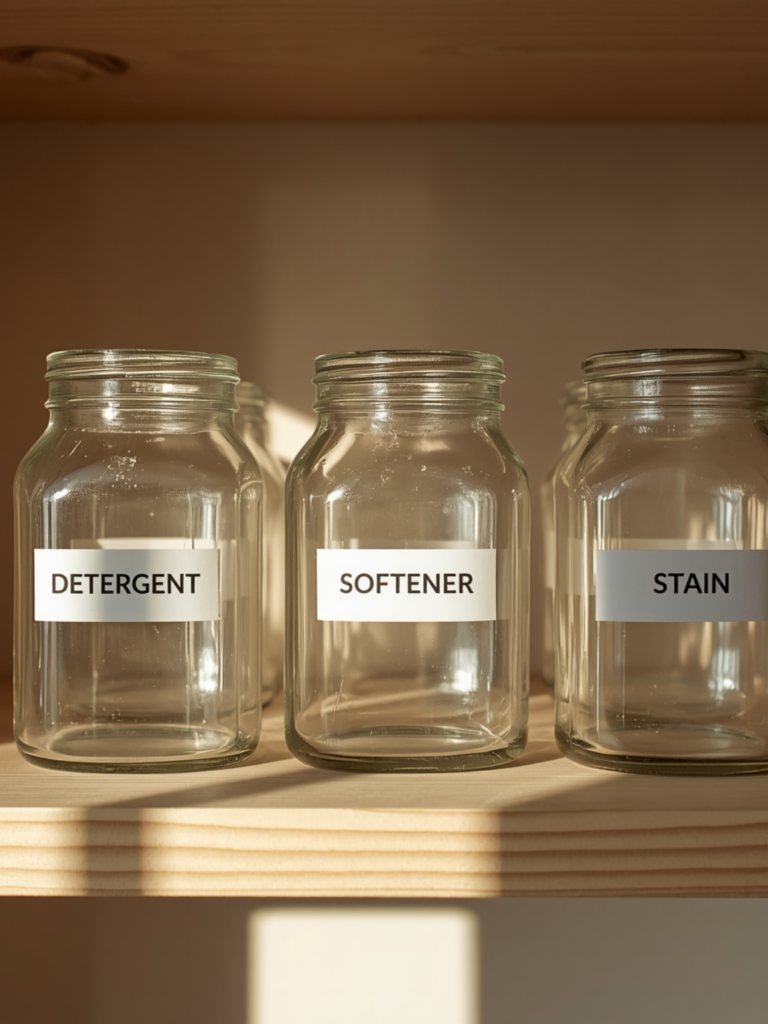
Uniform labels on the display containers are what make the transfer from branded packaging read as an intentional system rather than just different bottles. The labeling is as important as the containers.
- Waterproof black-on-white labels read well in humid environments: regular paper labels peel and smudge within weeks in a laundry space
- Label in all caps or a clean sans-serif font: the typography affects how organized the display reads
- Label the category, not the brand: DETERGENT, SOFTENER, STAIN, not the product name
10. Use the Back of the Door as Storage
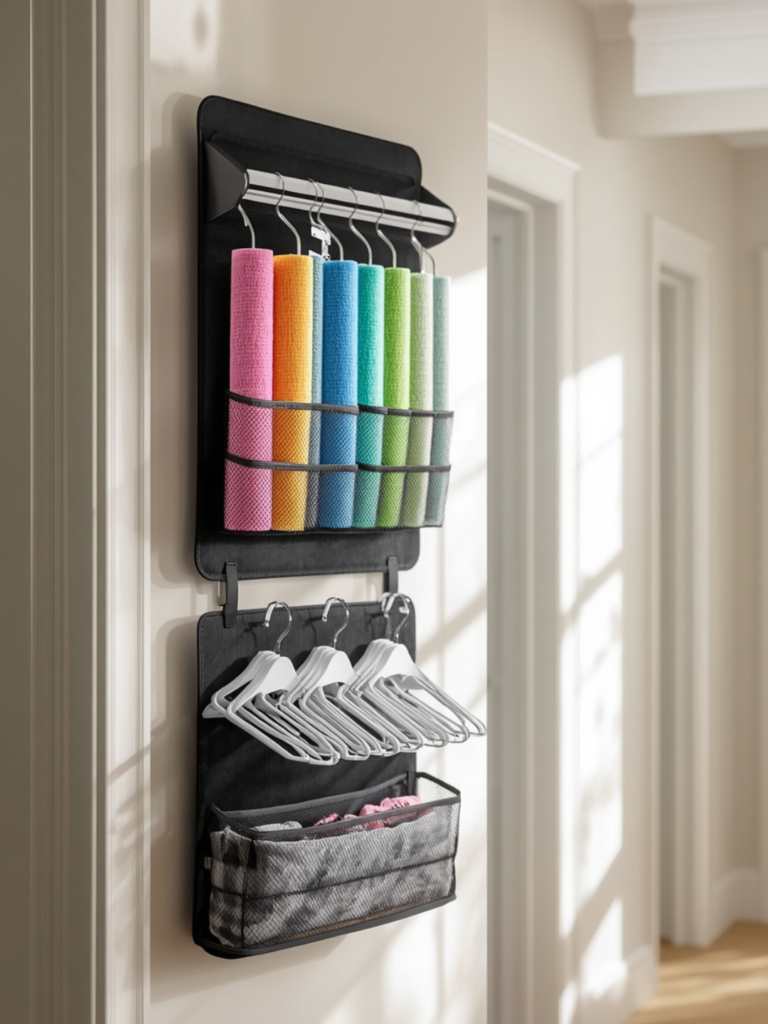
The inside of the laundry room door is one of the most underused storage surfaces in the home. An over-the-door organizer, a row of hooks, or a slim pocket organizer can hold everything from lint rollers to spare hangers without using any shelf or floor space.
- Over-the-door hooks rated for the weight of what you’re hanging require no drilling and come off cleanly when you move
- A slim over-the-door pocket organizer holds small items (lint rollers, stain pens, safety pins) and keeps them visible and accessible without taking shelf space
- Don’t overload the door: three or four functional items maximum. More than that and it looks like overflow rather than organization
11. Create a Folding Zone
Laundry that gets folded immediately at the machine gets put away immediately. Laundry that has to be moved to another room to fold sits in a pile somewhere for four days. Any horizontal surface in the laundry space can serve as a folding zone if it’s designated for that purpose.
- A counter between or above front-loaders is the obvious folding surface if your setup allows it
- A wall-mounted fold-down surface extends when needed and folds flat against the wall when not in use: the same logic as the drying rack
- Keep the folding surface completely clear when not actively folding: it is a work surface, not additional storage
12. Store Bulk Supplies Out of Sight
Large refill bottles and bulk packages should never be in the display zone. They belong in a closed cabinet, in a basket on an upper shelf, or in another storage area entirely. The display surface is for the decanted, organized quantities only.
- A woven basket with a lid on the upper shelf holds the full-size refill bottles and closes them off visually
- If there’s no upper shelf, a cabinet below the machines (if you have pedestals with drawers) works for bulk storage
- The rule: if it has branded packaging and you didn’t choose that packaging for aesthetics, it goes behind a closed door or inside a basket
13. Use a Single Hook Rail for Hanging Items
Items that can’t go in the dryer (delicates, wool, anything with a hang-dry tag) need a designated spot that isn’t the shower rod in the bathroom or the back of a chair somewhere. A hook rail on the laundry room wall solves this.
- A simple rail with five or six hooks above the machines holds items waiting to air-dry without blocking the walking path
- Space the hooks far enough apart that hanging items don’t touch each other and can dry properly
- A hook rail also works for the broom, a reusable shopping bag, and anything else that benefits from being at hand in the laundry zone
14. Add a Small Plant
A laundry room with a small plant on the shelf is a room that feels like part of the home rather than a utility closet. Even a very small plant changes the register of the space significantly.
- Pothos, snake plants, and peace lilies all tolerate the low light and high humidity of a laundry room
- A small pothos cutting in a simple ceramic pot on the display shelf costs almost nothing and lasts indefinitely with minimal care
- One plant is enough: this is not a styling exercise, it’s a single note of life in an otherwise functional space
15. Use Matching Hangers for the Closet Rod
If your laundry room or closet has a hanging rod for garments, the hangers matter. Mismatched wire and plastic hangers make any closet look chaotic regardless of how organized everything else is.
- Slim velvet hangers prevent slipping, take up half the rod space of plastic hangers, and cost less than most people expect for a full set
- Replace all hangers in one go: the effect is the uniformity, and mixing in old wire hangers with new velvet ones defeats the purpose
- If the rod is specifically for air-drying, wood or bamboo hangers are appropriate and read as more intentional than wire
16. Install an Ironing Board Holder on the Wall
An ironing board leaned against the wall or taking up floor space in the laundry room is a constant visual problem. A wall-mounted ironing board holder uses one screw hole and removes the board from the floor permanently.
- Mount it at height on a wall where the board can hang without blocking access to the machines or the door
- Some wall holders also accommodate the iron: keeping both in one place creates one less object floating around the laundry space
- A fold-down ironing board mounted directly to the wall takes no storage space at all when folded
17. Use a Lint Bin Instead of a Pocket
Lint pulled from the dryer filter typically ends up in a pocket, on the machine surface, or on the floor. A small bin specifically for lint attached to the side of the dryer or placed on the shelf beside it solves this.
- A small ceramic or metal bin with no lid is the simplest solution: open top makes lint deposit easy, small size keeps it from becoming a general waste bin
- Empty it every laundry session: lint is a fire hazard when allowed to accumulate
- Position it right at the dryer door at hand level so using it requires no extra movement or thought
18. Add a Scented Sachet or Reed Diffuser
A laundry room that smells like clean laundry is a room that feels organized even before you see the shelves. A scented sachet in the hamper or a small reed diffuser on the shelf completes the sensory quality of the space.
- Linen, clean cotton, or a light floral scent all work: avoid heavy or sweet scents that compete with detergent
- A lavender sachet in the bottom of the hamper is the most low-maintenance option: refresh it every few months
- A reed diffuser on the display shelf doubles as a decorative object and keeps the scent consistent without requiring any active attention
19. Use a Color-Coded System for Sorted Laundry
Two hampers in the same material in two different colors or labels for lights and darks make sorting a passive rather than an active task: laundry goes into the right hamper when it comes off and there’s no sorting moment at the machine.
- Two natural seagrass hampers with different colored fabric liners (white for lights, dark grey for darks) creates a system that is both functional and visually consistent
- Label the hampers clearly on the outside: LIGHT and DARK in large, readable text
- If there’s only room for one hamper, a divided hamper with two compartments and one exterior does the same job in the same footprint
20. Hang One Framed Print on the Wall
One small framed print on the laundry room wall communicates that this space was thought about, not just endured. It is the finishing detail that makes the difference between an organized utility room and a room that feels like it belongs in the home.
- A simple botanical print, a typographic print in the palette of the space, or a small abstract in warm tones all work
- Frame it in a simple black or natural wood frame: the print should be secondary to the organization system, not competing with it
- Position it at eye level where you can see it while you’re sorting or waiting for the machine: it makes the time in the space better
Start With the Dispensers. Then Clear the Floor.
Those two changes, uniform containers on the shelf and nothing on the floor, will make the biggest immediate difference in how the laundry room feels. Everything else on this list builds from that foundation at whatever pace the space and budget allow.
Save this for your next weekend organization project and drop a comment with your setup: closet, dedicated room, side-by-side, or stackable. Happy to suggest the right shelf layout for your specific configuration.