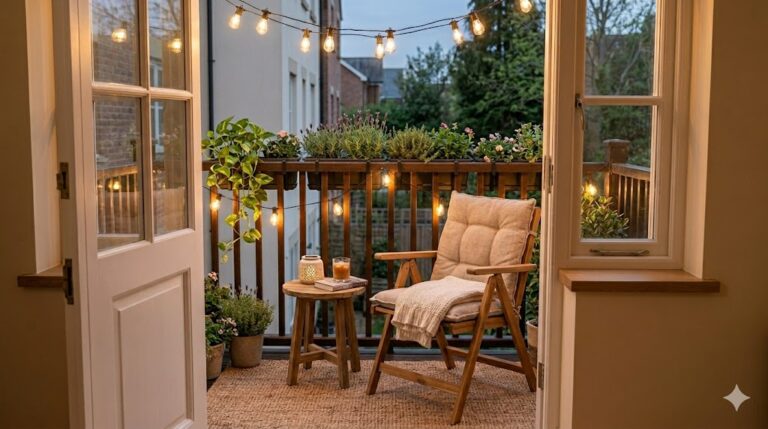
20 Renter Balcony Makeover Ideas That Won’t Cost You Your Deposit
The renter balcony problem is not the same as the homeowner balcony problem. The homeowner can drill into the wall, mount a shade sail to the building structure, attach planters to the railing with bolts, and install lighting that requires wiring.
The renter cannot do any of those things without risk of losing a deposit that is often worth more than the entire balcony makeover budget.
Here are 20 specific ideas for a renter balcony makeover that are completely deposit-safe and removable without trace when you leave.
1. Start With a Waterproof Outdoor Rug That Lifts Off Completely
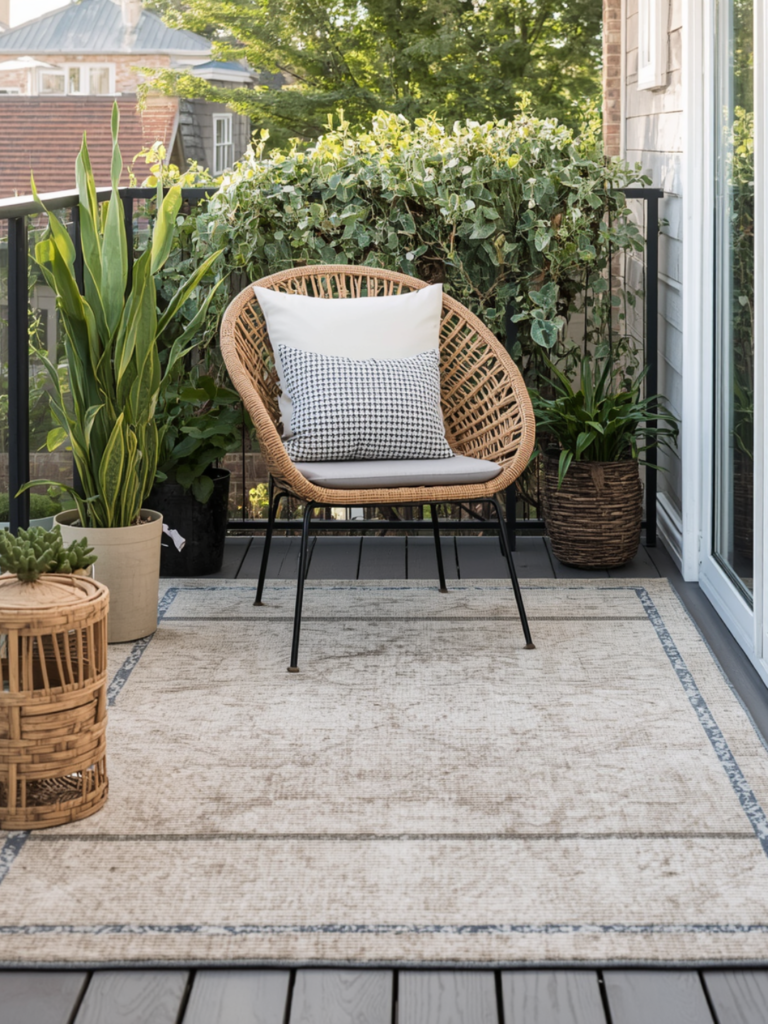
An outdoor rug laid directly on the balcony floor requires no installation, no adhesive, and no modification to the surface. It comes up in one motion when you move. The visual effect of defining the floor zone is identical to a built-in surface treatment that would cost a hundred times more and require professional removal.
- A waterproof reversible outdoor rug is hoseable, drip-dries quickly, and can be flipped for a second colorway: two functional choices in one rug for the same price
- Size it to cover the seating zone, not the entire balcony: a partial rug that defines the main area looks more intentional than wall-to-wall coverage
- Roll and store it inside when you leave for an extended period or when the weather turns: the reversible backing is also a practical advantage against mold and moisture from below
2. Hang String Lights With Command Outdoor Adhesive Hooks
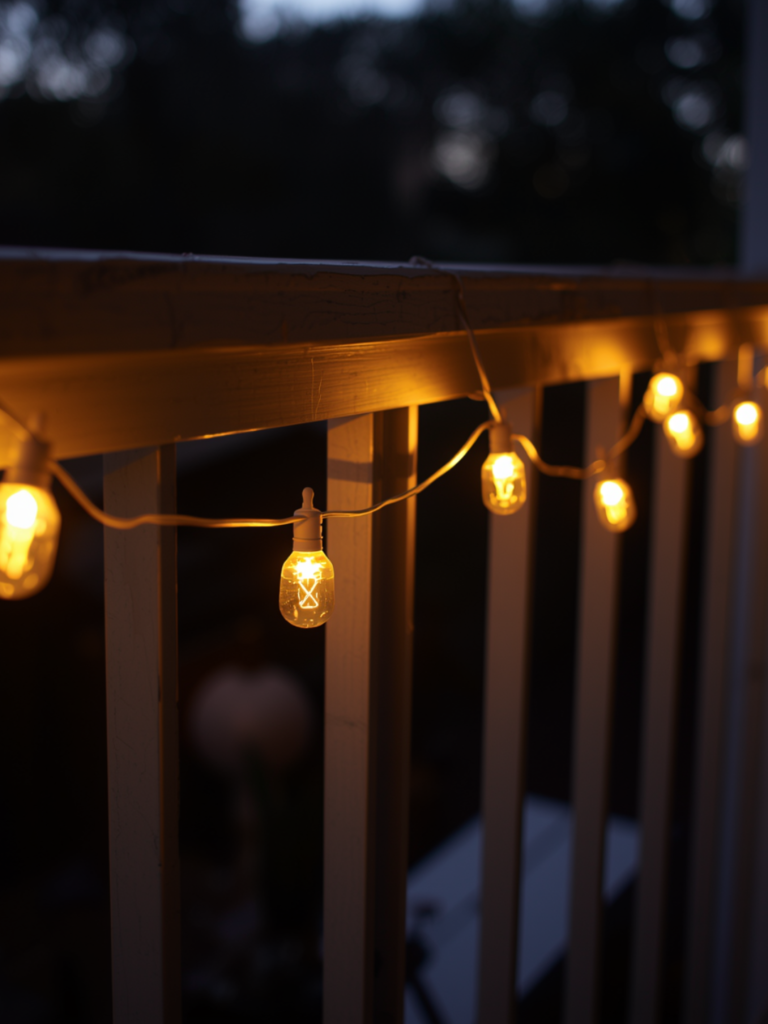
String lights on a renter balcony are entirely achievable without drilling. Command adhesive hooks rated for outdoor use and for the weight of the lights hold a full string run along the railing or overhang and come off the surface cleanly without residue when removed correctly.
- A set of dimmable vintage-style outdoor string lights transforms the balcony after dark in a way that no other $30 purchase can: the warm glow turns a concrete ledge into somewhere worth staying after sunset
- Use Command outdoor adhesive hooks rated for at least 3 pounds each: the hooks should be rated for twice the actual weight of the lights you’re hanging
- Follow the Command removal instructions exactly when the time comes: pull the tab at a 45-degree angle slowly rather than pulling straight off, and the surface comes clean
- Warm white (2700K) bulbs only: cool white string lights read as security lighting rather than ambient atmosphere
3. Install Railing Planter Brackets That Clamp Without Drilling
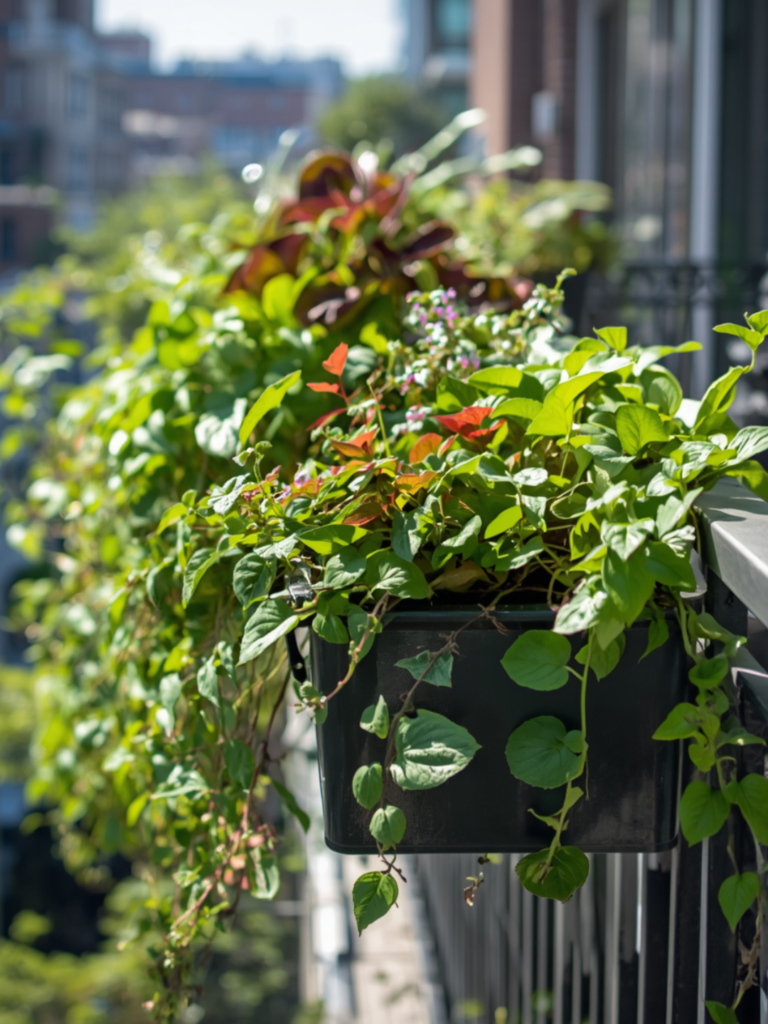
Planter boxes that clamp or hook onto the railing rather than being bolted through it add a full run of greenery along the balcony edge without any drilling, any damage, and any permit issues. The brackets are adjustable to different railing widths and remove in seconds.
- A set of adjustable railing planter boxes with no-drill brackets attaches to railings of different widths and comes off cleanly: you take the planters with you when you move and your landlord never knew they were there
- Line one side of the railing only rather than all four sides: a continuous run on one side reads as intentional, coverage on all sides reads as cluttered
- Water more frequently than you think necessary: small planters in direct sun dry out very fast, and plants in a railing planter on a hot balcony can go from thriving to dead in 48 hours if you miss a watering
4. Choose Outdoor Seat Cushions That Come Inside When It Rains
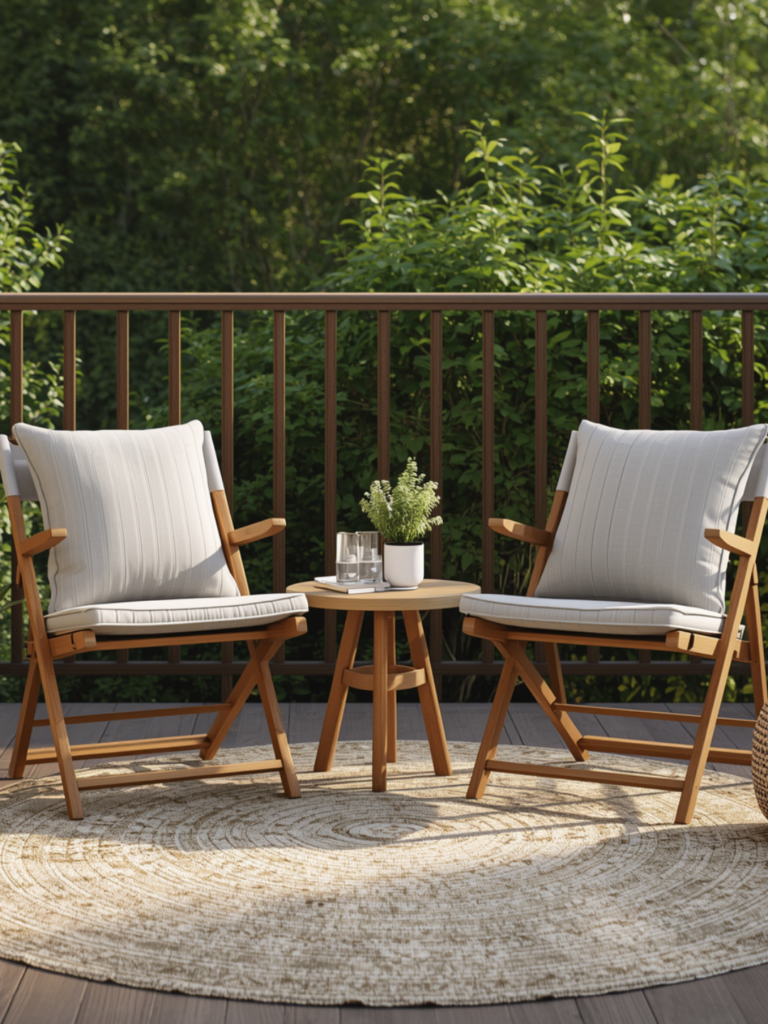
Outdoor cushions on a renter balcony work best when they are easy to take inside rather than left permanently on the chairs. Quick-dry fill cushions that can be carried inside at the first sign of rain are more practical than outdoor-rated cushions left out for months.
- A set of weather-resistant outdoor seat cushions in a solid neutral or subtle pattern works for the chair and as floor cushion seating for a guest: a set of two is the right starting quantity for most small balconies
- Match the cushion color to the rug palette: the two largest textile surfaces in the balcony should agree on color
- A waterproof storage bin or bag for the cushions when they come inside keeps them clean and extends their life significantly
5. Use Freestanding Privacy Screens Instead of Mounted Panels
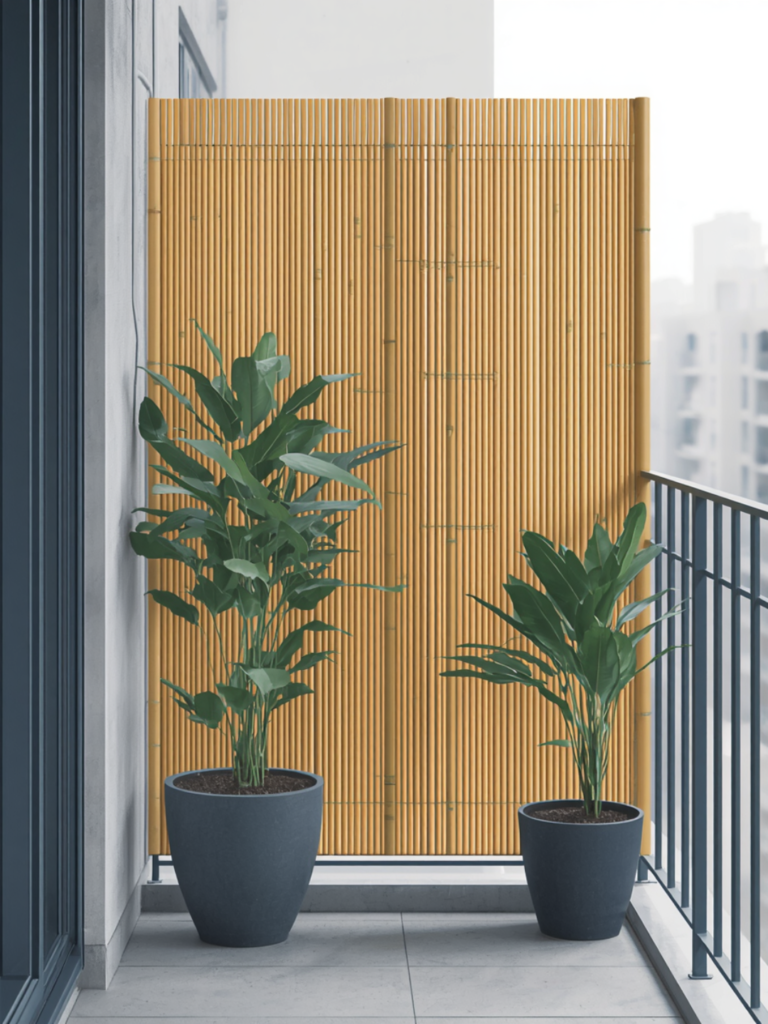
If the balcony is overlooked by neighbors, freestanding bamboo or wooden privacy screens that stand on their own legs or lean against the railing provide privacy without any wall attachment. They fold flat when not in use or when you move.
- A folding bamboo screen leaned against the inside of the railing adds visual privacy and a natural material backdrop without touching the wall or the floor structurally
- Weight the base of any leaning screen on a windy balcony: a pot of soil, a large terracotta pot, or a heavy planter at the base of the screen prevents it from being blown over
- Bamboo and natural wood screens age well outdoors and develop a weathered quality that reads as intentional rather than as weathering
6. Add Fold-Flat Furniture That Stores Inside in Winter
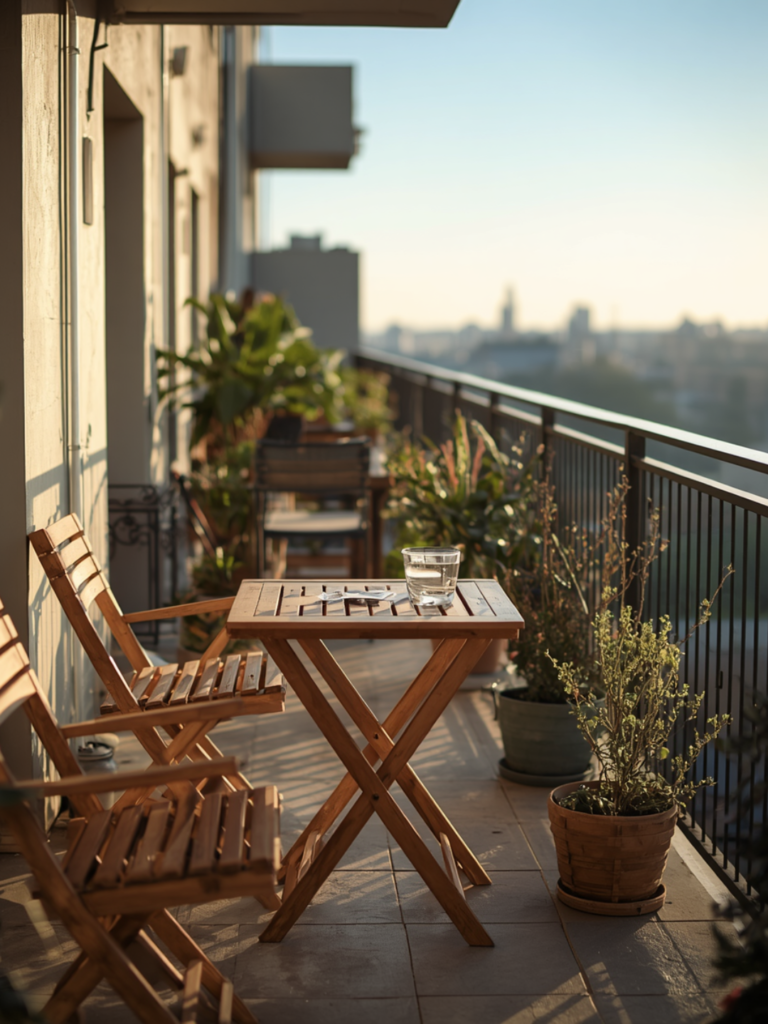
Furniture on a renter balcony has to work in every season and survive being stored for months without structure to protect it. Fold-flat chairs and tables that collapse completely and store behind a sofa or in a closet are the most practical furniture choice for a rental outdoor space.
- Look for chairs with wooden or metal frames rather than woven webbing, which deteriorates faster when stored and exposed to weather alternately
- Two folding chairs and one folding side table is the complete functional setup for most small balconies without creating a crowded footprint
- Folding furniture is also easier to configure for different uses: two chairs facing out for everyday use, or pulled together facing each other when you have a guest
7. Use Solar-Powered Stake Lights in Plant Containers
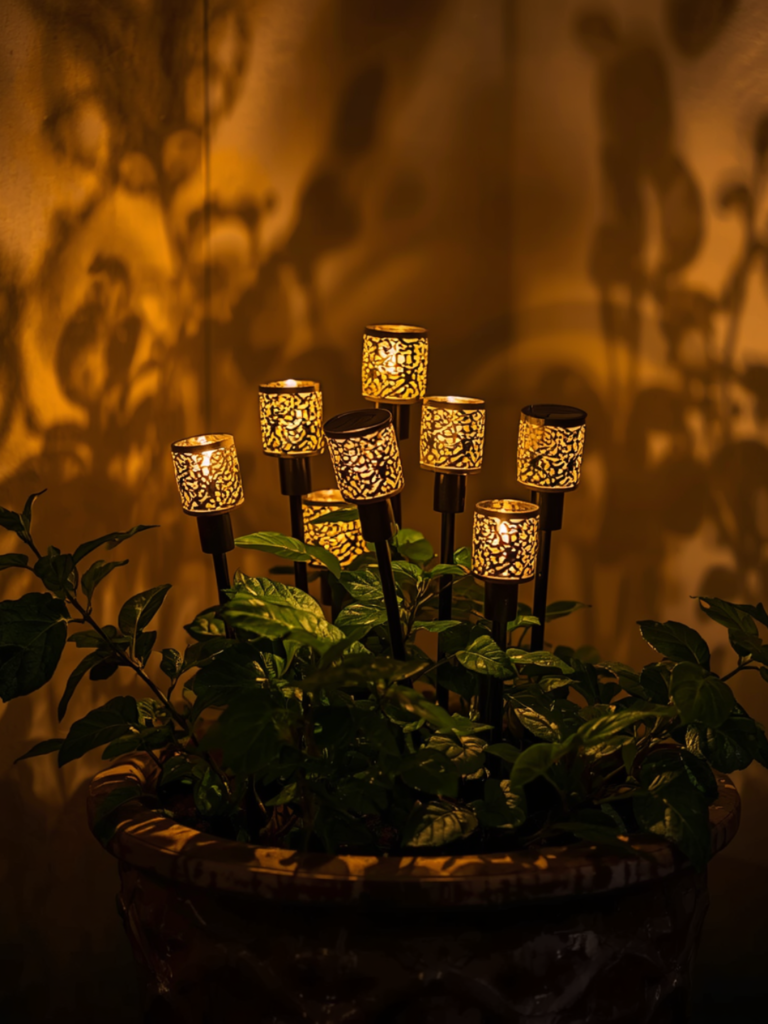
Solar stake lights pushed into a large plant container charge during the day and switch on automatically at dusk. No wiring, no extension cord through the door, no timer to set. For a renter balcony where running power to the outside space is a landlord conversation you probably want to avoid, solar lights are the complete solution.
- Cluster two or three stakes in one large pot rather than one in each small container: the cluster reads as deliberate, one per pot reads as an unresolved lighting system
- Warm-toned stakes only: the cool white versions read as security lights rather than ambient evening lighting
- Position the staked pots where they receive direct sun during the day: solar lights in a shaded corner will not charge fully and will provide minimal evening output
8. Hang Lanterns on Command Hooks Along the Railing
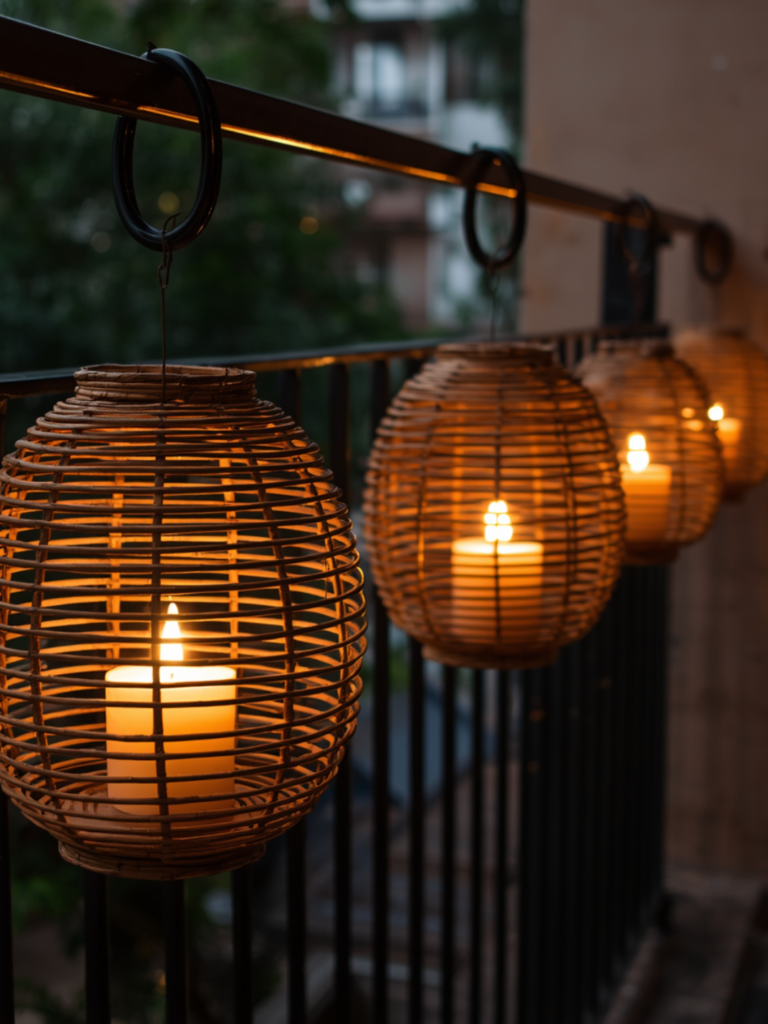
Battery-operated lanterns hung from Command outdoor hooks on the railing or the overhang provide intimate close-range lighting that the string lights at overhead level cannot. The combination of overhead string lights and railing-level lanterns creates the layered evening ambiance that makes a balcony feel like a proper outdoor room.
- Iron or rattan lanterns read as intentional and age well outdoors: plastic lanterns look exactly like what they are regardless of what else surrounds them
- A battery-operated or solar LED candle inside eliminates fire risk and wax drip without meaningfully reducing the light quality at outdoor viewing distances
- One or two lanterns is enough: the string lights are already providing the primary ambient light, and the lanterns are an accent layer rather than the main source
9. Use a Clamp-On Railing Table for a Surface Without Floor Footprint
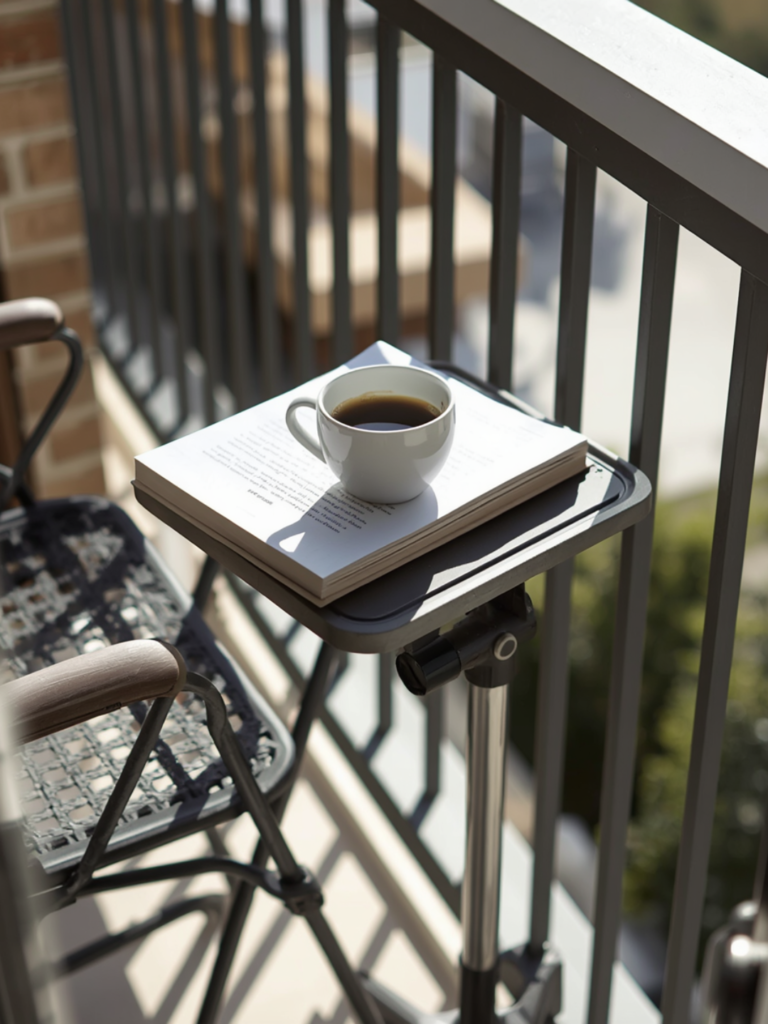
A clamp-on table that attaches to the railing provides a drink and phone surface beside the chair without using any floor space. It takes up the footprint of the railing itself rather than adding to the balcony’s floor plan, which matters significantly on a narrow or small outdoor space.
- Most clamp-on railing tables fit railings between 1.5 and 3 inches wide: measure the railing before ordering
- Position it on the same side as the dominant hand of the person who uses the chair most: it will always be in reach without having to reach across the body
- Keep only two objects on the surface at a time: a drink and one other thing. The table is for using, not for collecting outdoor objects
10. Add a Large Freestanding Plant to Fill the Corner
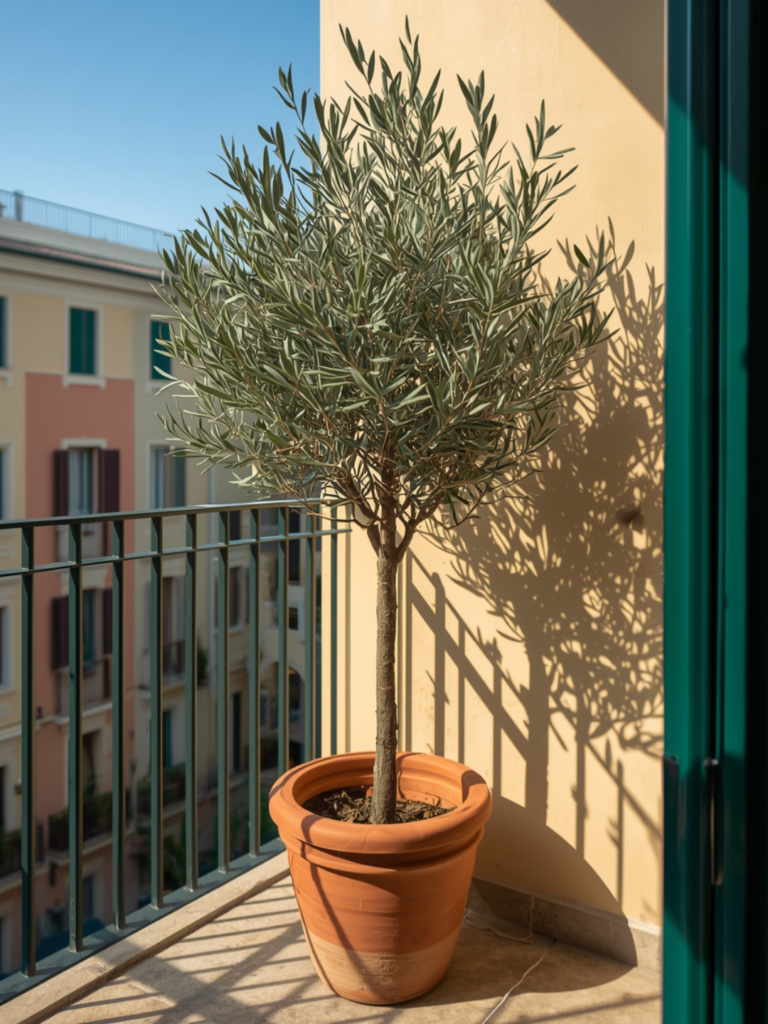
A large container plant in a heavy terracotta or ceramic pot in the corner of the balcony fills dead space, adds height, and grounds the whole layout. The container stays moveable because it is on wheels or because two people can lift it: the permanence of a planted corner without any structural installation.
- Terracotta is the right pot material outdoors: it breathes, ages beautifully, and is heavy enough to resist tipping in wind without being bolted down
- An olive tree, bay laurel, tall ornamental grass, or large fern all work as single statement plants that hold a corner without requiring the pot to be attached to anything
- Position it in the corner not being used for seating so it fills space without blocking the walking path or the seating zone
11. Hang a Bamboo Shade on the Overhang or Ceiling With Adhesive Hooks
A bamboo roll shade attached to an overhang, a pergola beam, or a ceiling with heavy-duty adhesive hooks provides sun protection for a hot afternoon balcony without any drilling or structural modification. It rolls up when not in use and takes less than a minute to remove completely.
- Bamboo roll shades are significantly cheaper than retractable awnings and provide equivalent shade for the seating zone they cover
- UV-resistant fabric is important for durability: cheap versions fade and sag within one season and look worse than having no shade at all
- Test the adhesive hooks with the weight of the shade before relying on them for full deployment: do a 48-hour adhesion test before hanging the full shade on a windy day
12. Use Faux Ivy Panels Attached With Zip Ties for Privacy
Faux ivy privacy panels attached to the railing with zip ties create an immediate privacy screen and a green backdrop without any drilling, any adhesive on the building structure, or any watering. Zip ties are removable with scissors and leave no mark on most railings.
- Cover only the section that faces the actual privacy issue, not the full perimeter: selective placement reads as more deliberate and leaves airflow on the uncovered sides
- Leave gaps for airflow at the top: a fully sealed panel traps heat in summer and can create wind pressure problems in storms
- Real climbing jasmine or a climbing rose trained along the railing looks significantly better but requires a full season to establish and more maintenance than faux panels
13. Add a Vertical Tiered Plant Stand for Stacked Greenery
A tiered plant stand lets you display several plants vertically and creates visual height that makes the balcony feel more designed rather than flat. It uses the footprint of one large pot to display three or four plants at different levels, which is a significant advantage on a small outdoor space.
- Three levels is the sweet spot: four or more starts to look overcrowded on a small balcony
- Vary the plant types by level: tall and structural at the bottom, mounding in the middle, trailing at the top
- Iron or powder-coated steel handles outdoor conditions far better than wood, which warps in wet weather and can leave rust stains on a concrete floor you’ll be charged for
14. Place a Natural Fiber Doormat at the Sliding Door Entry
The transition from apartment to balcony needs its own moment. A natural fiber doormat at the sliding door or French door defines the entry point and establishes the outdoor space as a room with an entrance rather than a floor extension.
- Natural jute or sisal reads as intentional; rubber-backed synthetic mats do not
- Size up to the full width of the door opening: a mat that is the full width reads much better than a narrow mat centered in front of it
- A natural tone mat works in any balcony palette and signals nothing specific about the style, which is its advantage over a printed or patterned mat
15. Use a Tension Rod and Outdoor Curtain for Shade and Privacy
A tension rod installed between two walls or posts, with no drilling, can support a lightweight outdoor curtain panel that provides both shade and a soft privacy layer for a balcony that is overlooked from a specific angle. The tension rod comes out with no trace left on the walls.
- Tension rods are rated for spans up to around 80 inches: measure the span you need before ordering to ensure the rod is strong enough for the width
- Outdoor fabric or a heavyweight indoor fabric treated with outdoor spray is appropriate: a standard cotton curtain will mold and discolor within one wet season outdoors
- Leave the panel loosely tied back most of the time: a curtain that is always closed reads as blocking the balcony, one that is tied open reads as an optional privacy layer
16. Grow Fragrant Herbs in the Railing Planters
A balcony that smells like fresh basil, rosemary, and mint is a balcony that gets used more. Fragrant herbs in the railing planters add function (you can actually use what you grow) and create an ambient outdoor scent that is more natural and more pleasant than any diffuser.
- Basil, rosemary, thyme, mint, and chives all grow well in small railing planters with good sun
- Keep mint in its own separate planter: it takes over any container it shares and will crowd out everything else within one growing season
- Harvest regularly: herbs become bushier and more productive when cut frequently, and the unused growth is the one that goes to seed and becomes woody
17. Add One Statement Hanging Planter From a Ceiling Hook
A single large hanging planter suspended from a Command adhesive ceiling hook rated for the weight of the pot and soil adds visual height and trailing greenery to the balcony without using any floor space. The hook comes off the ceiling with no damage if you follow the removal instructions.
- Use the largest Command hook rated for outdoor ceiling use that is available: most indoor Command hooks are not rated for outdoor temperatures and UV exposure
- Trailing plants (pothos, string of pearls, tradescantia, sweet potato vine) show the most benefit from being hung: the trail is the visual element
- Weigh the pot plus wet soil before choosing a hook: plants are significantly heavier when wet than when dry
18. Use a Weatherproof Rug Pad Under the Outdoor Rug
A non-slip rug pad under the outdoor rug prevents it from shifting and curling in wind, which solves one of the most common problems with outdoor rugs on rental balconies where the rug cannot be taped or glued down. It also protects the balcony floor surface from any dye transfer or moisture accumulation, which matters when you’re responsible for the condition of the floor.
- A weatherproof, non-slip rug pad sized slightly smaller than the rug (1-2 inches shorter on each side) keeps both the pad and the rug in position without being visible
- A pad that breathes rather than creating a sealed moisture trap is important outdoors: solid foam pads can trap moisture between the pad and the floor, which creates the exact condition that deposits get charged for
- Hang both the rug and the pad vertically to dry after heavy rain: a wet rug left flat takes significantly longer to dry than one with airflow on both sides
19. Store Everything Portable When the Season Ends
The deposit-safe balcony is one where nothing is left to deteriorate over the off-season. Cushions, rugs, small plants, and decorative objects that come inside in winter or during extended bad weather last longer and create no damage or staining to the balcony floor or railing surfaces.
- A weatherproof storage box inside the apartment near the balcony door for cushions and small textiles is the most practical system: everything is easy to grab and easy to put away
- Large plants can be moved inside for winter in most apartment situations: a plant dolly makes moving heavy terracotta pots significantly easier
- Photograph the balcony at the start of each season and at the end: if your landlord ever disputes deposit deductions, before-and-after photos are your documentation
20. Choose Everything in the Same Material Family
A renter balcony where every purchased item is in the same natural material family, natural fiber rug, terracotta pots, wooden or rattan furniture, bamboo shade, reads as intentionally designed even though everything was chosen individually over time. The material consistency does the styling work that a larger budget would do with matching furniture sets.
- Natural materials (jute, seagrass, terracotta, bamboo, wood) all read together as part of the same palette regardless of where each item came from
- Avoid mixing natural fiber pieces with plastic or synthetic ones: one plastic chair in a natural-fiber balcony reads as the one item that did not belong to the plan
- Natural materials also transfer to any future home regardless of style or layout: the investment in a good seagrass rug or terracotta pots travels with you and works anywhere
No Drilling Required. All of It Comes With You When You Leave.
Every single item on this list is fully moveable and leaves no trace when removed correctly. The resulting balcony is not a compromise version of a homeowner balcony: it is a better-edited version, because every choice had to earn its place rather than being attached to a wall and left there. Start with the rug and the string lights, and let everything else layer in from there.
Save this and drop a comment with your railing type (metal, wood, glass, concrete) and whether you have an overhang or not: those two details determine which of these ideas work best for your specific setup.