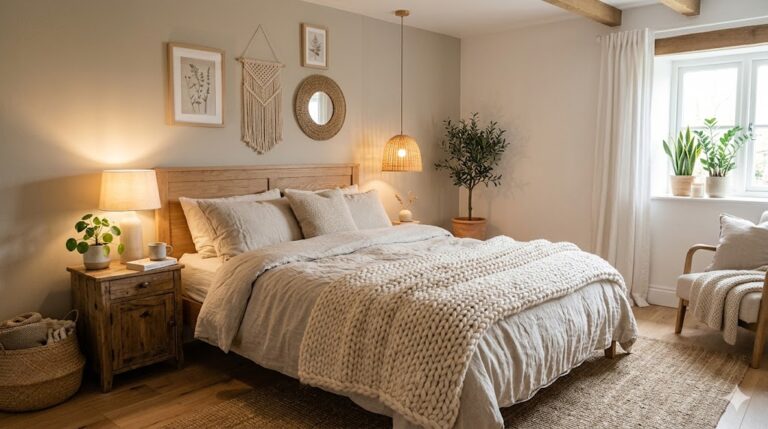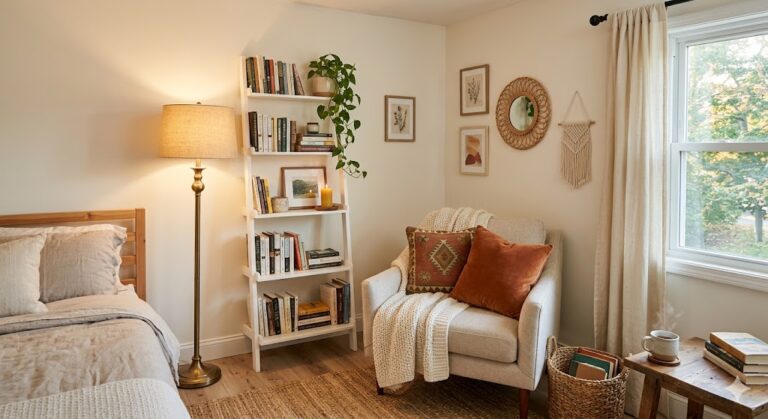
20 Coastal Bedroom Ideas That Skip the Anchors and Still Nail the Aesthetic
The coastal bedroom aesthetic has a cliche problem. Anchors on throw pillows. Shells in a glass jar. A sign that says Sea Breeze. Starfish on the wall.
These objects are so immediately associated with the aesthetic that they have become shorthand for it, and in doing so they have made it difficult to execute the actual feeling the aesthetic is supposed to create: light, openness, air, and the quiet calm of being near water.
Here are 20 specific ideas for building a modern coastal bedroom without a single anchor, shell, or starfish.
1. Start With Sheer Linen Curtains That Let Every Bit of Light Through
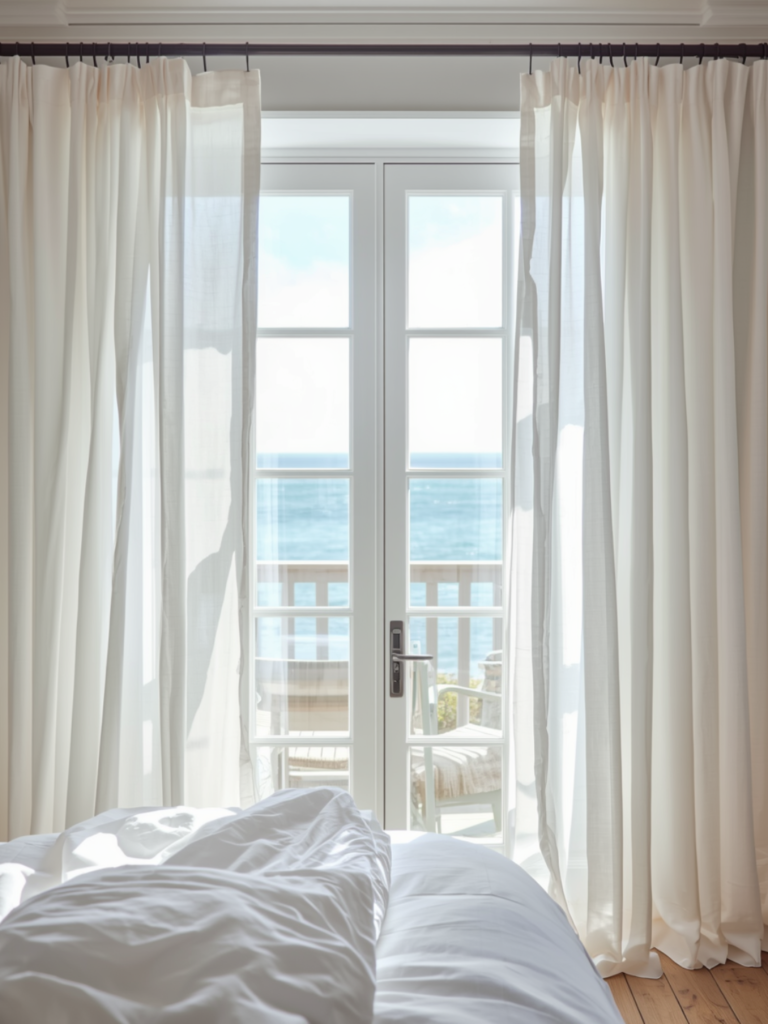
Coastal rooms are defined by light quality before anything else. The feeling of being near water is inseparable from the diffuse, bright, slightly bounced light of an open coastal landscape. In a bedroom, this translates to maximizing natural light through the window treatments rather than filtering it out.
- Replace any heavy or dark curtains with sheer linen panels in white or cream: they filter light without blocking it and move softly with any breeze from an open window
- Hang the rod at ceiling height so the curtain panels run from ceiling to floor: the height creates the sense of open, airy space that is central to the coastal aesthetic
- White or natural linen is the correct tone: bright white reads as clinical, natural linen reads as warm and sun-faded in the right coastal way
2. Build the Bedding in Layers of White, Cream, and Natural
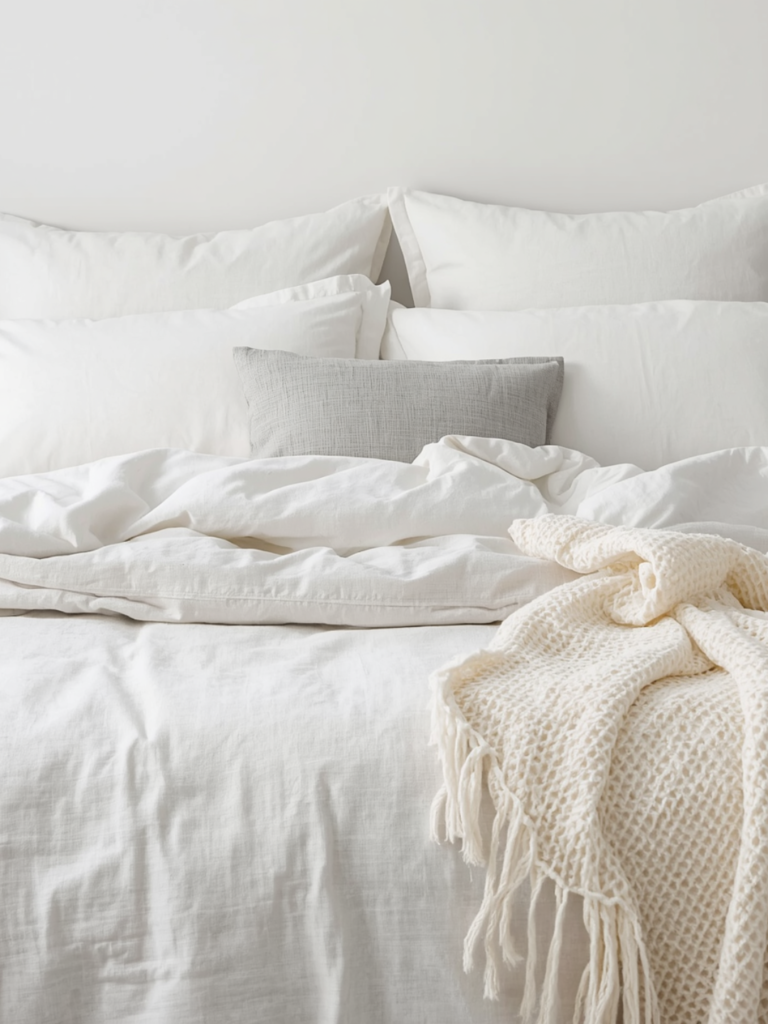
The coastal bedroom palette starts at the bed. White linen, cream washed cotton, and natural fiber textures layered together create the soft, airy quality that is central to the aesthetic without requiring a single piece of nautical decor.
- A stonewashed linen duvet cover in natural or white is the foundational bedding piece for a coastal bedroom: the texture, the drape, and the slight rumple of washed linen capture the effortless quality of the aesthetic better than any other fabric
- Layer a waffle-weave blanket in cream or pale blue at the foot of the bed as a secondary texture: the woven surface adds the tactile depth that prevents the neutral palette from reading as empty
- Use a linen or cotton quilt in warmer months instead of the full duvet: a lighter layer reads as more coastal and more relaxed than a heavy fill in summer
- Pillow arrangement: two Euro shams, two standards, one lumbar, all in the same white-cream-natural palette. Color contrast in pillows breaks the coastal tone immediately
3. Use Blue as an Accent in Exactly One Object

The modern coastal bedroom is not a blue-and-white room. Blue is one element in a palette that is primarily neutral, appearing as an accent in a single textile, one object, or a small piece of art rather than as a wall color or dominant textile across the room.
- One blue accent cushion among cream and white ones is more sophisticated than a matching blue-and-white set: the single blue object reads as a considered accent, the matched set reads as a nautical theme
- A single piece of blue and white pottery (a vase, a small bowl, a lamp base) brings the color without turning the room into a theme
- Dusty blue, faded denim, pale powder blue, or ocean-washed teal all read as coastal: avoid bright cobalt, which reads as Mediterranean rather than modern coastal
4. Add a Rattan or Woven Mirror as the Main Wall Piece
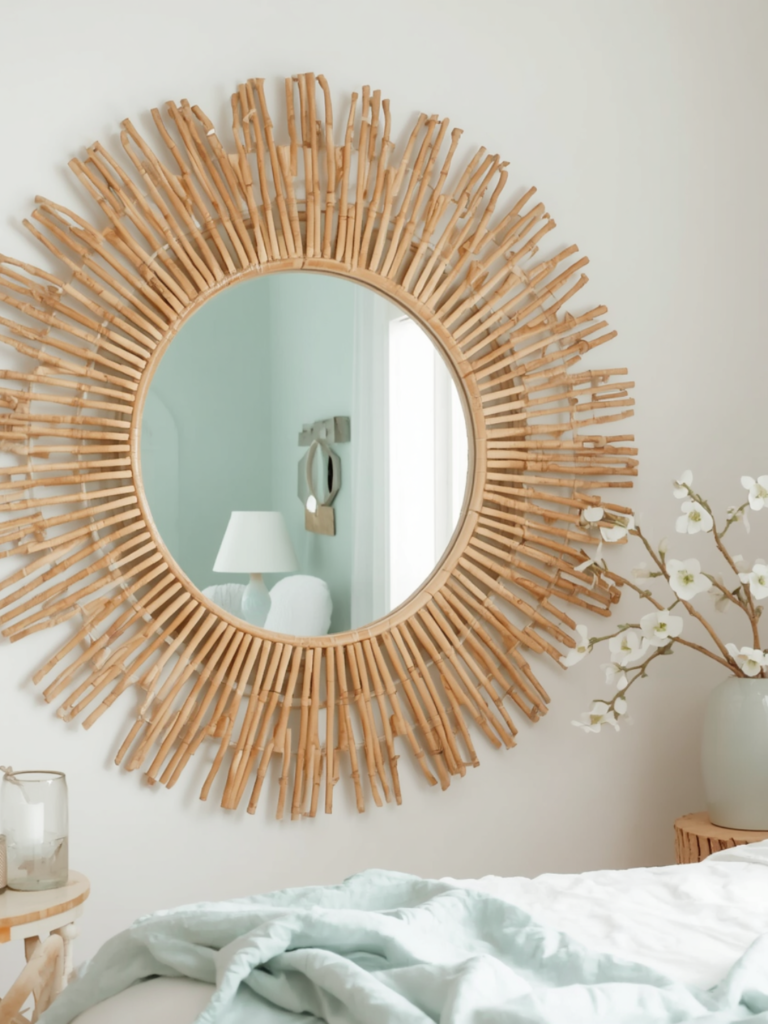
A rattan or woven mirror on the wall is the single most effective natural material addition to a coastal bedroom because it combines texture, organic form, and light-bouncing function in one object. The woven surround reads as coastal without referencing the ocean directly.
- A boho rattan sunburst wall mirror in natural woven rattan adds the coastal texture and organic form that a metal or glass mirror cannot: the woven surround reads as modern coastal in a way that a driftwood-framed mirror tips over into craft project territory
- Position it on the wall opposite the window where it bounces natural light back into the room: the light quality improvement is immediate and directly contributes to the coastal feeling
- A large rattan mirror (24 inches or more) reads as a design statement; a small one reads as a craft store purchase. Size matters significantly for this particular object
5. Keep Every Surface Edited Down to Three Objects Maximum
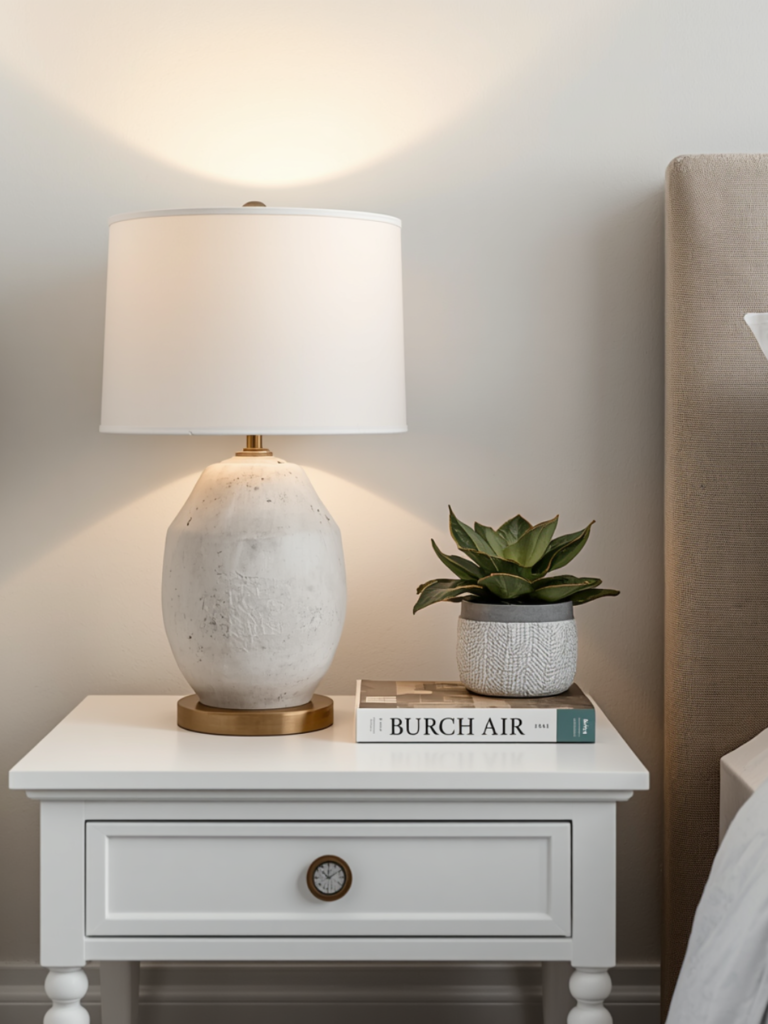
Coastal rooms feel open, and open means uncrowded. Crowded dressers, loaded shelves, and surfaces full of objects are the opposite of the light, airy feeling the aesthetic is supposed to create. In a coastal bedroom, less on every surface is always more.
- Nightstand: lamp, one small plant or ceramic vessel, current book. Nothing else stays on the surface
- Dresser: one lamp, a small woven tray with two objects, a plant. Everything else goes in a drawer or a basket
- Shelves: if you have open shelving, use one-third of the space for objects and leave two-thirds empty. The empty space is the feeling of openness that the whole coastal palette is building toward
6. Use Driftwood or Sea Glass as the One Literal Coastal Reference
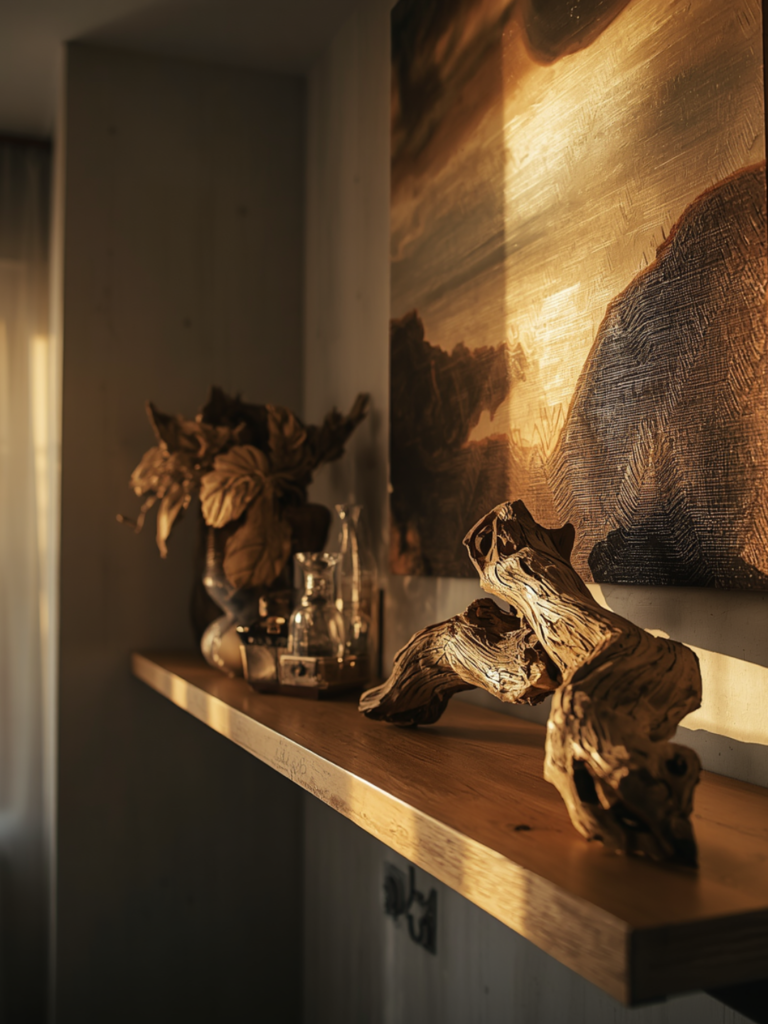
These are the closest the modern coastal bedroom gets to literal coastal references, and they work precisely because they are the actual materials of the coast rather than representations of it. A piece of driftwood on a shelf, a small collection of sea glass in a ceramic bowl, a smooth river stone used as a paperweight.
- These objects work because they are the real thing: they have the texture, weight, and irregularity of natural materials rather than the smoothness of manufactured coastal decor
- One or two pieces is enough: the organic material does its work best as a single focal object, not as a collection of twenty shells in a glass cylinder
- A piece of driftwood leaned against the wall behind a lamp reads as a sculptural choice: a decorative shell from a gift shop reads as a souvenir
7. Choose Furniture in Natural or Whitewashed Wood
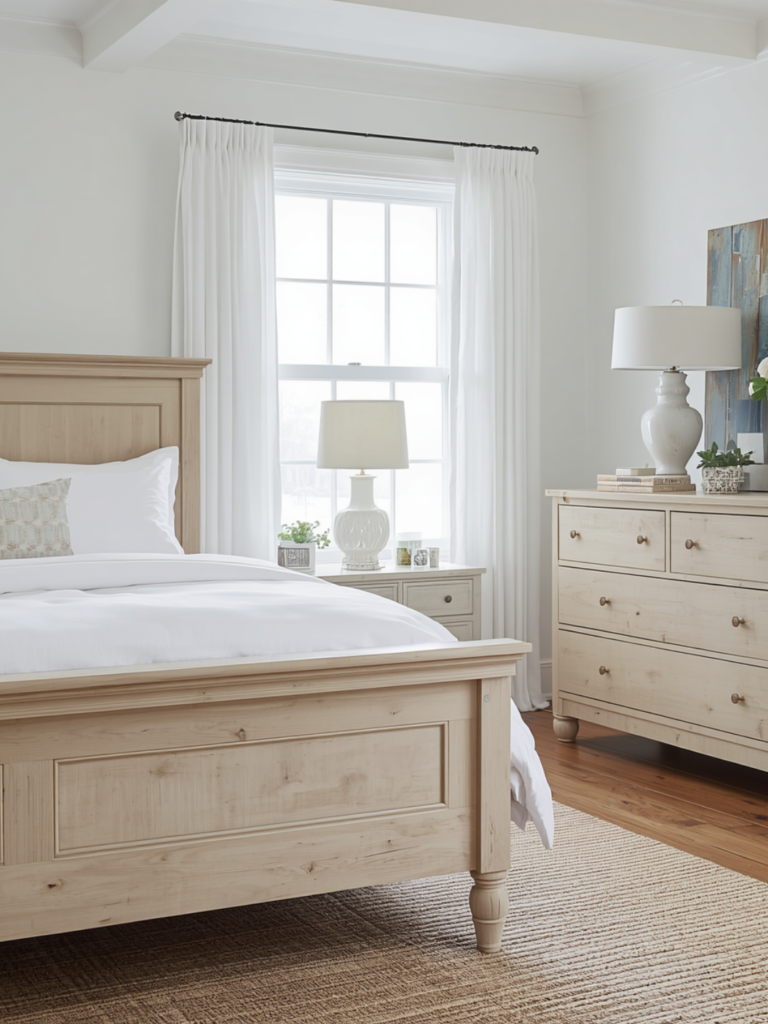
The furniture palette for a modern coastal bedroom is natural or light-washed wood rather than dark stains, painted furniture, or high-gloss finishes. Pale oak, whitewashed timber, and natural pine all read as coastal when they are in the right context.
- A pale wood bed frame or headboard, even a simple platform or slatted frame, reads as more authentically coastal than an upholstered one in this aesthetic
- Whitewashed or limewashed wood finish is the most specifically coastal wood treatment: it looks sun-bleached and gently aged, which is exactly the quality the aesthetic is going for
- Mix light wood tones rather than matching them exactly: pale oak with natural pine reads as collected and organic, which is the right quality for a coastal bedroom
8. Add Texture With Natural Fiber Pillows and Throws
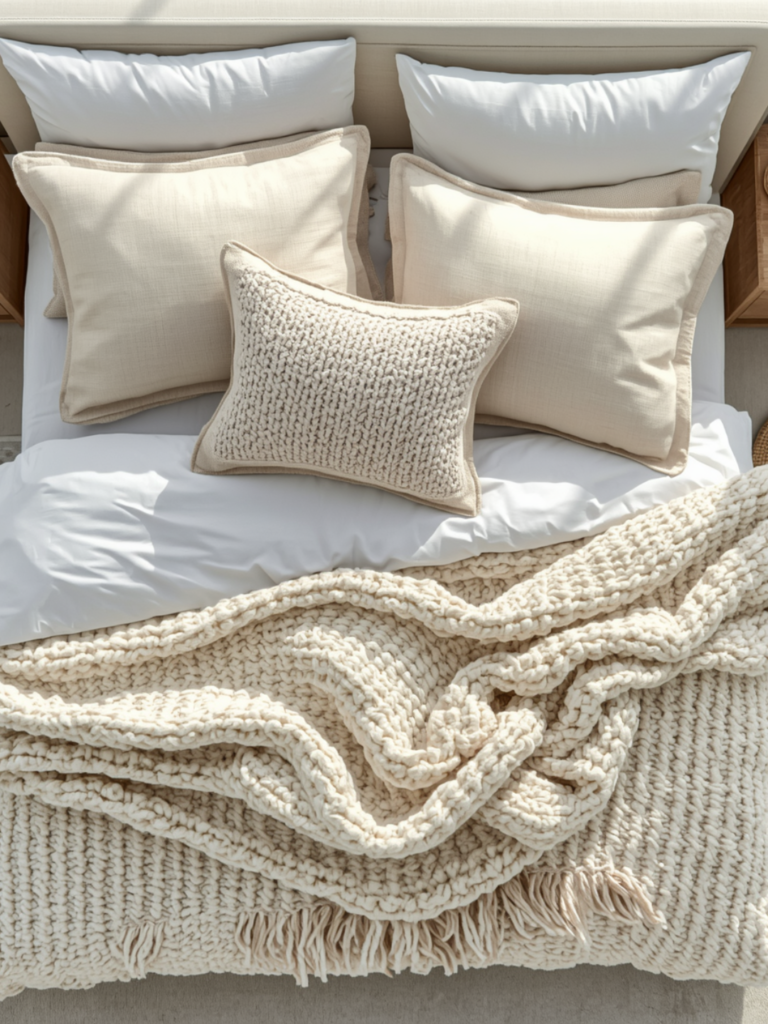
Without nautical prints or coastal patterns, the coastal bedroom gets its visual interest from texture. Woven cotton, chunky linen, waffle-textured throws, and rough-woven pillow covers all add the tactile depth that keeps the neutral palette from reading as empty or clinical.
- A chunky woven cotton throw in cream or pale blue at the foot of the bed adds the right coastal texture without any pattern: the weave is the visual interest
- A pillow cover in a loose-weave linen or a woven cotton with a subtle stripe reads as coastal without the nautical reference
- Layer different textures within the same color family: smooth linen duvet with a waffle blanket and a chunky pillow in cream and white creates depth without color contrast
9. Bring In a Coastal-Climate Plant
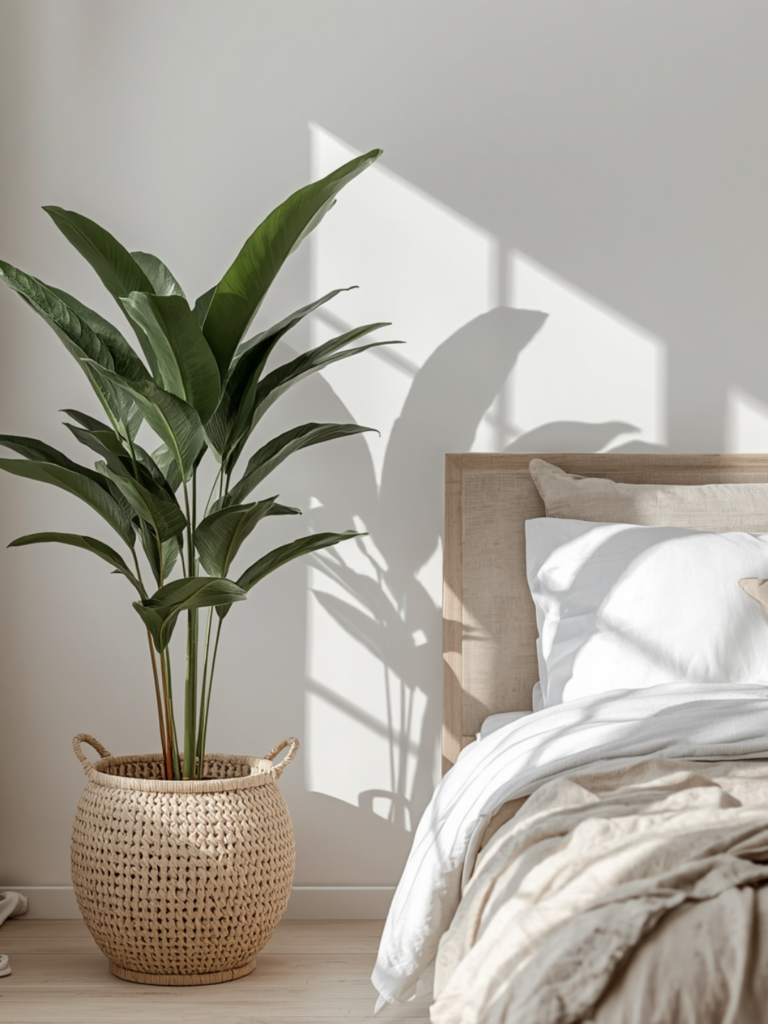
Specific plants reinforce the coastal feeling in a way that generic greenery does not. A large indoor palm, a fiddle leaf fig, a succulent, or a snake plant all reference coastal vegetation without being literal about it. The right plant in the right container is an important element in the coastal bedroom.
- A fiddle leaf fig or large palm in the corner of the room adds tropical coastal warmth and fills vertical space that would otherwise read as empty
- A succulent or small cactus on the windowsill reads as desert-coastal (California, Portugal) which is a valid and specific direction within the broader coastal aesthetic
- Keep the plant in a natural terracotta pot, a simple white ceramic, or a woven basket: the container reinforces the material palette rather than contradicting it
10. Use a Seagrass or Jute Rug as the Floor Foundation
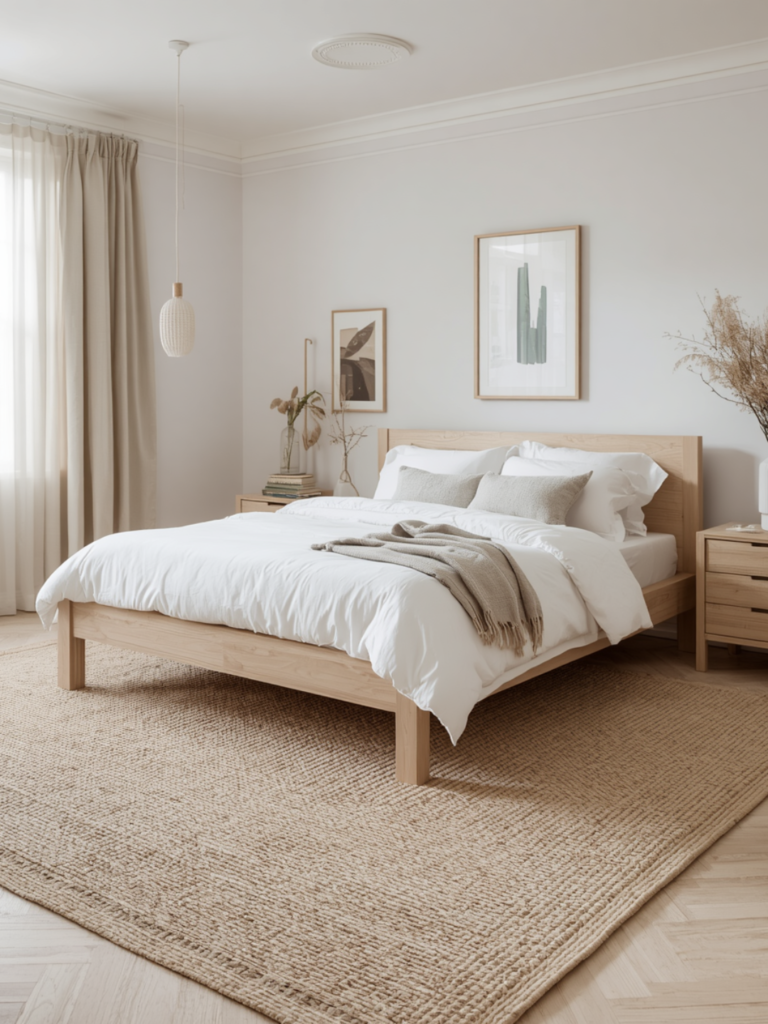
A seagrass or jute rug underfoot adds warmth to the light coastal palette, grounds the furniture arrangement, and introduces the natural fiber texture that is as important to the aesthetic as the textiles on the bed. Natural fiber rugs are also practically appropriate for a bedroom: they are softer underfoot than hard floors but more textural than pile carpet.
- Size it to extend at least 18 inches beyond the sides and foot of the bed: a rug that only peeks out from under the bed has no grounding effect in the room
- Natural seagrass is slightly more durable than jute in a high-traffic bedroom: jute softens faster underfoot but also wears through faster in the heaviest traffic zones
- A seagrass rug underneath a smaller geometric woven rug at the foot of the bed creates the layered rug effect that reads as styled without overcrowding the floor space
11. Complete the Sensory Experience With a Sea-Clean Scent
A coastal bedroom should smell like it looks. Clean, airy, and slightly marine without being artificial. A reed diffuser or a candle in a sea salt, driftwood, white tea, or clean linen scent completes the sensory experience of the aesthetic in a way that visual choices alone cannot achieve.
- Sea salt and driftwood, clean linen, ocean breeze, and white tea with eucalyptus are all appropriate coastal scent directions: use the natural-smelling versions rather than the artificial ones that smell like a car air freshener
- Keep the vessel simple: a clear glass diffuser or a white ceramic candle jar sits inside the palette without standing out as a separate decor object
- Use the scent consistently: over time a specific scent becomes associated with the room and reinforces the whole atmosphere every time you walk in
12. Replace the Overhead Light With Warm Directional Sources
A single overhead ceiling fixture in a coastal bedroom creates harsh, even light that flattens the texture of the natural fiber elements that the aesthetic depends on. Replacing the overhead light in the evening with warm directional sources from lamps creates the soft, warm coastal light quality that makes the room feel like it belongs near water.
- Two bedside table lamps with warm 2700K bulbs provide the primary light source for a coastal bedroom in the evening: position them where they illuminate the bed without creating glare toward the ceiling
- A rattan pendant light or a lamp with a woven shade creates the textured warm glow that the coastal aesthetic needs: the natural fiber shade filters the light in a way that a plain fabric drum shade cannot
- Turn the overhead completely off after dark and use only the layered lamp sources: the visual difference is significant and takes the room from functional to genuinely coastal in atmosphere
13. Add a Waffle-Weave Blanket at the Foot of the Bed
A waffle-weave blanket in cream, pale blue, or natural linen tone draped at the foot of the bed adds the textural contrast that makes the bedding look genuinely layered rather than just two pieces of linen on top of each other. The waffle grid pattern is subtly interesting without being a print.
- Waffle-weave fabric reads as specifically coastal in texture: the grid pattern has a quality of beach towel or vintage hotel linens that fits the aesthetic naturally
- Drape it rather than fold it: an unfolded blanket loosely arranged at the foot of the bed reads as lived-in and effortless, which is the whole coastal approach to bedding
- If you are using the chunky knit throw from earlier on this list, use the waffle blanket as the middle layer under it: the texture contrast between the fine grid and the chunky knit reads well from across the room
14. Choose or Style a Simple Pale Wood Headboard
The headboard is the largest furniture element in the bedroom and the one with the most impact on the room’s aesthetic direction. A simple slatted pale wood headboard, a whitewashed panel, or a rattan cane headboard all read as specifically coastal without requiring anything around them to make the context clear.
- Natural rattan or cane headboards are available as standalone pieces that attach to any existing bed frame: you do not need to replace the whole bed to change the headboard
- A slatted pale oak headboard reads as clean and coastal; a boxy upholstered headboard in cream or linen can work if the fabric and color are right, but the natural material version is always stronger in this aesthetic
- If a new headboard is not in the budget, a large rattan mirror or a piece of driftwood art hung at headboard height performs the same visual function
15. Use Mirrors Strategically to Amplify Natural Light
Mirrors in a coastal bedroom are functional light tools before they are decorative objects. Positioned to catch window light and bounce it around the room, a large mirror or a rattan mirror can make a bedroom feel twice as bright as it actually is, which directly delivers the light quality that defines the coastal aesthetic.
- A full-length mirror on the wall opposite the window catches the most light across the most hours of the day
- A small cluster of mirrors (two or three different sizes in natural frames) on a wall beside the window reflects light into the room’s dark corners without dominating the wall
- Every mirror should be in a natural material frame (rattan, pale wood, rope, driftwood-look): chrome, black metal, or ornate gold frames read as wrong for this aesthetic
16. Apply the No-Nautical-Object Rule to Every Purchase
The discipline of the modern coastal bedroom is that every object must earn its place on the merit of material, texture, or color rather than on its coastal reference. Before adding any new object to the room, the question to ask is whether the object would still work in the room if you removed the coastal concept entirely.
- A piece of driftwood passes: it is an organic natural material object regardless of the concept. An anchor-shaped candle holder fails: remove the concept and the object has no reason to be there
- A woven seagrass basket passes: it is a natural fiber storage object that reads well in many aesthetics. A lighthouse figurine fails: it is only coastal as a reference, not as a material object
- This rule is the most important design decision in the coastal bedroom because it is what separates a room that feels like a beach house from one that feels like a well-designed room that happens to be near the coast
17. Hang One Piece of Abstract Art in the Coastal Palette
Art in a modern coastal bedroom is abstract or organic rather than literal. A watercolor wash in blue and cream, an abstract print in ocean tones, or a black and white photograph of open sky or water all bring the coastal palette to the wall without anchors, lighthouses, or any of the other coastal cliches.
- Size it large enough to hold the wall: at least 24×30 inches on a standard bedroom wall, larger on a king-bed wall above a headboard
- A linen-tone mat around the print inside a simple thin-profile frame reads as considered; a busy decorative frame competes with the art and with the room
- Abstract art in coastal tones (soft blues, sandy neutrals, washed cream, soft sage) reads as coastal even without any representational coastal imagery
18. Declutter Every Visible Surface Completely
The most specific thing about a properly executed coastal bedroom is what is not in it. No chargers on the nightstand. No stacked books competing with the lamp. No skincare products on the dresser. The open surface area is where the light and the airy quality actually live: fill the surfaces and the coastal feeling disappears immediately.
- Do a complete surface audit: remove everything from every surface and put back only what is beautiful, functional, or both
- Everything that is merely convenient (the charger, the hand cream, the hair tie) finds a home inside a drawer, a basket, or a woven tray where it is accessible but invisible
- A coastal bedroom that photographs well is one where the surfaces look this way every day, not just for the photo: the daily reset is the practice that makes the room actually feel the way it looks
19. Use Woven Baskets for Any Storage That Needs to Stay Visible
When storage is visible in a coastal bedroom it should be in a natural woven material that reads as part of the decor rather than as a utility container. A seagrass basket for spare throws, a woven tray on the dresser for daily-access items, a lidded rattan box for anything that needs to be close at hand but out of sight.
- Seagrass, rattan, jute, and woven cotton all read as correct in the coastal material palette: avoid plastic bins, painted boxes, or metal containers in this context
- Keep the basket lids closed when the contents are not in use: an open basket full of stuff reads the same way as an open drawer full of stuff
- The basket material should connect to other natural fiber elements in the room: the rug, the lamp shade, the headboard. The material thread running through the room is what creates the sense of intentional design
20. Let the Room Breathe on Every Level
The final and most important coastal bedroom principle is breathing room. Space between objects on shelves. Open floor area around the bed. A rug that extends without crowding the walls. Curtains that hang without being crammed onto a rod. Pillows that are not stacked so high they fall over. The restraint is the aesthetic: the coastal bedroom is not a room that has been decorated, it is a room that has been edited.
- Every piece of furniture should have clear space around it: a bed pushed against three walls, a dresser jammed into a corner, a chair blocking the door all communicate the wrong spatial message regardless of how nice each individual piece is
- Negative space in a well-designed room is not empty: it is the air that makes everything else visible. The coastal bedroom has more of it than most other aesthetics, and more deliberately so
- When you finish styling the room and it feels slightly under-decorated, that feeling is correct. Trust it
No Anchors. No Shells. Still Completely Coastal.
What you have instead: washed linen, natural light, a rattan mirror, sheer curtains at ceiling height, woven textures in cream and blue, one literal organic coastal material, and a scent that finishes the feeling. That is a coastal bedroom. Not a themed room, not a beach house, but a room that captures the quiet and light of being near water without a single souvenir in it.
Save this for your next bedroom refresh and drop a comment with what direction you are taking your coastal bedroom: tropical, California minimal, or European coastal. Happy to refine the recommendations based on which version resonates with your space.