21 Genius Ways to Style Open Shelving in the Kitchen Without the Clutter
Open shelving is one of the most beautiful kitchen design trends out there clean, casual, and perfect for showcasing your favorite pieces. But it can also turn into a chaotic mess if you’re not intentional. The key to making open kitchen shelves work is finding the sweet spot between style and function.
This list goes beyond the generic “add jars and plants” advice. You’ll get 21 practical, creative ways to style your shelves without clutter, from foundational setup tips to pro-level styling tricks that make your kitchen feel both elevated and lived-in.
Foundation First – What to Keep & What to Skip
Before you even think about styling, you need to clear the visual noise. These first five ideas are all about setting strong, thoughtful foundations—so your shelves feel curated, not chaotic.
1. Keep Only What You Use or Truly Love
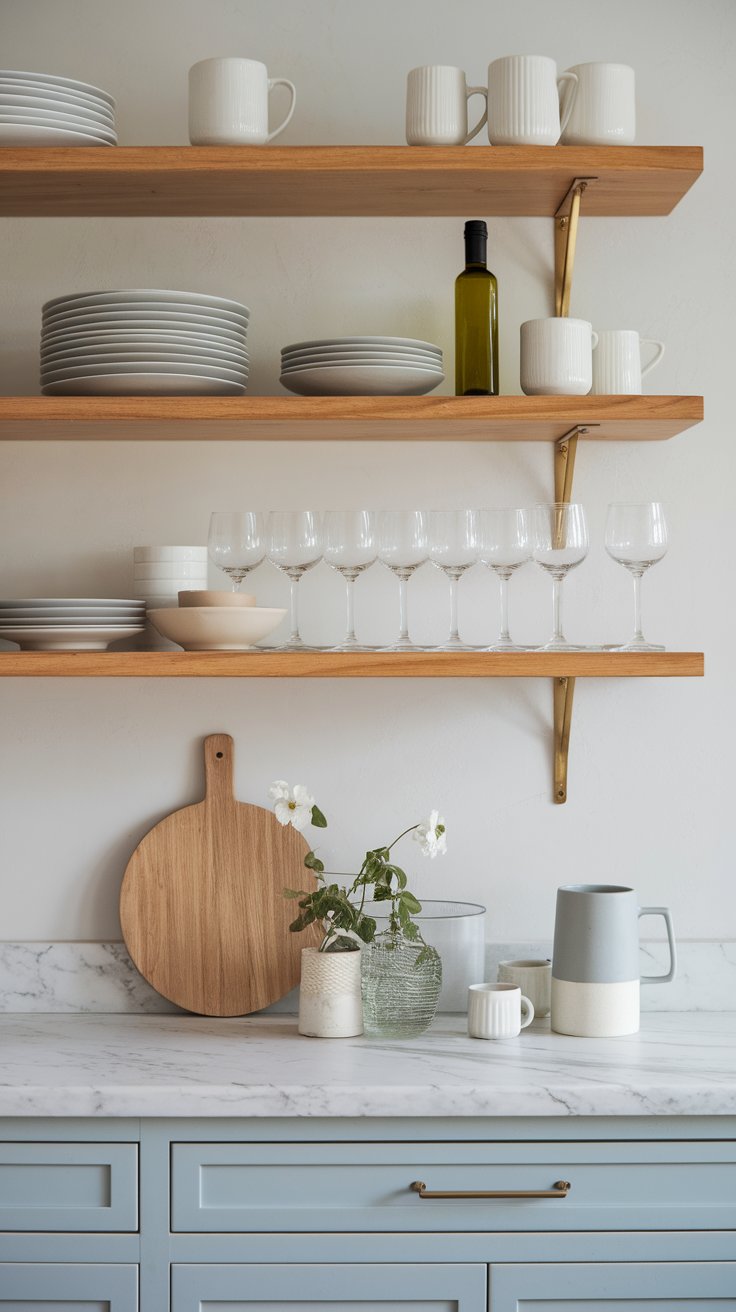
Open shelves aren’t just storage—they’re part of your kitchen’s decor. If an item doesn’t serve a purpose or bring you joy when you look at it, it probably doesn’t belong out in the open.
Here’s how to audit your kitchenware:
- Pull everything out. Lay out what’s on your shelves.
- Group by category. Plates, bowls, mugs, jars, etc.
- Ask yourself:
- Do I use this weekly?
- Is it in good condition?
- Does it match or complement my other items?
If it’s chipped, clashing, or just collecting dust—it’s time to donate or tuck it behind closed doors.
Style Tip: Keep only a curated selection of your best-looking essentials. This creates breathing room, which helps your shelves look styled rather than stuffed.
2. Color-Code or Tone-Match for a Clean, Intentional Look
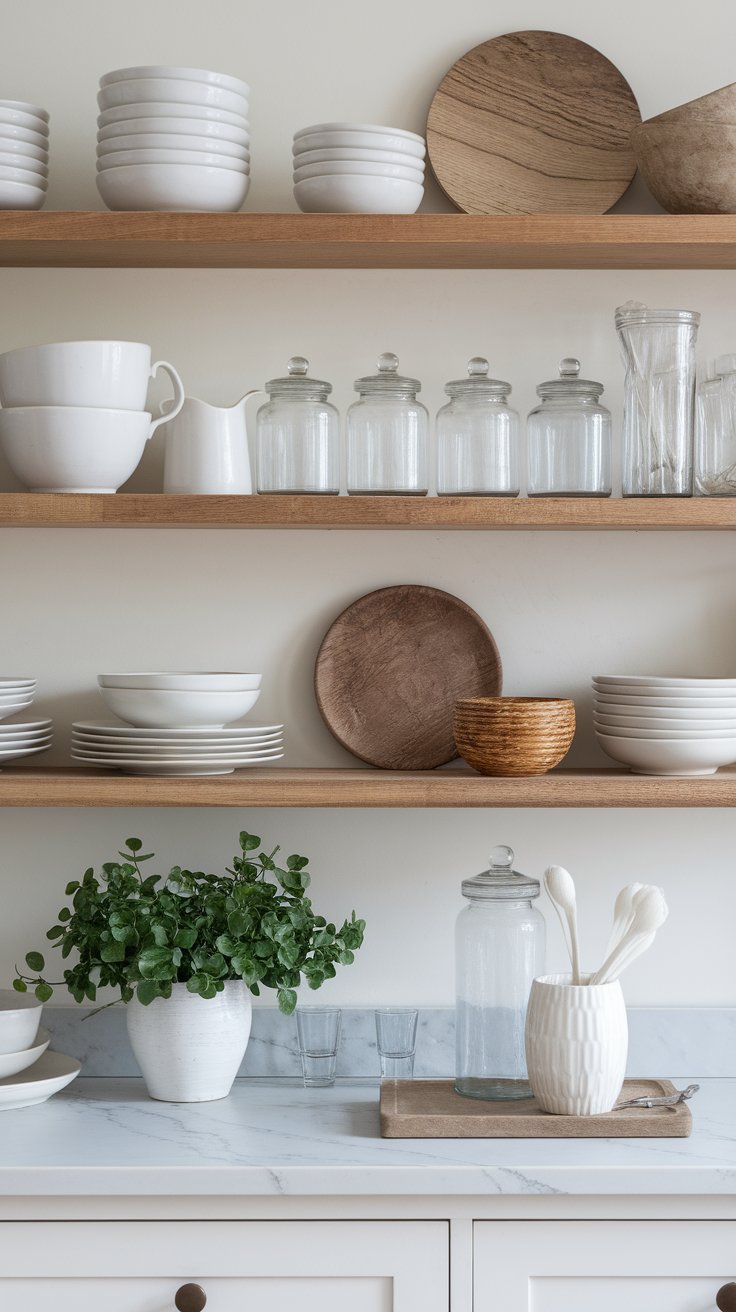
Nothing makes open shelving feel messy faster than a jumble of colors and finishes. When everything is out in the open, even functional items need to play nicely together visually.
Try this approach:
- Stick to a tight color palette (e.g., whites, soft grays, natural woods).
- Group items by color or material—clear glass with clear glass, white dishes with white.
- Store colorful or mismatched items behind closed doors and use open shelves for your most cohesive pieces.
Bonus Styling Trick: Use all-white dishware but vary the textures (matte, glossy, speckled) to keep it from looking flat.
3. Pair Open Shelves with Closed Storage Nearby
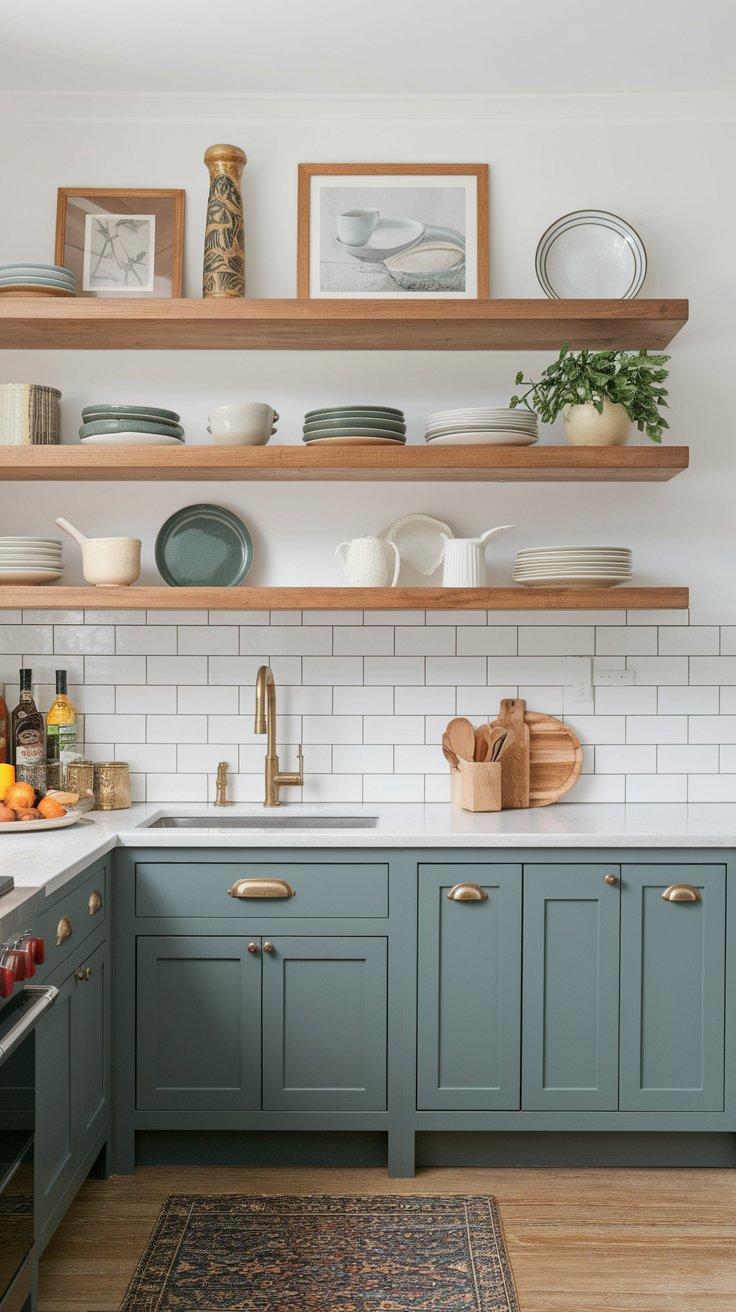
You don’t need everything on display. In fact, open shelves work best when they’re paired with closed cabinets or drawers that take on the visual clutter.
Use a high-low approach:
- Open shelves: Display your beautiful, frequently used items.
- Lower drawers or upper cabinets: Hide plastic containers, bulky appliances, or that giant stack of takeout menus.
Design Tip: This combination gives you the best of both worlds—a space that looks styled but still functions for real life.
4. Choose One or Two Shelf Finishes and Stick with Them
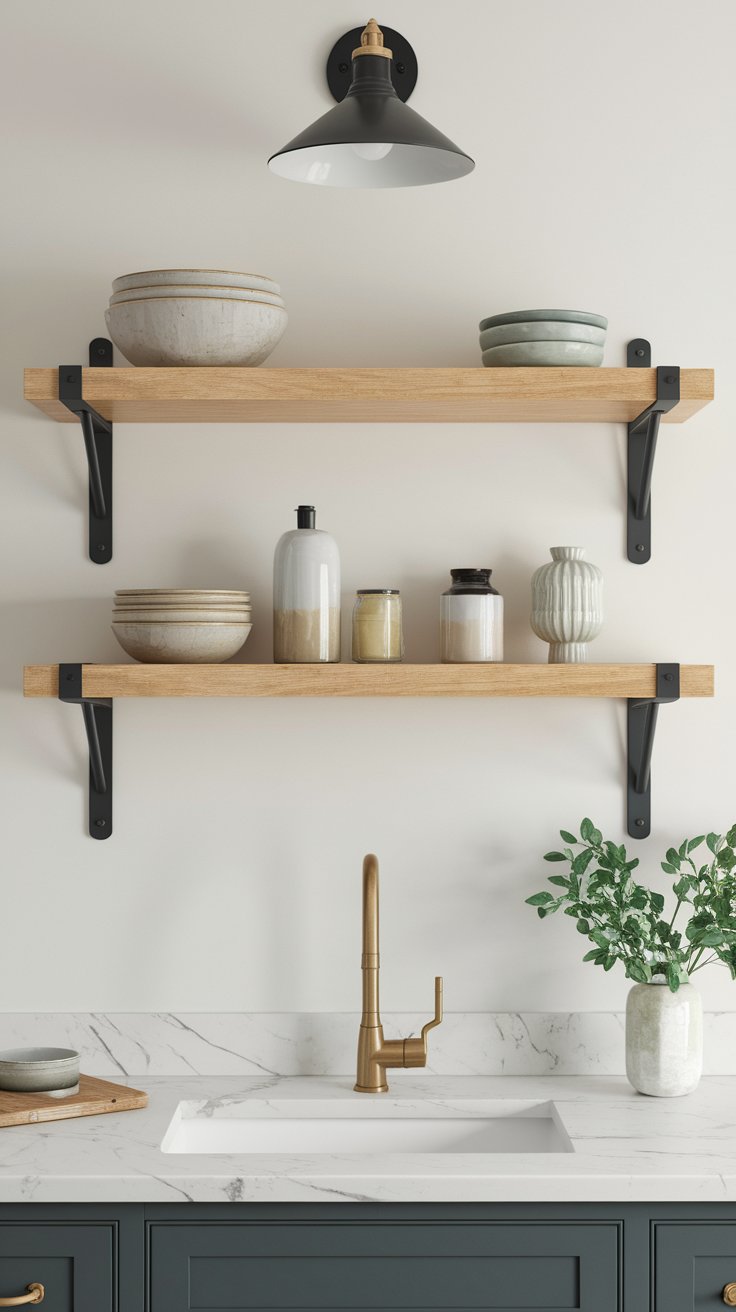
If your shelf materials and hardware don’t coordinate, things can start to look visually scattered—even when everything else is organized.
Most cohesive combos:
| Shelf Material | Matching Accent | Best For |
|---|---|---|
| Natural wood | Brass, leather, or matte black | Warm, organic, lived-in spaces |
| Painted white MDF | Polished nickel or silver | Bright, modern, minimal kitchens |
| Black metal | Industrial pipe or dark wood | Urban, bold, moody kitchens |
Style Advice: Match your shelf brackets to your kitchen’s faucet, cabinet handles, or lighting fixtures to tie the whole space together.
5. Use the Prime Shelf for Everyday Beauty
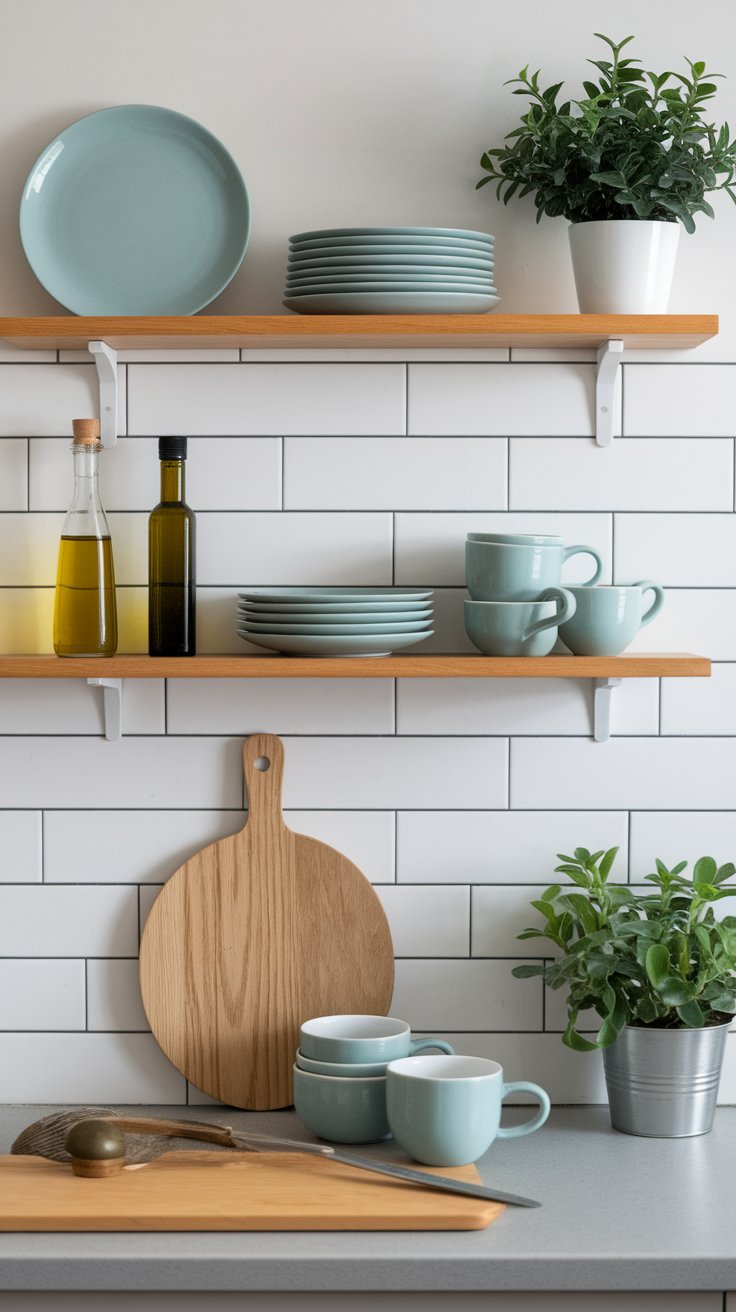
The shelf that sits at eye level is what everyone sees first. Make it your “hero shelf”—where practicality meets visual harmony.
Here’s what to place here:
- A neat stack of your best plates or bowls
- A beautiful olive oil bottle, salt cellar, or pepper grinder
- One or two clean-lined mugs
- A small potted plant or a piece of art for balance
Why it matters:
This shelf anchors your entire arrangement. When your center shelf is thoughtfully styled, it makes the whole setup look more intentional—even if the shelves above or below are simpler.
Styling Like a Pro – Decor Meets Function
These tips bring designer-level balance to your open shelves by combining everyday items with thoughtful decor. It’s about creating a look that feels styled but still livable.
6. Use Matching Canisters or Glass Jars for Pantry Staples
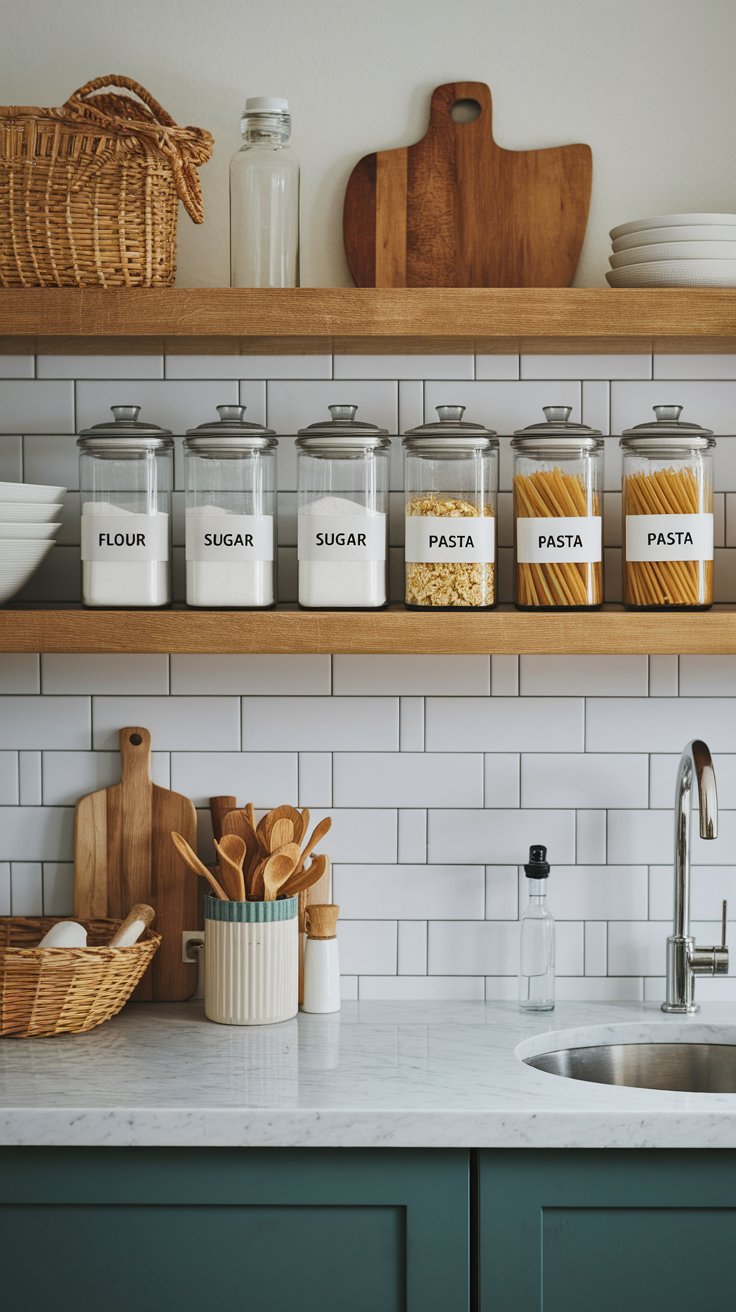
Matching jars create an instant sense of order. When your sugar, flour, coffee, or pasta is stored in labeled glass or ceramic canisters, your shelves look like a lifestyle shoot and stay practical.
How to do it:
- Choose uniform containers in a material that fits your style (glass, ceramic, matte tin).
- Add minimalist labels or hand-written tags.
- Keep the labels consistent—same font, size, or marker color.
Pro Tip: Line the canisters in rows or group them in sets of 3 for a clean visual flow.
7. Stack Plates, Bowls & Mugs Like Art
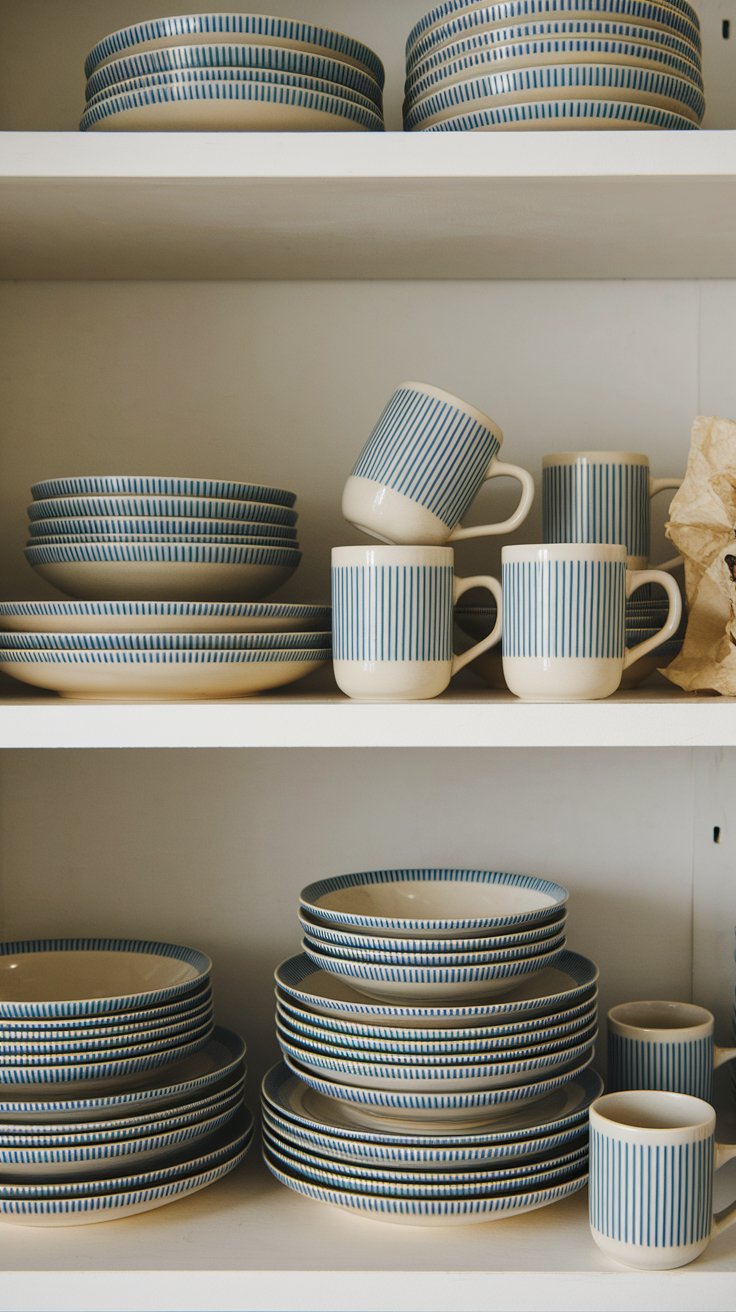
Dishware is the easiest everyday item to make look beautiful—if it’s stacked with care.
Ideas to try:
- Stack 6–8 plates in ascending size on one side of a shelf.
- Pair with a set of matching bowls or mugs directly next to it.
- Use a vertical plate rack if your shelves are tall.
Why It Works:
The repetition and structure create a rhythm on your shelves, just like a gallery wall would on a blank canvas.
8. Group Items in Odd Numbers for Better Balance
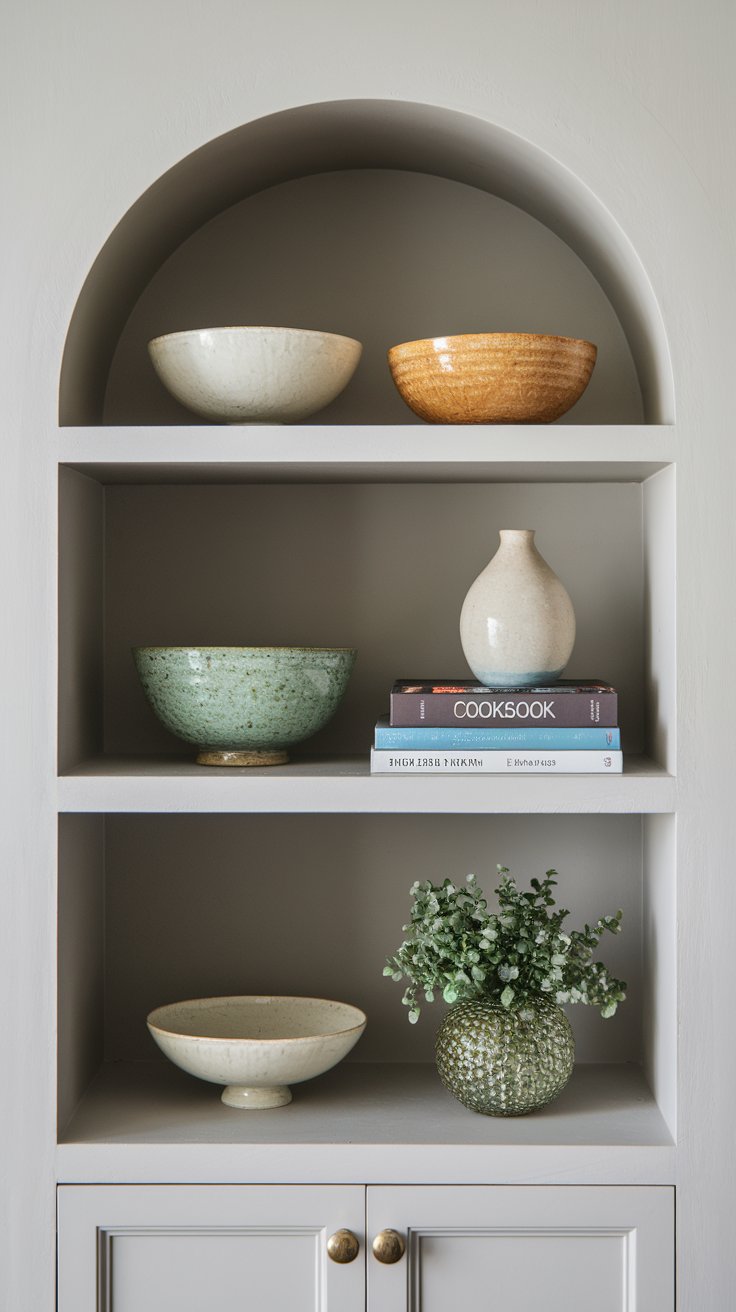
Designers swear by the “rule of three”—and for good reason. Odd-numbered groupings feel more natural and less rigid than even ones.
Try this setup:
- 3 stacked bowls
- A small vase
- A single cookbook laid flat underneath
Arrangement Tip:
Group by height or tone to create a triangle shape with your eyes. This guides the viewer through your shelf space without feeling overly staged.
9. Add Small Art or Framed Prints for Personality
Open shelves don’t need to be only functional. A small framed piece of art, a botanical print, or even a vintage recipe card in a clip frame can break up the monotony and give your shelves character.
Smart Placement Ideas:
- Lean a small print behind clear canisters
- Layer it behind dishes for depth
- Use a magnetic clip or mini easel to rotate seasonal art
Styling Tip:
Keep the art minimal and neutral if you already have color in your dishware. Let it complement, not compete.
10. Include Plants (Fresh or Faux) for Life & Softness
Greenery breaks up hard lines and brings warmth to your space. Even a tiny potted succulent can completely soften the look of stacked plates and jars.
Best Plant Picks for Shelves:
- Trailing pothos (adds vertical movement)
- Mini rosemary or thyme pots (functional + fragrant)
- Faux eucalyptus or olive branches for zero maintenance
Where to Place Them:
- On the ends of shelves
- Hanging slightly over a stack of cookbooks
- In corners that need a natural break
Smart Storage Hacks That Look Good
You don’t have to choose between beauty and function. These styling hacks help you hide the mess, organize the must-haves, and make your shelves work harder—while still looking like they belong in a magazine spread.
11. Use Baskets or Crates for Loose Items
Baskets are a genius way to contain clutter on open shelves. They create visual uniformity, even if what’s inside is a total mix of stuff.
Best uses:
- Tea bags, snacks, and protein bars
- Small tools like can openers or measuring cups
- Kids’ lunch-making items
| Basket Style | Ideal For |
|---|---|
| Woven seagrass | Rustic or boho kitchens |
| Whitewashed wood | Cottage or farmhouse styles |
| Wire or metal crates | Modern, industrial kitchens |
Tip: Line metal baskets with linen napkins for a softer, tidier look.
12. Add Hooks for Hanging Mugs or Utensils
Take advantage of vertical space under each shelf by installing small hooks. This instantly adds another layer of storage while turning everyday items into decor.
Ideas to hang:
- Matching coffee mugs
- Wooden spoons or brass utensils
- Small colanders or oven mitts
Easy DIY: Use adhesive Command hooks for a renter-friendly upgrade, or install a thin rod with S-hooks for a more permanent option.
13. Display Cookbooks with Bookends or Ledge Brackets
Cookbooks don’t just belong in a cabinet—they can be a major part of your shelf styling. The key is choosing only your best-looking ones.
How to style them:
- Stack 2–3 flat, with a candle or plant on top
- Stand 3–5 upright, held with a bookend or metal bracket
- Rotate seasonally (grilling in summer, soups in winter)
Pro Tip: Remove dust jackets and keep to neutral-toned spines for a more cohesive look.
14. Use Risers to Create Vertical Layers
Not everything has to sit flat. Risers let you stack small items at different heights so your shelves feel full—but not crowded.
Use risers for:
- Layered spice jars
- Vases or teapots behind shorter bowls
- Creating multi-level visual interest
Bonus: Many risers come in wood, marble, or acrylic finishes so you can match them to your shelf aesthetic.
15. Hide Clutter Behind Decorative Cutting Boards
You can still have some chaos—just tuck it behind something cute. A leaning cutting board or pizza paddle can hide items like paper towels, extra jars, or even that ugly-but-useful blender bottle.
How to use this trick:
- Lean one or two boards vertically on the shelf
- Stash small containers or items behind them
- Let a pretty tea towel or dried herbs hang over the edge for softness
Style Tip: Mix wood tones (light oak + walnut) for added depth without breaking the visual flow.
Finishing Touches – Vibe & Visual Balance
This last group of ideas is all about elevating the look. You’ve decluttered, styled, and organized—now it’s time to finesse. These finishing touches add charm, warmth, and that “pulled-together” feeling that makes open shelving feel intentional and effortless.
16. Mix Textures: Wood, Ceramic, Glass, and Metal
One of the easiest ways to add depth without clutter is by mixing materials. Even a neutral palette feels interesting when it has texture.
Try combinations like:
- Smooth white ceramics with woven baskets
- Clear glass jars next to matte pottery
- A vintage copper pot beside marble canisters
Why it works:
Texture adds visual weight, making your shelves feel layered and styled—even if the color scheme is simple.
17. Repeat Shapes for Visual Consistency
When your shelf styling feels “off” but you can’t figure out why, it’s often a shape issue. Repeating shapes gives your arrangement a rhythm that’s pleasing to the eye.
How to apply it:
- Use mostly round bowls or jars for softness
- Group square or rectangular shapes together
- Choose one “hero shape” and let it guide your layout (e.g., circular cutting boards + round canisters)
Tip: Mix sizes, but repeat shapes—that’s the balance.
18. Create White Space Between Groupings
Cramming every inch of shelf space full can make even the prettiest setup feel chaotic. Instead, leave small breathing room between clusters of items.
The formula:
- 2–4 grouped items → 2–4 inches of blank space → next cluster
- Space above and below counts too—don’t stack too high
Why it matters:
White space gives the eye room to rest. It makes each item feel more intentional and helps highlight your favorite pieces.
19. Use Under-Shelf Lighting for a Soft Glow
Want your open shelves to look designer-level? Add lighting. Under-shelf LEDs or puck lights add warmth and depth while making everything easier to see.
Options to consider:
| Lighting Type | Best For | Difficulty |
|---|---|---|
| LED strip lights | Long shelves, soft ambient glow | Easy |
| Puck lights | Spotlight on key items | Medium |
| Smart lighting | App-controlled, dimmable glow | Advanced |
Style Tip: Choose a warm white (2700–3000K) for a cozy, kitchen-friendly vibe.
20. Rotate Decor Seasonally
You don’t need a total overhaul—just swap out a few pieces every season to keep your shelves feeling fresh and intentional.
Quick seasonal swaps:
- Spring: pastel mugs, greenery, floral tea towels
- Summer: lemon-themed jars, cookbooks, citrus bowls
- Fall: warm wood boards, copper accents, mini pumpkins
- Winter: evergreen sprigs, neutral linens, gold or silver touches
Why it works:
A subtle refresh keeps your kitchen in sync with the rest of your home—and gives you a reason to re-style without starting from scratch.
21. Let Your Personality Show
This is your kitchen—your shelves should reflect that. Whether it’s a favorite vintage pitcher, a quirky souvenir mug, or your go-to hot sauce lined up proudly, don’t be afraid to include a few pieces that are just for you.
Make it personal by including:
- A family heirloom or antique piece
- A handwritten recipe card in a mini frame
- Your favorite coffee beans or tea tin on display
Bottom line:
Perfection isn’t the goal—personality is.
Final Thoughts
Open shelving in the kitchen is more than a trend—it’s a smart, stylish way to blend function with design. But without a plan, those open shelves can quickly become magnets for clutter. The key is to treat them like curated spaces: part storage, part showcase.
With the 21 genius ideas we’ve covered, you now have a toolbox of creative ways to make your shelves beautiful, organized, and entirely your own. Whether you love rustic charm, modern minimalism, or cozy cottage vibes, there’s a way to make open shelving work—without sacrificing sanity or style.
FAQ: Open Kitchen Shelving
Are open kitchen shelves practical for everyday use?
Yes—when styled intentionally. Open shelving works best when it holds frequently used items like dishes, glassware, or pantry staples. If you limit what’s on display to what you actually use, it becomes both convenient and attractive. Just avoid overcrowding and keep cleaning in mind—shelves do collect some dust and grease over time.
How do I keep open shelves from looking cluttered?
Stick to a consistent color palette, limit how many categories of items you store, and use containers like baskets or jars to group smaller items. Leave white space between groupings and avoid stacking too many things vertically. Remember: fewer, better-looking essentials make a bigger impact than packed shelves.
What materials work best for open shelving in kitchens?
Wood (like oak, pine, or walnut) and metal (such as steel or wrought iron brackets) are both durable and stylish. Choose materials that complement your existing cabinets and fixtures. For a modern, minimalist look, go with white or black painted MDF. For warmth, natural or reclaimed wood is always a win.
How do I style shelves if I have mismatched dishware?
If replacing your dishes isn’t an option, consider using one shelf just for display and store mismatched items elsewhere. You can also group by color tones (cool vs. warm), or use baskets to hide less-attractive items. Adding unifying elements like matching jars, cookbooks, or framed prints can help balance out the mix.
Do open shelves work in small kitchens?
Absolutely. In small kitchens, open shelves actually help create the illusion of space by reducing visual bulk. Just be selective about what you store on them—use the lower shelves for daily-use items and go vertical with display pieces. Floating shelves above a sink or next to a window can also maximize space without closing things in.