21+ Primitive Bedroom Ideas You’ll Want to Copy Right Now
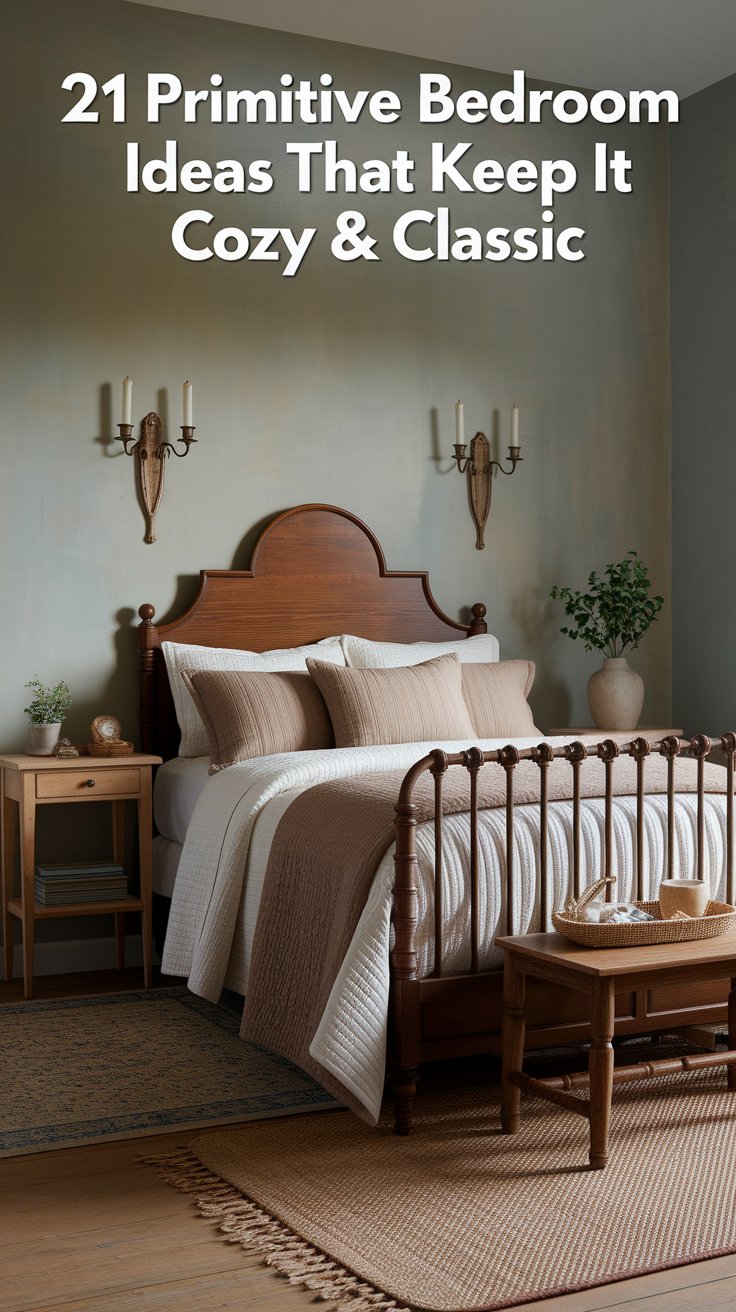
Primitive bedroom style is all about warmth, age, and simplicity. Inspired by early American homes, it blends humble materials, muted colors, and handmade decor to create a space that feels grounded and enduring.
There’s beauty in worn wood, faded quilts, and iron candle holders that tell a story.
This post will guide you through over 21 primitive bedroom ideas that are easy to recreate using vintage finds, natural textures, and thoughtful styling.
Furniture Foundations
1. Simple wooden bedframes with natural wear
Start with the bed. Primitive bedrooms often feature tall, spindle-back or shaker-style bedframes made of raw or distressed wood. The goal is not sleekness but character. Nicks, uneven stain, or a matte finish give the bed a handmade, timeworn appearance.
Options to look for:
| Bedframe Style | Features to Prioritize |
|---|---|
| Spindle-back frame | Tall headboard, aged paint |
| Shaker-style frame | Clean lines, square corners |
| Reproduction beds | Pine, oak, or poplar wood |
Pair the frame with a neutral or quilted coverlet to keep the focus on the wood.
2. Primitive-style peg rails and wall hooks
Peg rails are a key primitive feature that add both charm and storage. Mount a simple strip of wooden pegs along the wall, usually waist-height or higher.
Items to hang:
- A vintage nightgown or linen apron
- Dried herb bundles
- Small baskets
- Tin candle lanterns or wood-framed mirrors
This simple addition helps you avoid modern clutter and adds visual interest to otherwise empty wall space.
3. Old-fashioned washstands or chamber tables
Use a reproduction or antique washstand as a nightstand or accent table. These small, often three-legged pieces were originally used to hold wash basins. Their narrow footprint makes them ideal for tight spaces.
Styling tips:
- Place a small crock or stoneware pitcher on top
- Add a beeswax candle in a tin holder
- Store extra quilts underneath or a small stack of books
This detail sets the tone for the entire bedroom by creating a sense of early-American purpose.
4. Blanket chests and wooden storage benches
At the foot of the bed or under a window, a painted blanket chest offers both storage and style. Look for solid wood boxes with rubbed edges or stenciled folk art patterns.
Common finishes and colors:
| Finish | Best Accent Color Combinations |
|---|---|
| Distressed mustard | Charcoal, navy, rust |
| Dry-brushed black | Warm woods, tin accents |
| Barn red | Creamy whites, deep green |
These pieces also make great display surfaces for folded quilts, candles, or a dried arrangement in a crock.
5. Homespun or ticking stripe bedding
Primitive bedrooms rely on classic, simple fabric patterns. Ticking stripes and homespun fabrics are ideal for bedding because they feel old-world and unfussy.
Textile ideas:
- Ticking stripe pillowcases in blue or brown
- A neutral coverlet layered with a hand-stitched quilt
- Wool or flannel sheets in muted plaid
Helpful tip: Stick to one or two patterns and keep the rest solid. The goal is a restful, not busy, visual experience.
Textiles and Layers
6. Handmade or quilted throws folded with care
Primitive style values craftsmanship, especially in textiles. A hand-stitched or pieced quilt folded neatly at the foot of the bed brings color and meaning into the room.
Look for these quilt styles:
| Quilt Type | Typical Pattern | Color Scheme |
|---|---|---|
| Patchwork quilt | Squares or triangles | Burgundy, navy, mustard |
| Star quilt | Eight-pointed stars | Deep blue and tan, barn red |
| Log cabin quilt | Repeating square logs | Muted multi-toned scraps |
Drape quilts over a bench or chair when not in use, and avoid anything overly bright or modern.
7. Grain sack and feed sack pillow covers
These pillows bring understated texture and charm to the bed or an accent chair. Look for neutral-colored linen with faded lettering or subtle stripes.
Styling tips:
- Mix 2 or 3 pillows in varying sizes
- Stick to a neutral palette: cream, faded brown, dusty blue
- Avoid overly fluffy inserts—keep the silhouette soft and natural
You can find authentic feed sack fabric at flea markets or buy reproduction covers online.
8. Hooked or braided rugs on wood floors
Primitive bedrooms rarely feature wall-to-wall carpet. Instead, they use small area rugs made with braided jute, wool, or hooked fabric loops.
Best placement areas:
- Beside the bed
- Under a bench or trunk
- In front of a dresser or washstand
Rug shapes that fit best:
| Shape | Works Well For |
|---|---|
| Oval | Bedside and narrow spaces |
| Rectangular | Foot of the bed or entry |
| Round | Corners or reading areas |
Choose muted earth tones and avoid overly intricate modern prints.
9. Textured walls with soft, matte finishes
The walls in a primitive bedroom are never glossy or too clean-cut. Paint in soft, muted colors with matte or chalky finishes that suggest age and hand application.
Primitive paint colors to consider:
- Colonial blue
- Buttermilk cream
- Pewter gray
- Pine green
- Dusty barn red
Optional touch: Lightly distress trim or wainscoting to give the walls subtle character without making them feel faux or overdone.
10. Simple curtains made from muslin or unbleached linen
Skip modern blackout curtains and instead hang lightweight panels made from muslin, cheesecloth, or washed linen. Let the fabric pool slightly at the floor for an old-world touch.
How to hang them:
- Use wooden dowels or iron rods
- Tie back with fabric strips, jute rope, or twine
- Choose neutral colors like oat, ivory, or taupe
The movement and softness of the fabric will warm the space while still letting in natural light.
Walls, Lighting, and Decorative Details
11. Tin sconces and candle holders
Primitive bedrooms often rely on candlelight-inspired accents to create a warm, nostalgic glow. Use blackened tin sconces or tabletop holders to highlight a corner, dresser, or reading nook.
Lighting options to try:
| Type | Placement Suggestion |
|---|---|
| Wall sconce (tin) | Above a nightstand or dresser |
| Taper candle holder | On a blanket chest or table |
| Electric taper lamp | Beside the bed for safety |
Electric candles with flickering bulbs are a safe way to maintain the look of flame without using real wax or open flame.
12. Primitive-style signs and folk art wall decor
Signs featuring hand-lettered sayings or painted wooden panels add a personal, historic touch to primitive bedrooms. Keep the style modest and authentic.
Popular sign themes:
- Bible verses or old proverbs
- Early-American surnames or house names
- Simple words like “blessings,” “gather,” or “rest”
Hang them on painted wood, tin, or repurposed barn wood. The design should look handcrafted, not machine-cut.
13. Handmade dolls and rag-stuffed animals
These aren’t modern plush toys. Primitive-style dolls are often created with coffee-dyed fabric, hand-stitched clothing, and aged finishes.
Ways to display them:
- Sitting in a wooden chair in the corner
- Propped on a shelf or window ledge
- Resting on a stacked quilt or blanket chest
They serve as folk art pieces that add charm and history to the room.
14. Woven baskets used for decor and storage
Woven baskets in dark reeds or hand-dyed finishes bring both function and texture to the space. Use them as display accents or for storing extra linens.
Basket styling ideas:
- Stack three sizes beside a dresser
- Hang flat baskets on the wall like art
- Place rolled-up throws or pillows inside
Avoid bright colors or shiny finishes. Choose muted tones like black, brown, or aged natural.
15. Bundles of dried herbs or lavender
Bring life to the space without using fresh flowers. Primitive bedrooms often include elements from the natural world, and dried herbs fit that perfectly.
Display suggestions:
| Herb Type | Where to Place It |
|---|---|
| Lavender | In a crock on a washstand |
| Rosemary | Hanging from a peg rail |
| Wheat or oats | In a pitcher on a window ledge |
| Thyme | In a basket by the bed |
Tie herbs with twine or aged ribbon and avoid plastic floral arrangements.
Statement Pieces and Finishing Touches
16. Blackened beeswax candles and primitive tapers
Candles in a primitive bedroom aren’t just for scent or light. They’re visual anchors that add history and atmosphere. Blackened beeswax tapers look hand-dipped and slightly imperfect, which makes them ideal.
How to use them:
- Display in wrought iron holders
- Line up three tapers on a shelf or windowsill
- Place one beside a chair on a small table
For safety, use electric versions that mimic flame with a flickering bulb and distressed wax coating.
17. Saltbox house figures and folk art sculptures
Primitive decor often includes references to colonial architecture. Mini wooden saltbox houses or barn replicas in weathered finishes make charming accents.
Where to display them:
- On top of a blanket chest
- Along a mantel or shelf
- Tucked into a basket of greens
Folk carvings of sheep, stars, or willow trees can also be placed throughout the room in small clusters.
18. High-back wooden chairs in bedroom corners
A tall, straight-backed wooden chair gives a room structure and offers a quiet reading or resting spot. Look for ladder-back or slat-back styles in worn finishes.
How to style:
- Drape a folded quilt or shawl over the back
- Set a candle or book on the seat
- Add a small rug underneath to ground the piece
This works especially well in larger bedrooms or guest rooms.
19. Painted floorcloths or canvas mats
Instead of traditional rugs, consider a painted canvas floorcloth. These were used in early American homes and add a lot of character with minimal thickness.
Common patterns:
| Design Style | Typical Colors |
|---|---|
| Checkerboard | Black and cream or deep red |
| Floral vine | Navy, mustard, and green |
| Geometric borders | Walnut brown, rust, and tan |
Use rug tape underneath if placing on hardwood for stability.
20. Reproduction spinning wheels or loom tools
In rooms with a bit of space, a vintage-style spinning wheel or small loom frame brings in heritage and story. These are often decorative now but still signal craftsmanship.
Place them:
- In an unused bedroom corner
- Beside a reading nook or bookshelf
- Near a peg rail with textiles hanging nearby
Even a small shuttle, skein, or loom frame on a shelf works well.
21. Primitive wardrobes or pie safes for storage
Instead of modern closets or dressers, try using a wardrobe with punched tin doors, simple knobs, and distressed paint.
Primitive storage options:
| Piece Type | Best Use |
|---|---|
| Pie safe | Folded linens, books, decor |
| Wardrobe | Clothing or seasonal quilts |
| Armoire | Mixed storage with visual charm |
These large pieces add presence and period authenticity to the room.
Final Thought
Primitive bedroom design isn’t about decorating trends or perfect curation. It’s about welcoming texture, time, and imperfection into your space. From handstitched quilts to blackened candles and worn wooden finishes, each piece has a story and a purpose. You don’t need a house full of antiques. You just need an eye for craftsmanship and a love for comfort rooted in simplicity. When your space tells a quiet story, it always feels like home.
FAQs
What makes a bedroom “primitive” in style?
Primitive bedrooms feature early-American inspired furniture, handmade textiles, muted colors, and decor that feels aged, handcrafted, or worn in. The look is warm, unpolished, and deeply nostalgic.
Can I mix primitive and farmhouse styles?
Yes, as long as the tones and textures align. Primitive style leans more historic, while farmhouse often feels brighter and more modern. Stick with aged wood, handmade touches, and earthy tones for a balanced blend.
What colors should I use for a primitive bedroom?
Focus on muted tones such as barn red, colonial blue, mustard yellow, pewter, pine green, and warm neutrals like oat or cream. Avoid bright or saturated shades.
Do I need to use real antiques?
Not at all. Reproductions, DIY finishes, or thoughtfully chosen vintage-inspired pieces can create the same atmosphere without the cost of collecting true antiques.
Related Articles:
- 21+ Stunning Boho Rustic Bedroom Ideas That Just Work
- 27 Vintage Rustic Home Decor Ideas That Feel Cozy and Timeless
- 17 Charming Vintage Shabby Chic Bedroom Looks You Can Totally Recreate