21+ Genius Small Primary Bedroom Ideas That Feel Bigger and Look Beautiful
Designing a small primary bedroom might feel like a challenge, but it’s also an opportunity to get creative. The key is to find ways to maximize space while keeping the room stylish and serene.
A small space doesn’t mean you have to sacrifice comfort or beauty. With the right layout, smart storage, and a few visual tricks, your small bedroom can feel open, restful, and beautifully put together.
In this post, you’ll discover over 21 clever design and layout ideas that make small primary bedrooms feel more spacious and look their absolute best.
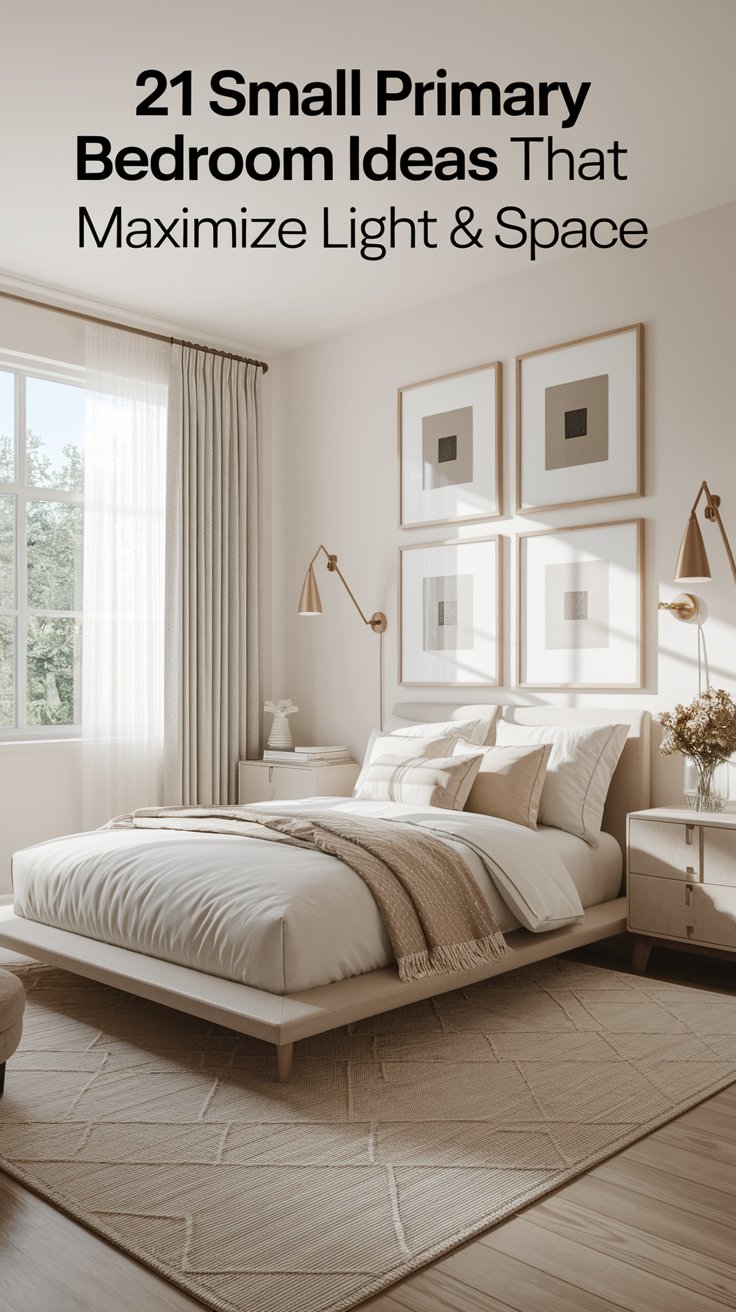
Smart Layout and Space Planning
1. Float the bed in a corner to free up floor space
Positioning the bed against two walls instead of centering it opens up more walking space in the rest of the room. This is especially helpful in bedrooms that are closer to a square shape than rectangular.
Why it works:
- Clears more floor space for storage or movement
- Allows for a cozier sleeping nook
- Ideal for rooms with only one usable wall
Add a sconce or small shelf on one side to keep things functional.
2. Use wall-mounted nightstands or shelves
Instead of traditional bedside tables, install floating shelves or small wall-mounted drawers. This keeps the floor open and makes cleaning easier.
Wall-mounted options to try:
| Style | Benefits |
|---|---|
| Floating wood shelf | Minimalist, easy to install |
| Small drawer shelf | Adds hidden storage |
| Narrow ledge shelf | Perfect for a book and lamp |
Keep cords tidy with wall clips or discreet cable channels.
3. Skip the footboard to open up walking space
Footboards add visual weight and take up precious inches. Opt for a headboard-only setup, or eliminate both for a clean, open look.
Better alternatives:
- Decorative pillows for layered interest
- A low-profile bench or ottoman for function
- An open basket at the foot of the bed for texture
This change alone can make a small room feel significantly larger.
4. Opt for a tall, narrow dresser instead of a wide one
Vertical furniture takes up less floor space and draws the eye upward, helping the room feel taller and more open.
Tall dresser benefits:
- Uses vertical space more efficiently
- Fits better in corners or beside doors
- Creates room for other essentials like a chair or mirror
Choose pieces with shallow drawers to avoid bulk.
5. Choose a layout with clear walking paths on one side only
You don’t need to access both sides of the bed. In very tight spaces, pushing one side of the bed against the wall allows for a wider walkway and space for other furniture.
Tips for this layout:
- Place the bed near a window for natural light
- Use the open side for entry, nightstand, or a reading lamp
- Add a small rug to define the walking area
This setup works especially well for solo sleepers or couples who don’t mind a shared exit.
Storage That Works Harder
6. Underbed storage drawers or lidded bins
The space under your bed is prime real estate. Instead of letting it collect dust, use it to store seasonal clothing, extra bedding, or out-of-season shoes.
Best underbed storage options:
| Storage Type | Best Use |
|---|---|
| Rolling drawers | Clothes, shoes, linens |
| Lidded plastic bins | Seasonal storage, books, keepsakes |
| Canvas zipper bags | Extra pillows or blankets |
Make sure your bed has at least 12 inches of clearance to use this space effectively.
7. Built-in or recessed wall shelving
Built-in shelving creates a custom look and adds vertical storage without taking up valuable floor area. Recessed shelves work especially well in older homes or spaces with deep walls.
Where to install shelving:
- Above the bed as a headboard replacement
- Beside the closet to store accessories
- Along unused corners for books or baskets
Keep shelves simple and color-coordinated to avoid visual clutter.
8. Use the back of the door for hanging storage
A behind-the-door organizer is perfect for shoes, accessories, or even folded sweaters. It’s a space that often goes unused but holds a lot of potential.
Ideas for door organizers:
- Hanging canvas shoe racks
- Over-the-door hooks for hats, bags, or robes
- Multi-pocket organizers for undergarments or socks
Choose low-profile options that allow the door to open fully.
9. Replace closet doors with curtains
Swinging closet doors take up space when open. Replacing them with fabric curtains saves room and softens the overall look of the space.
Tips for curtain closets:
- Choose neutral or textured fabrics like linen or cotton
- Use tension rods or ceiling-mounted tracks for clean installation
- Add tiebacks to keep things neat during the day
This is also a great way to make a small closet feel larger and more accessible.
10. Choose a bed with built-in storage
If you’re buying a new bed, look for one with built-in drawers, lift-up platforms, or cubbies. This is ideal in rooms where there’s no space for a separate dresser.
What to look for:
| Bed Feature | Ideal For |
|---|---|
| Drawer base | Clothing, linens |
| Lift-up platform | Large or seldom-used items |
| Cubby-style frame | Shoes, baskets, or decor |
This solution combines form and function without adding clutter.
Design Tricks to Visually Enlarge the Room
11. Stick to a soft, light color palette
Light colors reflect more light and make small spaces feel open and airy. Pale shades also create a calming atmosphere, perfect for a bedroom.
Best colors for small bedrooms:
| Color Family | Examples |
|---|---|
| Neutrals | Warm white, cream, light beige |
| Cool tones | Soft gray, pale blue, sage green |
| Warm tones | Dusty rose, muted terracotta |
Paint the walls, ceiling, and trim in the same tone for a seamless look.
12. Use vertical lines or stripes to draw the eye upward
Vertical elements help create the illusion of height, which is especially helpful in rooms with lower ceilings.
Ideas to add vertical lines:
- Vertical shiplap or beadboard paneling
- Floor-length curtains hung high
- Striped wallpaper in subtle tones
- A tall bookshelf or dresser
Avoid busy horizontal lines that make the space feel wider but shorter.
13. Hang floor-to-ceiling curtains to make windows feel bigger
Curtains that extend from the ceiling to the floor make windows feel taller and rooms look grander. Even if your windows are small, this trick visually stretches the wall.
Curtain tips:
- Hang the rod at least 6–8 inches above the window frame
- Choose light, breathable fabrics like linen or voile
- Match curtain color to the wall for a cohesive look
Use curtain rods that extend slightly beyond the window frame to widen the effect.
14. Add mirrors to reflect light and create depth
Mirrors are one of the simplest ways to make a space feel larger. They reflect both light and the surrounding room, doubling the visual area.
Where to place mirrors:
| Mirror Placement | Effect Created |
|---|---|
| Across from a window | Amplifies natural light |
| Above a dresser | Opens up the central space |
| Behind a lamp | Adds sparkle and dimension |
Choose mirrors with minimal or slim frames to keep the look clean.
15. Choose a low-profile bed to add visual height to the ceiling
A bed that sits closer to the floor leaves more wall space above it, making the ceiling appear higher. This effect increases the sense of openness in tight quarters.
Low-profile bed ideas:
- Platform beds with no box spring
- Beds with simple wooden frames
- Headboards that are short or wall-mounted
Add tall bedside lamps or vertical artwork nearby to emphasize the vertical space even more.
Multifunctional and Minimalist Furniture
16. Use a desk or vanity as a nightstand
When every inch counts, your furniture should serve more than one purpose. A small desk or vanity can easily double as a nightstand while giving you a place to write, work, or get ready.
How to style it:
- Add a small table lamp and a mirror
- Use drawers for both bedside and office essentials
- Choose a piece with slim legs to keep it visually light
This solution works especially well in studio apartments or rooms without space for both furniture types.
17. Try foldable or nesting furniture for flexibility
Foldable chairs, nesting tables, or collapsible desks give you options without permanently taking up space. These pieces can be tucked away when not in use.
Space-saving furniture ideas:
| Type | Best Use |
|---|---|
| Nesting tables | Nightstands, side tables |
| Fold-down desk | Workstation or vanity |
| Stackable stools | Extra seating or footrests |
Look for neutral tones and clean lines to blend with the rest of the room.
18. Use a storage ottoman at the foot of the bed
A storage ottoman provides a place to sit, a surface to lay out clothes, and hidden storage inside. It’s one of the most useful multi-functional pieces you can add to a small bedroom.
What to store inside:
- Extra blankets or pillows
- Shoes or seasonal clothing
- Books, journals, or tech accessories
Choose an upholstered ottoman in a fabric that complements your bedding.
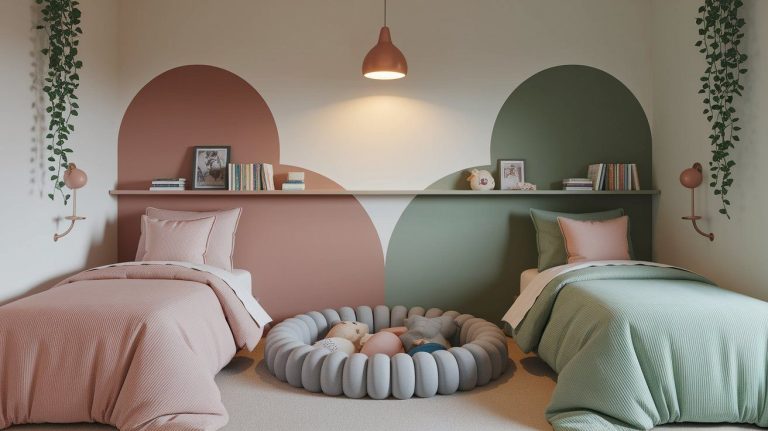
19. Skip the headboard in favor of a painted or wallpapered accent wall
A bulky headboard can take up space and make a room feel cramped. Creating an accent wall behind the bed adds style without adding volume.
Accent wall ideas:
- Painted arch or panel in a rich neutral tone
- Subtle wallpaper with vertical or natural patterns
- Reclaimed wood planks or peel-and-stick panels
Use lighting or simple artwork to complete the look.
20. Wall-mount lighting to clear nightstand surface space
Free up your nightstand by installing sconces or mounted reading lights. This not only saves space but adds a more polished, hotel-inspired look.
Wall-mounted lighting styles:
| Style | Best Room Vibe |
|---|---|
| Swing-arm sconces | Modern and functional |
| Plug-in sconces | Easy installation, renter-friendly |
| Minimalist LEDs | Sleek and space-saving |
Install them just above or slightly behind the headboard for optimal lighting.
Style Touches That Add Comfort Without Clutter
21. Stick to 2–3 colors for a cohesive, calming look
Limiting your color palette helps the space feel more open and less chaotic. Too many competing tones can make a small room feel even smaller.
Color palette suggestions:
| Style | Suggested Colors |
|---|---|
| Neutral + earth | Warm white, tan, olive green |
| Cool + calming | Light gray, sky blue, soft navy |
| Warm + soft | Cream, clay pink, dusty terracotta |
Use the same tones across walls, bedding, rugs, and curtains for a clean, unified space.
22. Layer textures instead of extra furniture
Adding too much furniture can quickly crowd a small bedroom. Instead, use texture to build depth and comfort.
Ways to layer texture:
- Knit or linen throw blankets
- Tufted or waffle weave pillows
- Woven baskets or rattan accents
- Soft, low-pile rugs underfoot
This technique keeps the room visually interesting without taking up space.
23. Use vertical artwork to draw attention up
Vertical decor naturally lifts the eye, making ceilings feel higher and rooms feel larger. It also helps balance low-profile beds and furniture.
Great options for vertical decor:
- Framed botanical prints hung in a column
- One tall mirror or fabric wall hanging
- Narrow shelves styled with books and plants
Avoid horizontal frames unless placed above the bed.
24. Keep surfaces clear and decorate with intent
A cluttered dresser or nightstand can make even a beautifully styled room feel cramped. Use trays, small boxes, or baskets to keep items grouped and contained.
Tips for intentional surface styling:
- Limit decor to 2–3 meaningful items
- Add one item with height (a lamp or vase)
- Use a tray to create visual order
Be selective. Every object should serve a purpose or spark joy.
25. Limit furniture to essentials and use a statement piece
Instead of trying to fit everything into your room, focus on the basics and add one standout element for personality.
Examples of a good statement piece:
| Piece Type | Effect It Creates |
|---|---|
| Bold light fixture | Draws the eye upward |
| Patterned headboard | Adds visual interest to one wall |
| Vintage chair or bench | Gives the room character and warmth |
Keeping the rest of the room minimal allows your feature piece to shine without making the space feel crowded.
Final Thought
A small primary bedroom doesn’t need to feel limiting. With the right mix of functionality, smart furniture choices, and thoughtful design, even the most compact spaces can feel spacious, restful, and beautiful. The secret is not to add more, but to add with intention. Every item should either serve a purpose, enhance comfort, or make the space feel more like you. Small truly can be stunning.
FAQs
What qualifies as a “small” primary bedroom?
Typically, anything under 130 square feet is considered small for a primary bedroom. Common layouts include 10×10 or 10×12 feet.
How can I make my small bedroom look more open?
Use light colors, mirrors, and minimal furniture. Focus on vertical design elements like tall curtains and slim dressers to create the illusion of more space.
Should I use a big bed in a small bedroom?
A queen-size bed often works well, but skip the bulky frame and headboard. Opt for a low-profile or platform style to keep the room feeling open.
What’s the best way to add storage without overcrowding?
Use underbed storage, vertical shelving, and multi-purpose furniture like ottomans and wall-mounted desks. Avoid furniture that blocks walking paths.
Related Articles:
- 27 Brilliant Small Bedroom Ideas for Kids That Maximize Every Inch
- 21 Brilliant DIY Bedroom Ideas for Small Rooms That Maximize Every Inch
- 16+ Genius Guest Bedroom Hacks for Small Spaces (Your Guests Will Thank You)