27 Brilliant Small Bedroom Ideas for Kids That Maximize Every Inch
Designing a child’s bedroom in a tight space doesn’t mean sacrificing style or function. In fact, small bedrooms often lead to the most creative solutions, spaces where every inch works smarter and looks better.
Here are 27 clever, space-saving ideas that turn even the tiniest bedroom into a cozy, organized, and joyful retreat.
Space-Saving Layouts & Smart Zoning
1. Vertical Beds: Bunks, Lofts & More
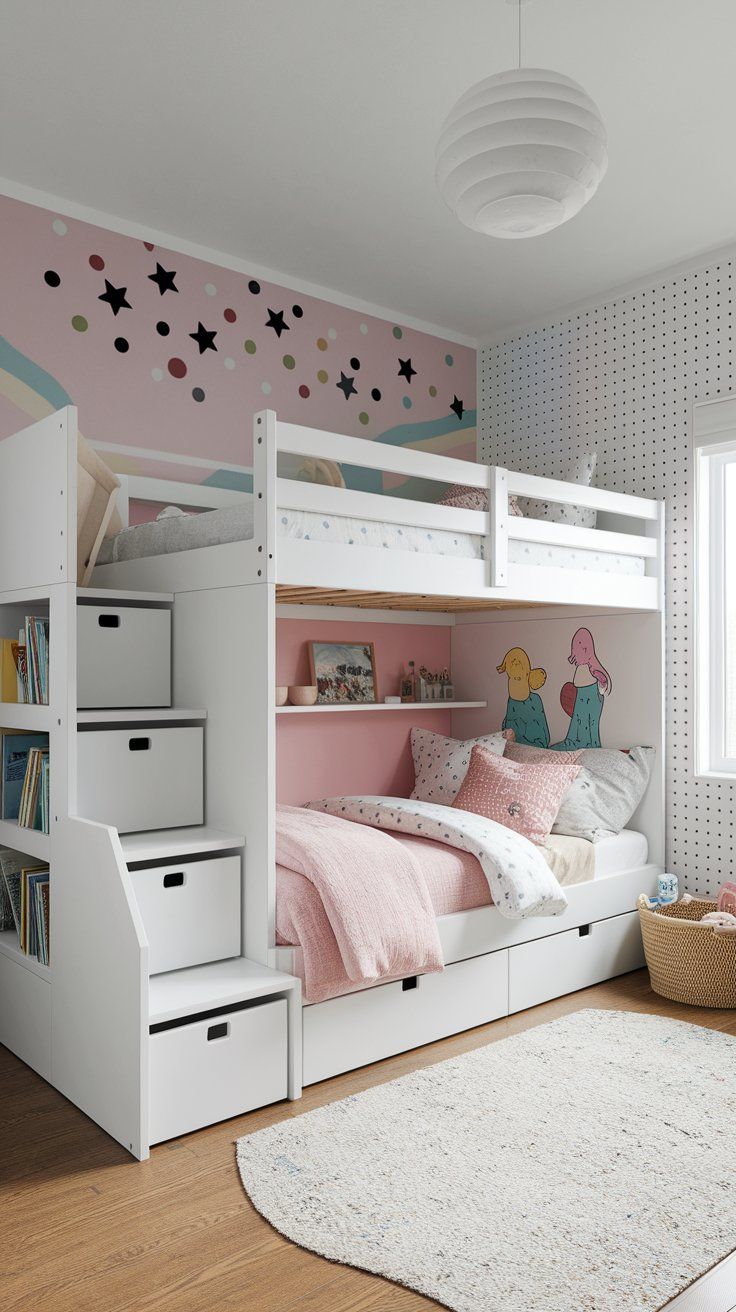
When floor space is limited, think vertically. Bunk beds are the go-to choice for shared rooms, while loft beds free up precious square footage underneath. That space can become a reading corner, a homework station, or even a toy zone.
Smart additions:
- Add a curtain under a loft bed to create a secret play fort
- Install wall-mounted lighting near the top bunk for bedtime reading
- Choose models with built-in storage stairs for added function
Lofts and bunks aren’t just fun for kids, they unlock double the space in half the footprint.
2. Built-in Storage Under the Bed
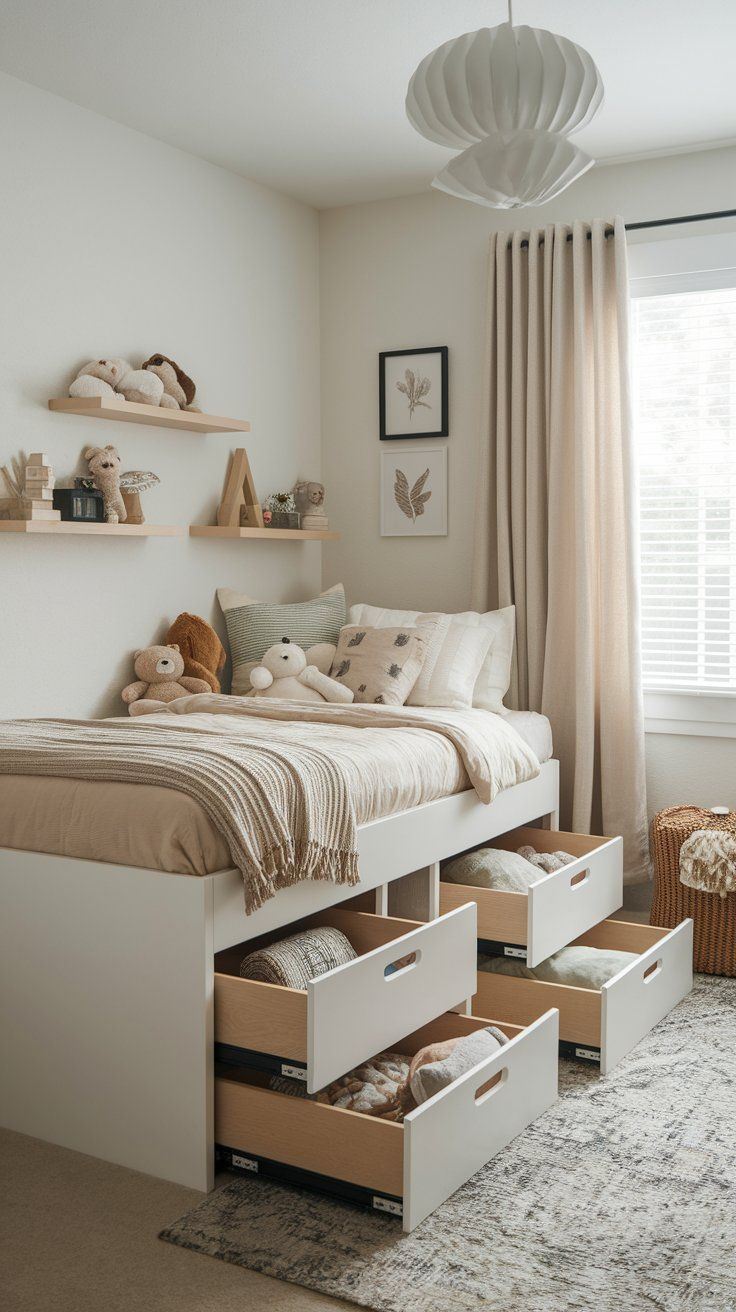
Skip the bed skirt and go straight for drawers, bins, or custom built-ins. Under-bed storage is ideal for seasonal clothes, extra bedding, or toys that don’t need to be on display.
Storage options that work:
- Rolling plastic bins with labels
- DIY drawers on wheels made from wooden crates
- Lift-up platform beds with hidden compartments
This space is often overlooked but offers massive storage potential, especially in rooms where every inch counts.
3. Corner Bed Layouts That Open Up the Room
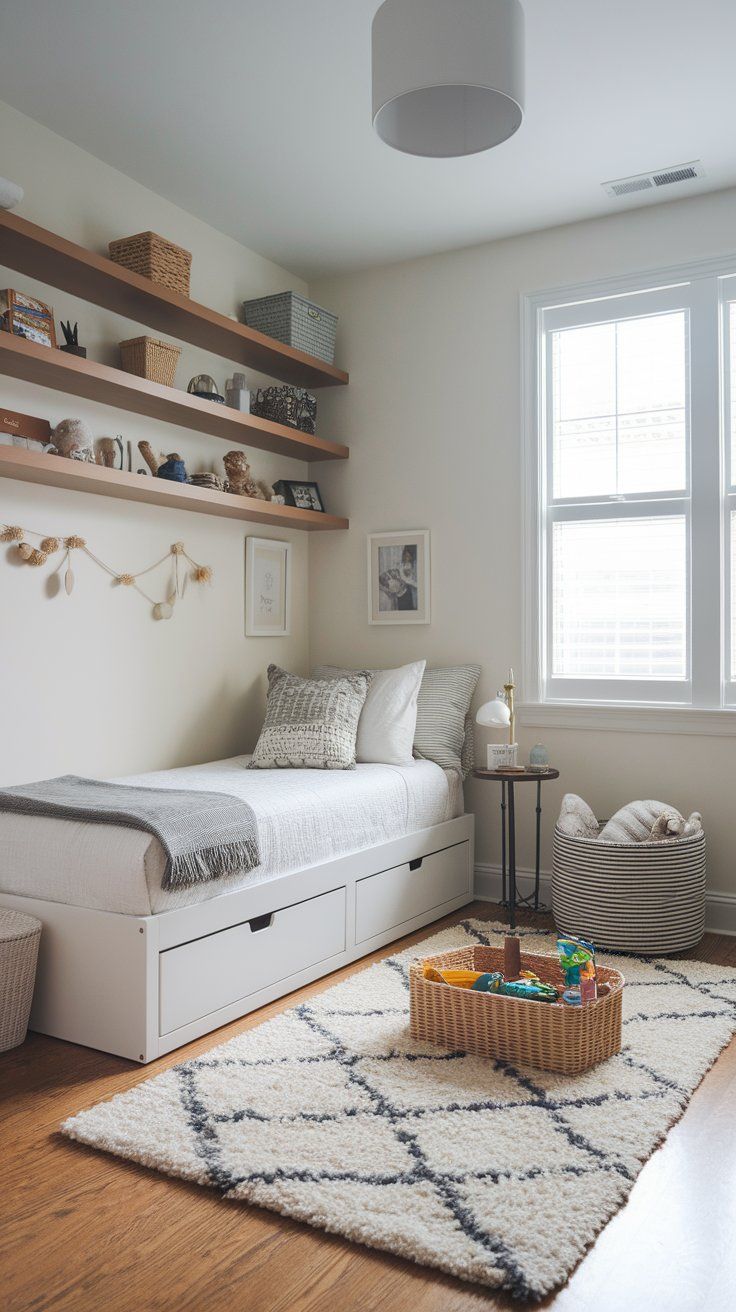
Instead of centering the bed, push it into a corner to open up more usable floor space. This works especially well in square or narrow rooms and creates a cozy sleeping nook.
Tips to make it work:
- Use wall sconces or floating nightstands to free up floor space
- Add a large cushion along the wall to mimic a built-in daybed
- Incorporate a gallery wall above the bed for height and color
This layout also leaves room for small play rugs, desks, or toy bins in the rest of the room.
4. Shared Room Divider Ideas That Don’t Shrink the Space
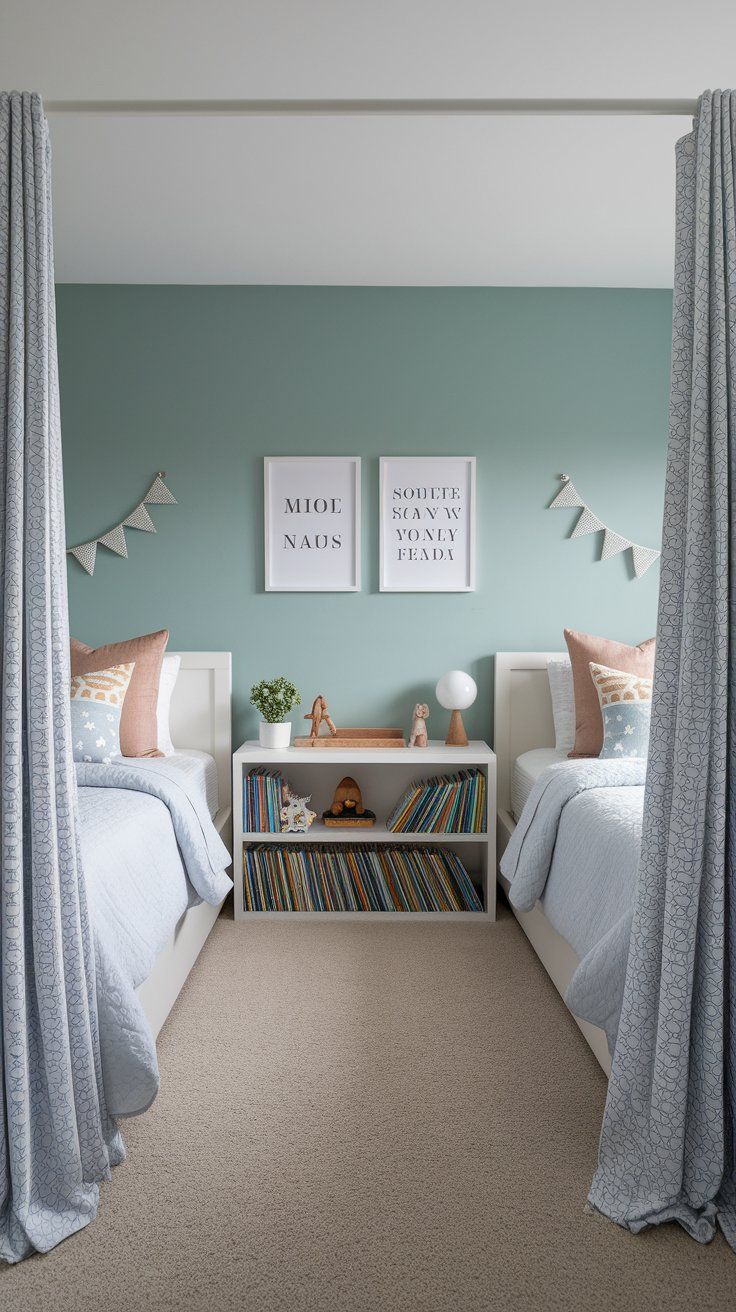
If two kids share a room, giving each their own “zone” makes a big difference in how the space feels. Use low dividers or curtains to create a sense of separation without cutting off light or airflow.
Creative ideas:
- Use a bookshelf as a divider between beds
- Hang a curtain from the ceiling for privacy
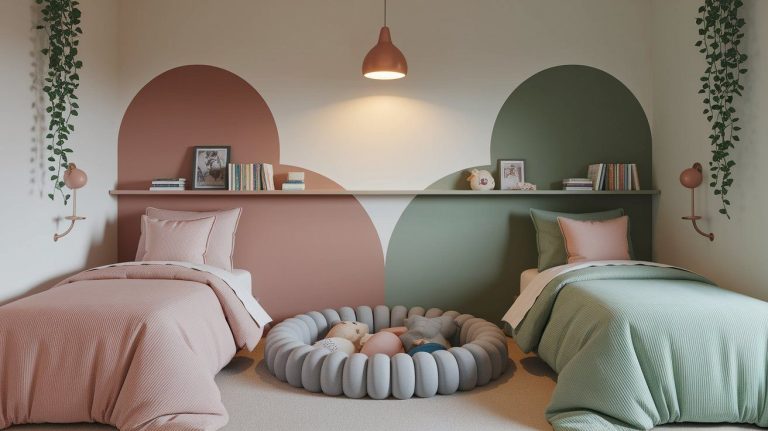
- Paint a visual border on the wall to define zones
Keeping zones personal yet open can help reduce sibling squabbles and encourage independence.
5. Floor Beds for Toddlers in Tiny Rooms
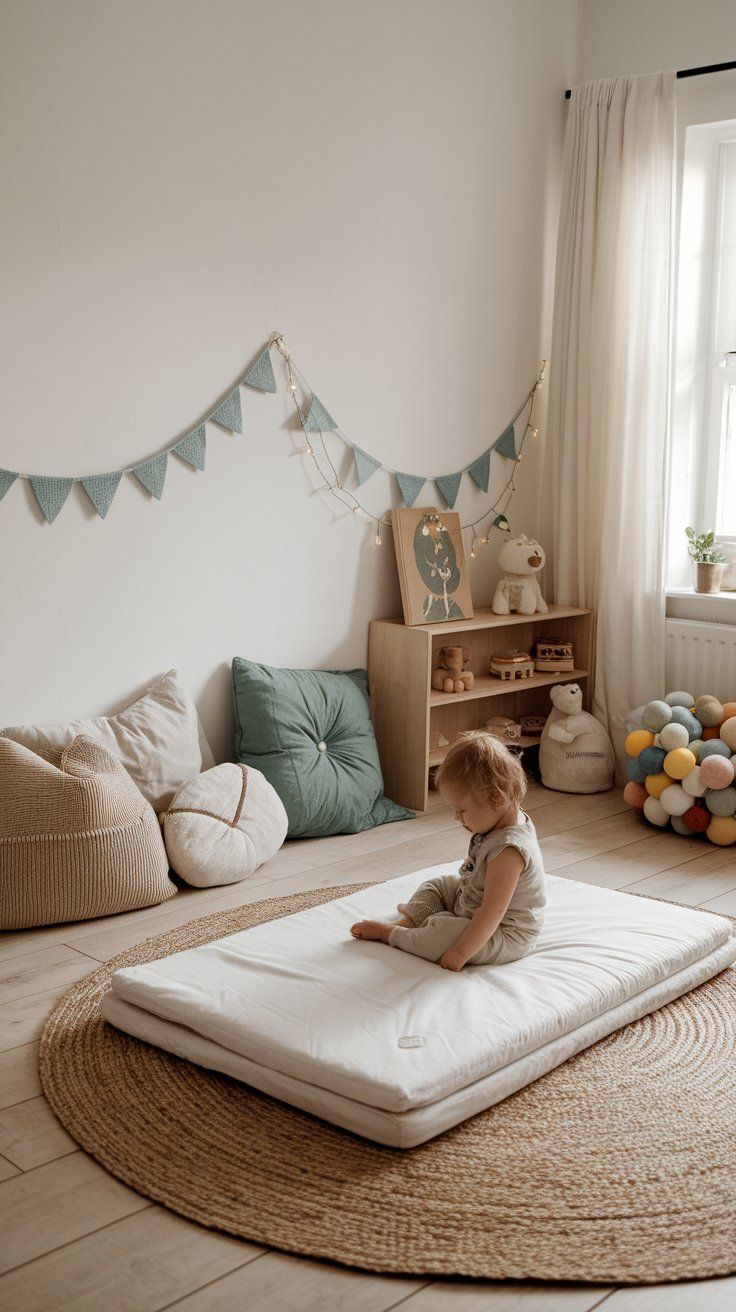
For the youngest kids, a floor bed (inspired by Montessori design) is both safe and space-conscious. No bulky frame, no high sides — just a comfy mattress and a world of low-level independence.
Why it works:
- Encourages kids to climb in and out on their own
- Easy to pair with wall art, fairy lights, or a small play tent
- Can be styled with pillows or bolsters to make it feel like a daybed
Pair it with low storage baskets or soft rugs to keep the room grounded and safe.
Clever Storage Solutions
Smart storage can transform even the tiniest bedroom into an organized, clutter-free haven. These clever ideas go beyond plastic bins and bulky dressers, using wall space, hidden compartments, and multi-use items to keep the room tidy and functional.
6. Use of Wall-Mounted Storage Bins & Buckets
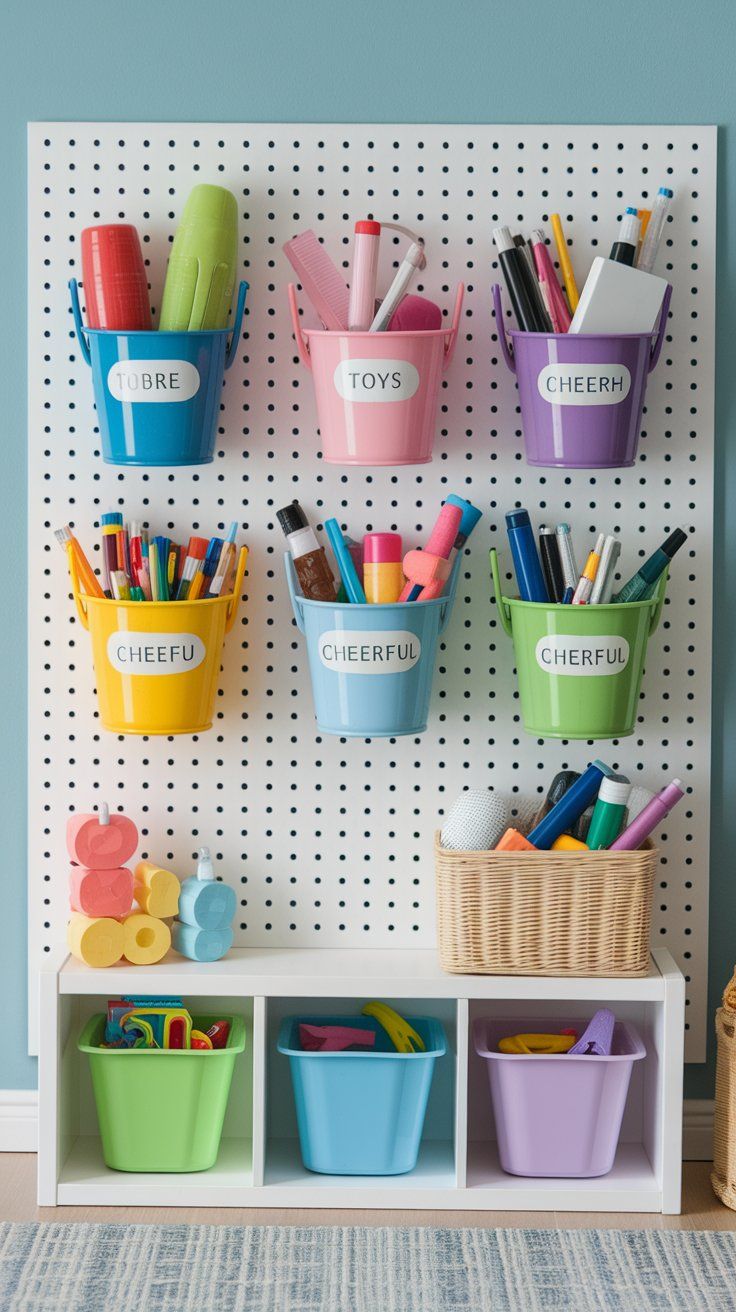
Free up floor space by taking storage to the walls. Mount colorful plastic or metal buckets to store small toys, art supplies, or socks. They’re easy for kids to access and look cute as part of the room’s decor.
Try this setup:
- Install a pegboard or slatted wall panel
- Attach hooks or pegs to hang storage buckets
- Group items by category and label each bin
This setup turns storage into wall art and encourages kids to put things back in the right spot.
7. Over-the-Door Organizers for Toys & Shoes
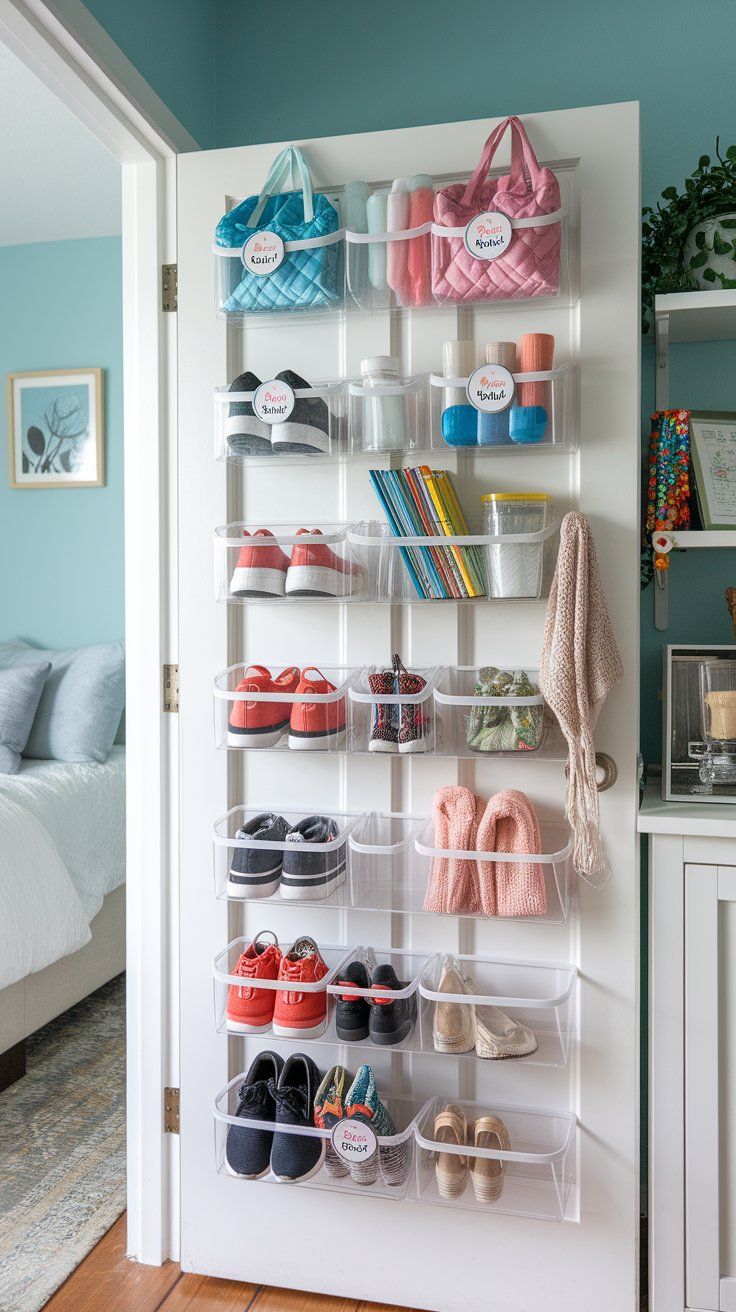
Don’t underestimate the back of the door. Hang a clear pocket organizer to hold everything from shoes and hair accessories to figurines and craft tools. It’s out of sight when the door is open and super easy to install.
Helpful uses:
- Group toys by type in each row
- Use one organizer for school supplies
- Add clip-on labels for young kids to identify contents
This trick works especially well in shared bedrooms where drawer space is limited.
8. Fold-Out Desks and Tables
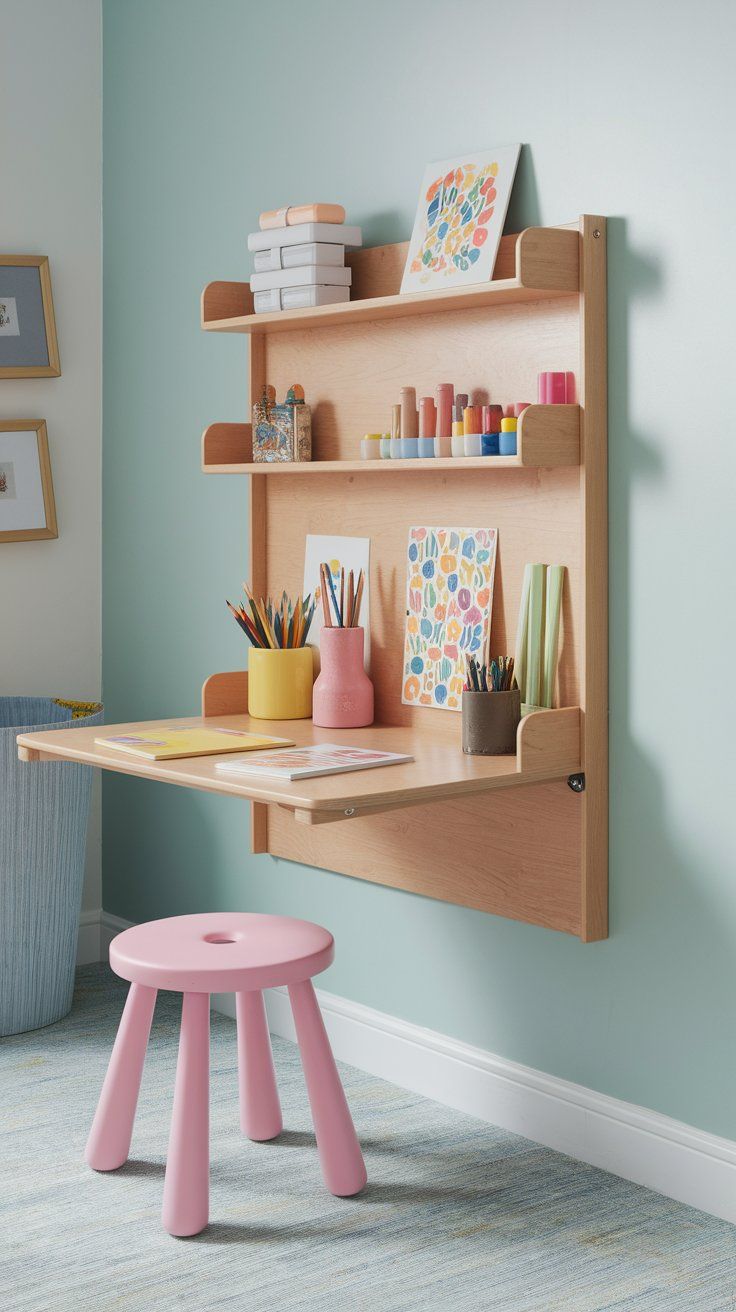
Fold-down desks or wall-mounted drop-leaf tables are perfect for homework or art without taking up permanent space. When not in use, simply fold them flat against the wall.
Ideal for:
- Homework stations in a narrow room
- Art or craft spaces without bulky furniture
- Kids who need a surface but not all the time
Pair it with a small stackable chair or stool that tucks neatly underneath.
9. Cube Shelving That Doubles as Seating
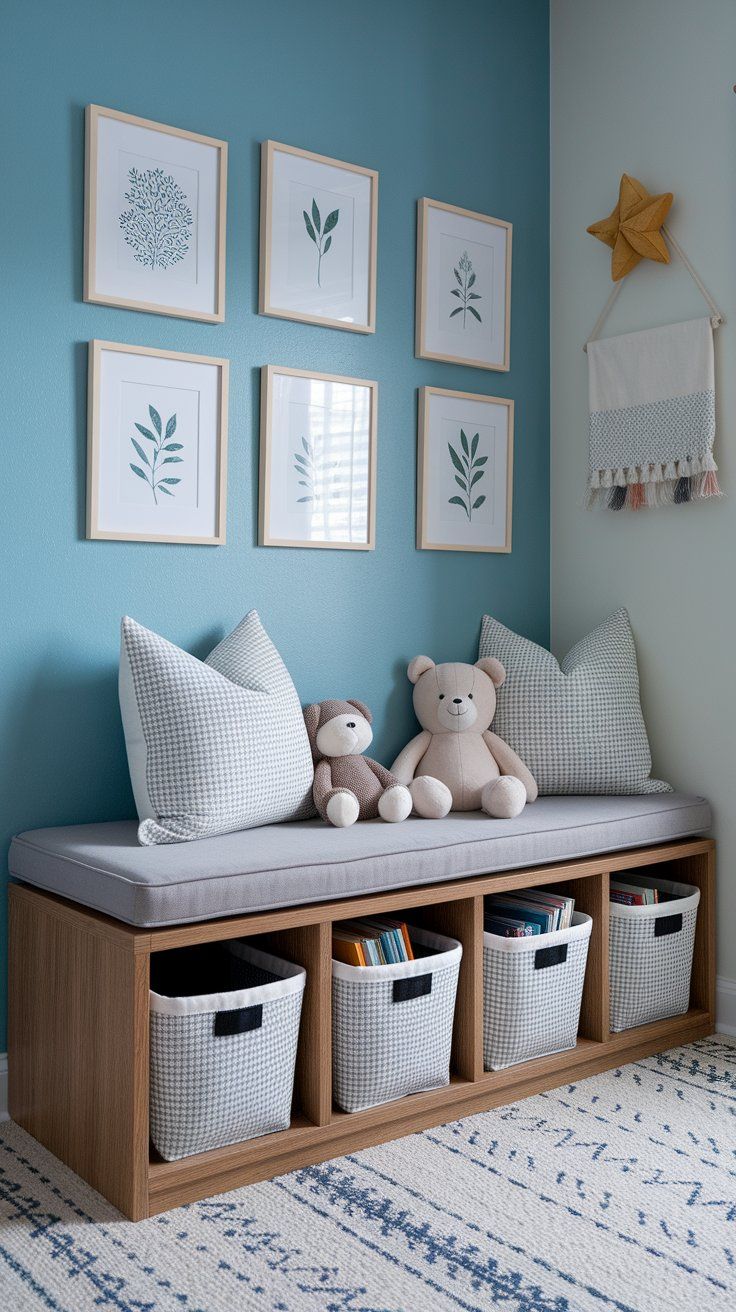
A cube organizer isn’t just a storage unit — it’s also a bench, nightstand, or toy chest, depending on how you use it. Lay it on its side, add a cushion, and you’ve got an instant reading nook with storage built in.
Practical options:
| Cube Size | Suggested Use | Storage Tip |
|---|---|---|
| 6-cube | Bench + toy storage | Use fabric bins inside each cube |
| 9-cube | Room divider | Store books, puzzles, and plushies |
| 12-cube | Along a wall | Style with plants, toys, and baskets |
It’s a budget-friendly furniture piece that checks more than one box.
10. DIY Window Seat with Hidden Storage
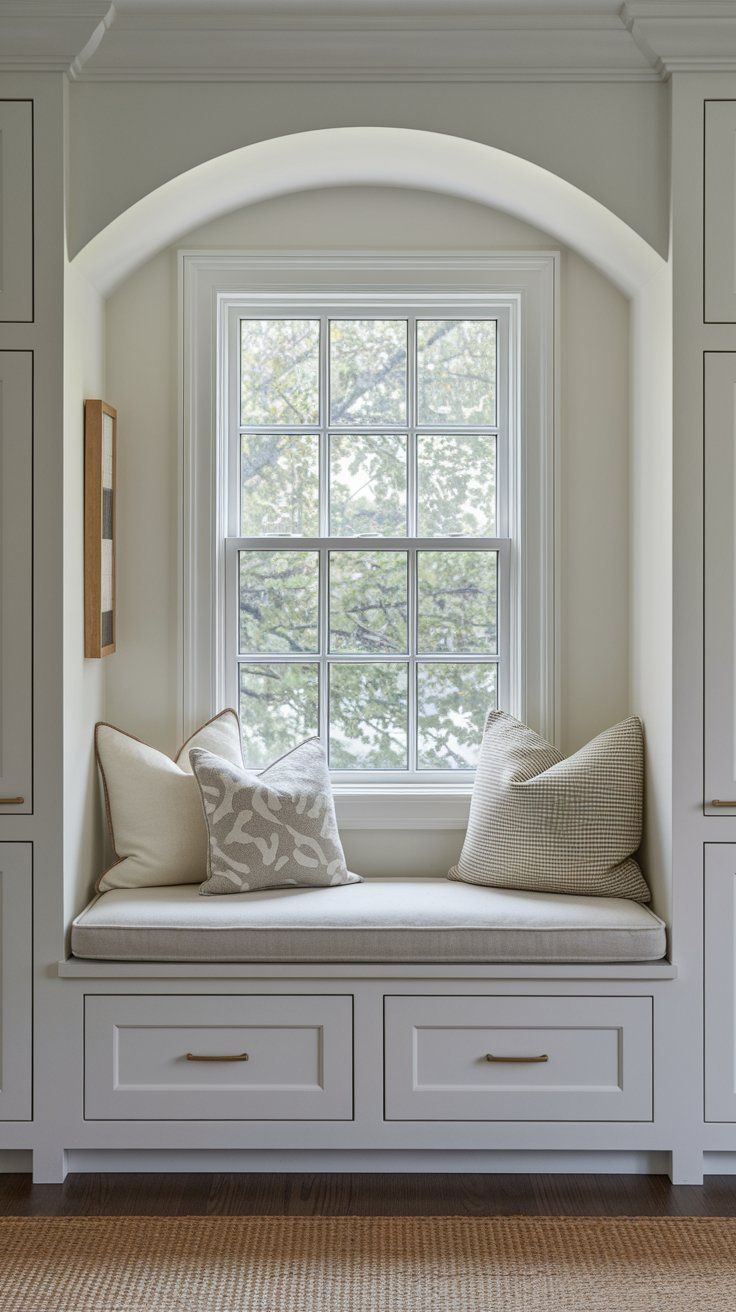
If your child’s room has a window alcove, turn it into a cozy reading nook and storage bench in one. Build a simple wooden box along the window, top it with a soft cushion, and add front-opening or lift-top storage.
Use it to store:
- Off-season clothes
- Large toys like dolls or trucks
- Blankets and bedding
The window seat adds charm and function, making it a favorite spot for quiet time.
Furniture That Works Twice as Hard
When space is tight, every piece of furniture should earn its place. Choosing items that offer more than one function helps keep the room open, clutter-free, and practical for growing kids.
11. Storage Ottomans & Poufs
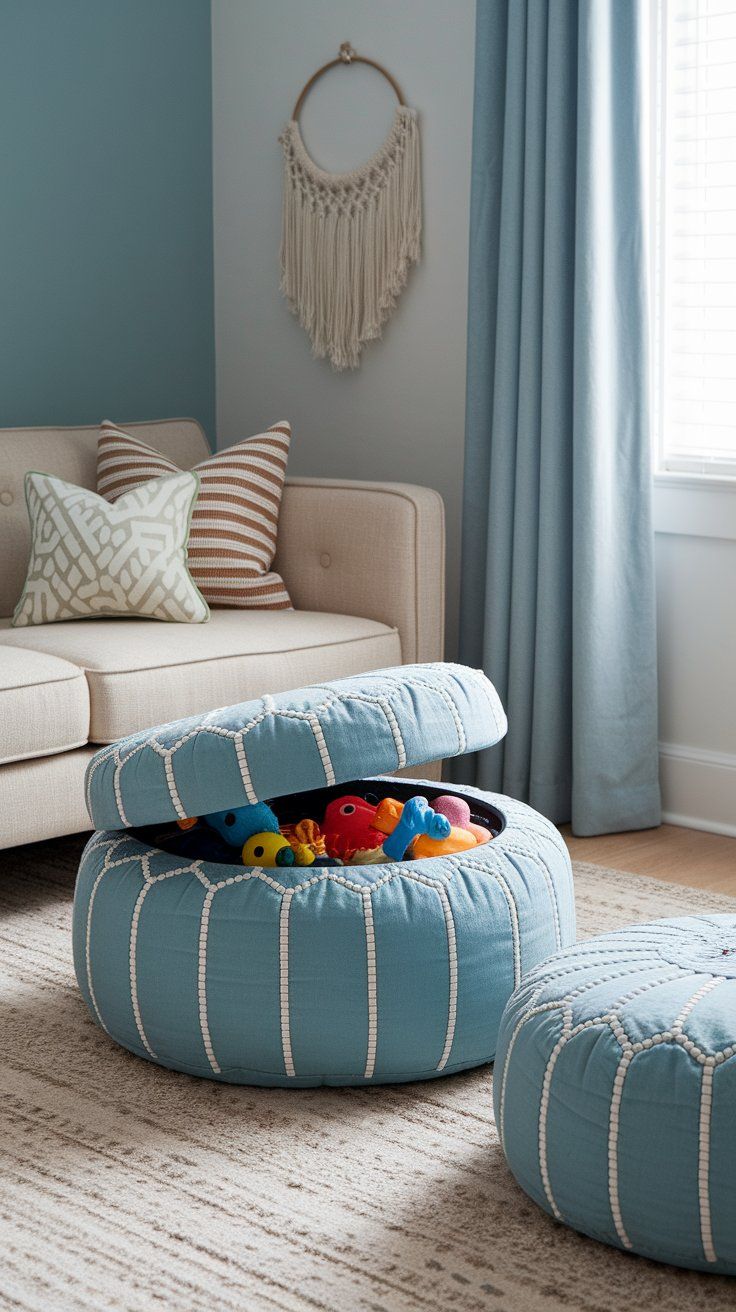
Instead of a traditional toy box or chair, use a soft ottoman or pouf that opens for storage. It adds seating and tucks toys or books out of sight.
How to use it well:
- Choose a fabric style that matches the room’s theme
- Fill it with stuffed animals, building blocks, or puzzles
- Place it at the foot of the bed for easy access
Kids can sit on it, play with it, or hide their favorite treasures inside.
12. Convertible Crib-to-Bed Designs
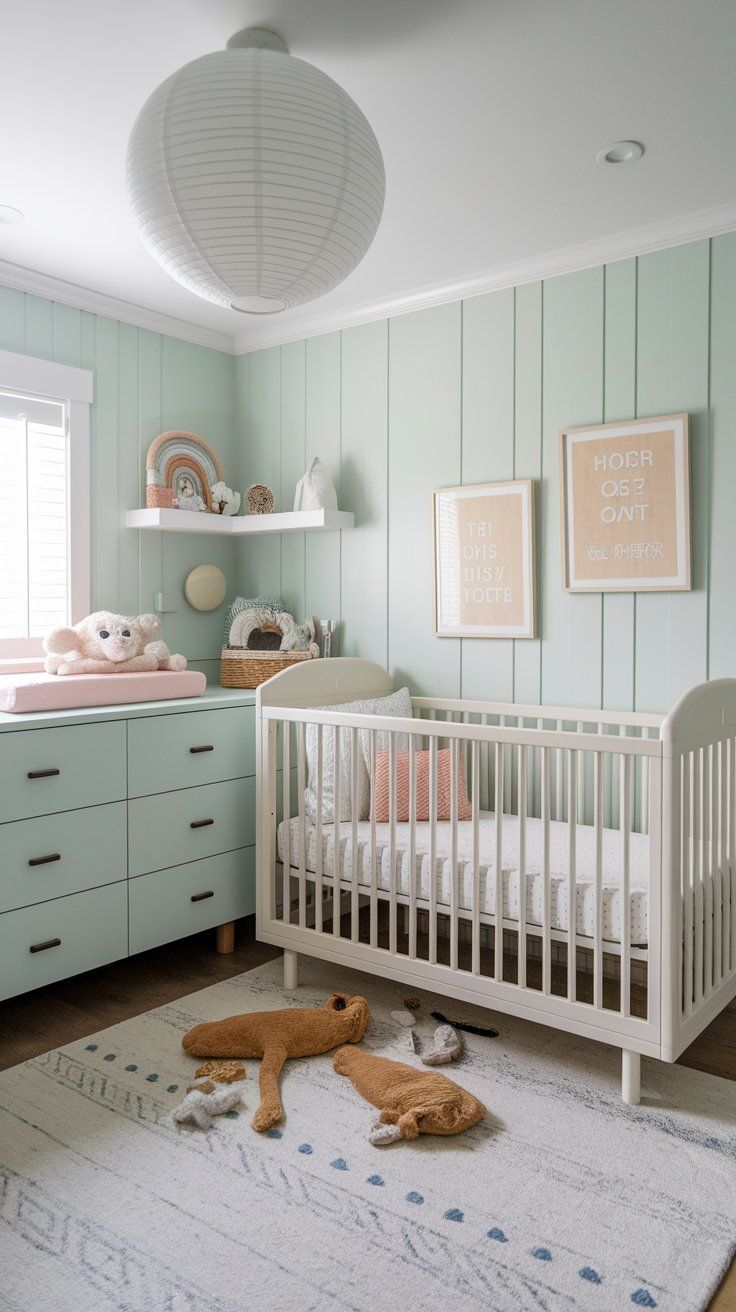
If you’re designing a nursery or toddler room, consider furniture that grows with your child. Many cribs convert into toddler beds, daybeds, or even full-size frames.
What to look for:
- Cribs with removable railings and extendable frames
- Adjustable mattress heights for longevity
- Styles with built-in drawers underneath
It’s a long-term investment that saves space and money as your child grows.
13. Murphy Bed or Foldable Mattresses
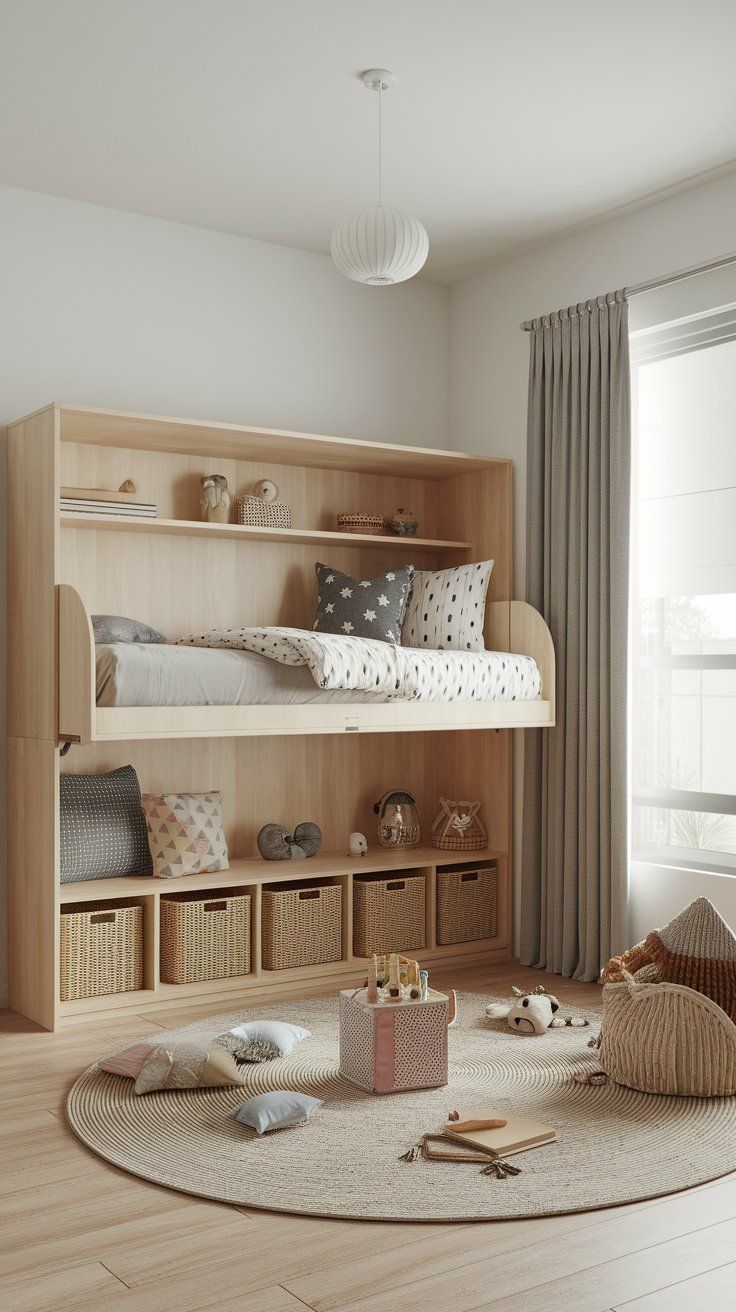
For multipurpose rooms or really tiny bedrooms, a foldable bed is a game changer. Wall-mounted Murphy beds or floor mattresses that roll up during the day let you reclaim floor space instantly.
Smart applications:
- Sleepover-friendly setups
- Bedrooms that double as playrooms
- Families with multiple kids in one space
Style the sleeping space with lightweight bedding and collapsible storage baskets for quick transitions.
14. Tiered Rolling Carts for Art or Toys
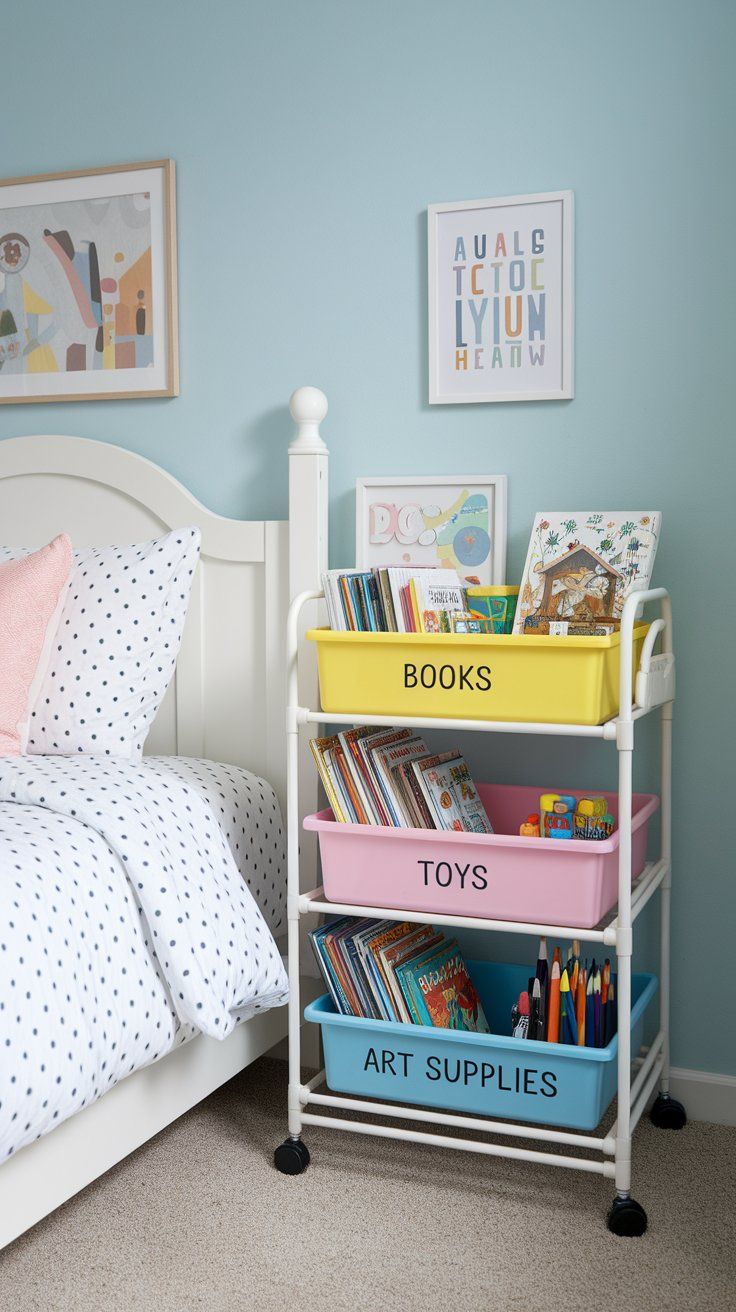
Rolling carts with multiple tiers can store craft supplies, books, or small toys — and they can move around as needed. Perfect for shared spaces or flexible routines.
Cart styling tips:
- Label each tier by use (coloring, stickers, LEGOs)
- Roll it next to the bed as a nightstand
- Use one tier for school essentials and another for toys
They’re compact, colorful, and super easy to repurpose as needs change.
15. Bedside Caddies Instead of Nightstands
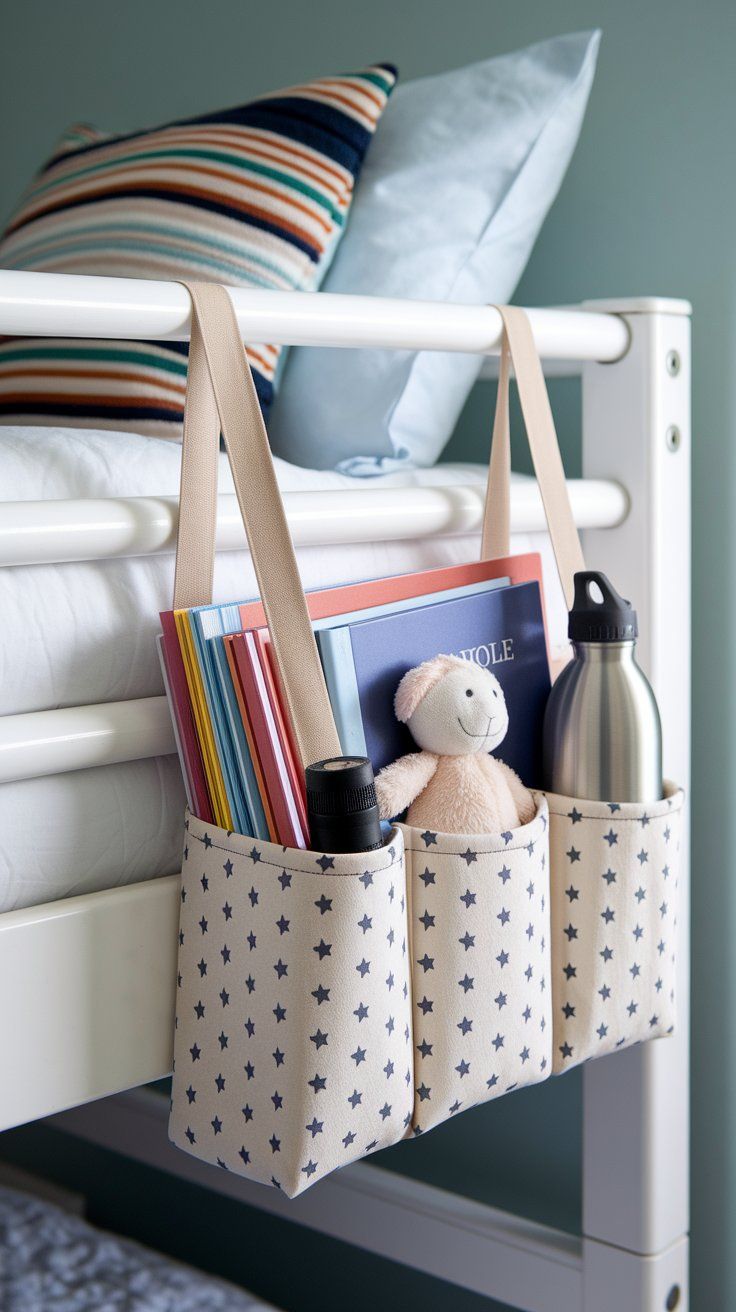
Swap out traditional nightstands for hanging bedside caddies. These fabric or pocketed organizers hook to the bed frame and store books, flashlights, water bottles, and stuffed animals.
Why it works:
- Keeps nighttime essentials within arm’s reach
- Saves floor space for play
- Ideal for bunk beds or loft beds where tables don’t fit
Look for options with washable material and multiple compartments to keep things tidy.
Visual Tricks to Make the Room Feel Bigger
Sometimes the best way to make a small room work is to trick the eye. By using light, layout, and a few clever styling techniques, you can help the space feel brighter, taller, and more open without knocking down a single wall.
16. Light, Neutral Color Palettes with Pops of Color
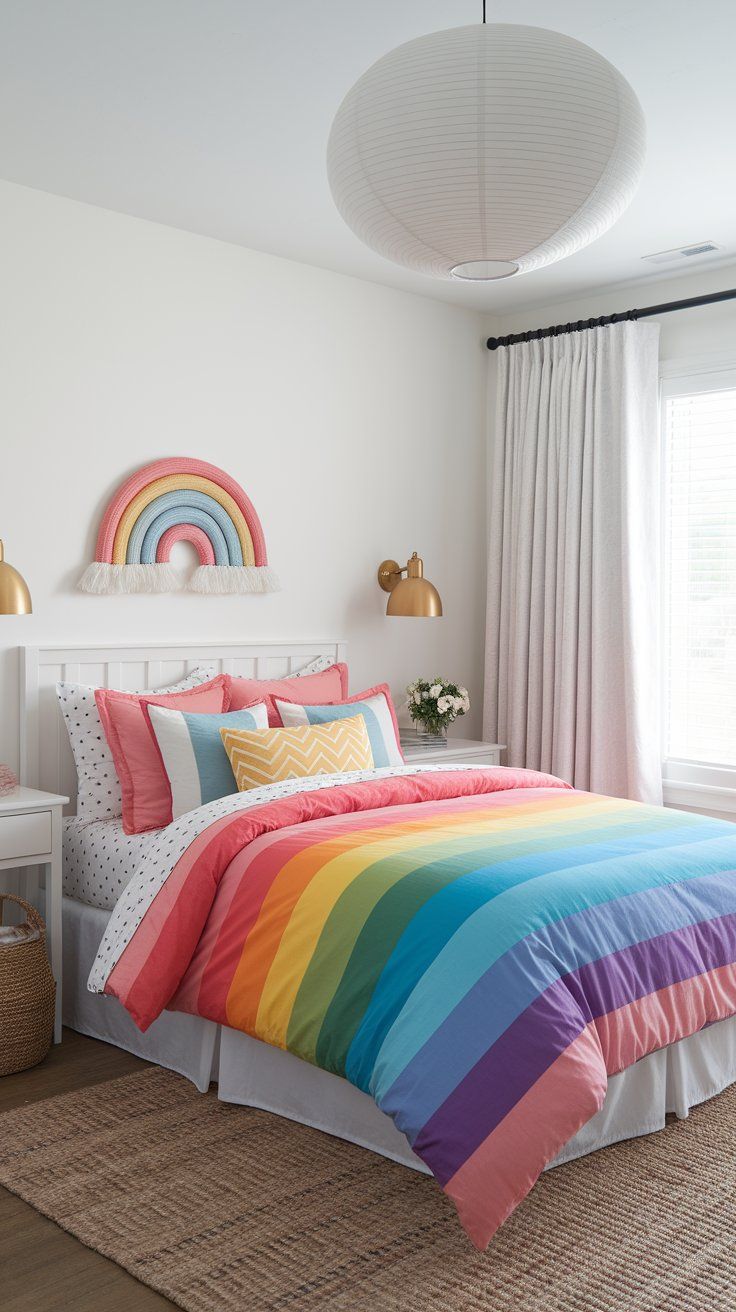
Pale wall colors like white, light gray, soft beige, or pastel tones reflect more light and visually expand the room. Add personality with bright, cheerful accents through pillows, art, or storage bins.
Helpful combos:
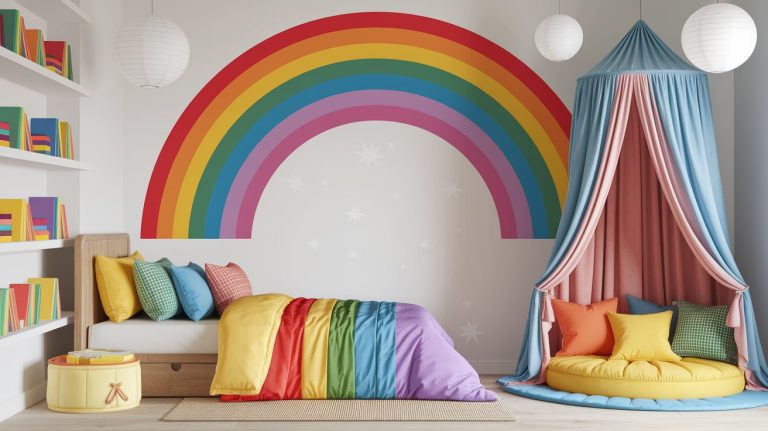
- White walls with rainbow bedding
- Soft mint paint with coral and yellow details
- Cream base layered with navy, mustard, or teal pops
Keeping the foundation neutral gives you room to experiment with colorful layers without making the space feel crowded.
17. Vertical Wall Stripes or Panels to Draw the Eye Upward
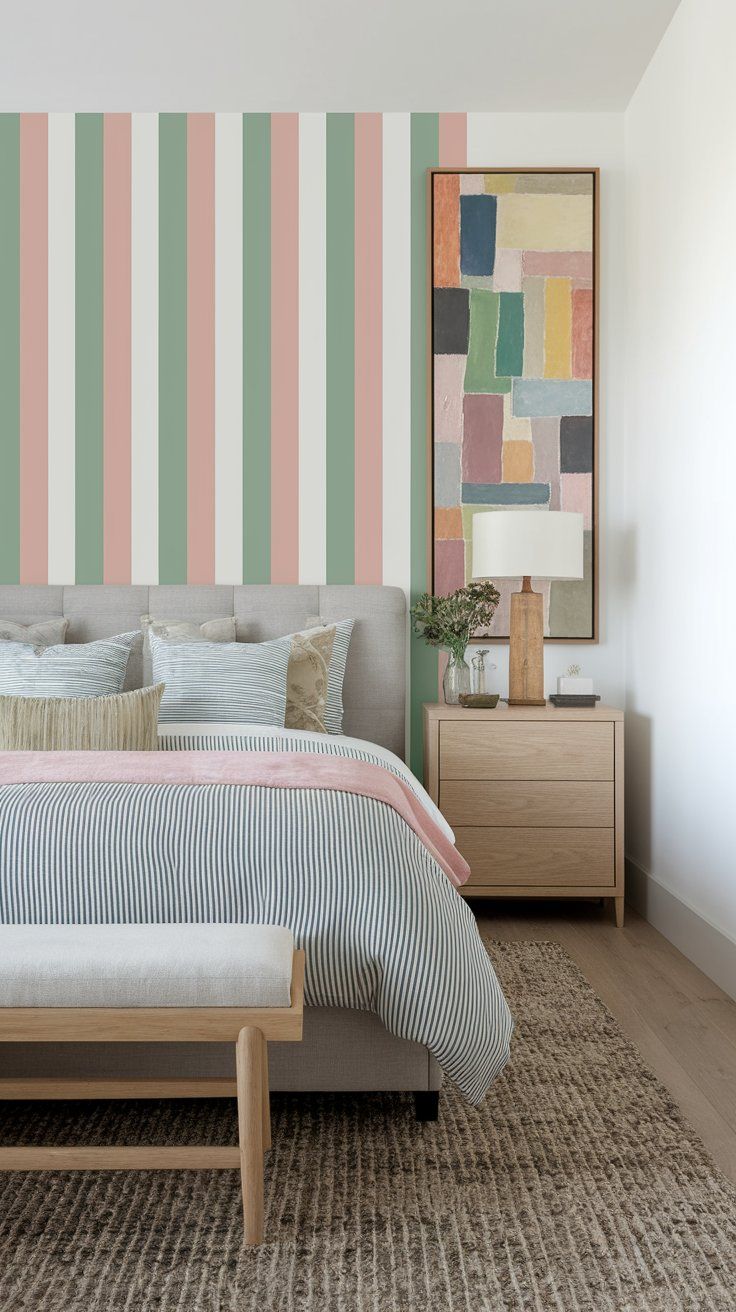
Vertical lines elongate the space and create the illusion of height. Use painted stripes, vertical paneling, or tall artwork to shift the focus upward.
How to apply this idea:
- Paint a single accent wall with stripes
- Use vertical shiplap or beadboard behind the bed
- Hang artwork in a column instead of side-by-side
This visual trick works especially well in low-ceilinged rooms.
18. Use of Mirrors for More Light and Depth
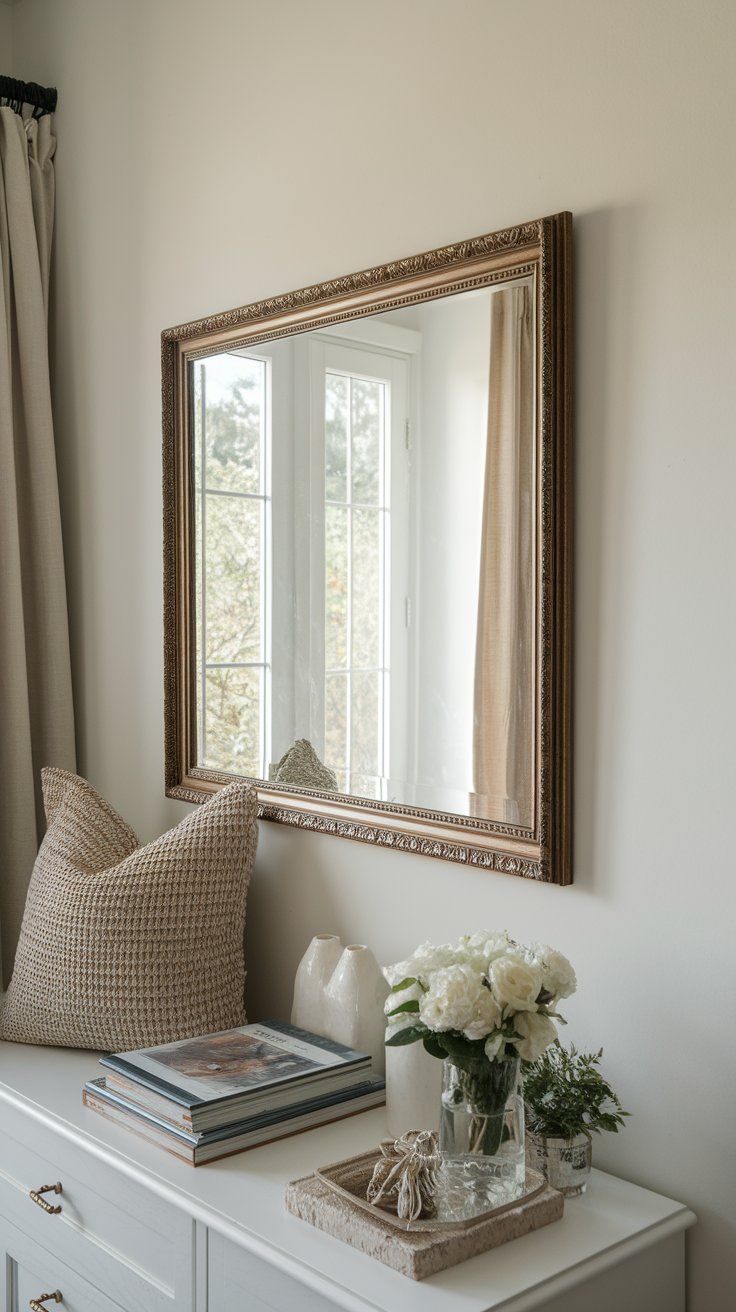
Mirrors reflect natural and artificial light, making any small room feel larger. Plus, kids love looking at themselves — so it’s both decorative and entertaining.
Mirror ideas:
- A framed mirror on the back of the door
- A tall standing mirror tucked in a corner
- A mirror gallery wall with fun shapes
Be sure to secure mirrors properly, especially in younger kids’ rooms, for safety.
19. Open Shelving Instead of Bulky Bookcases
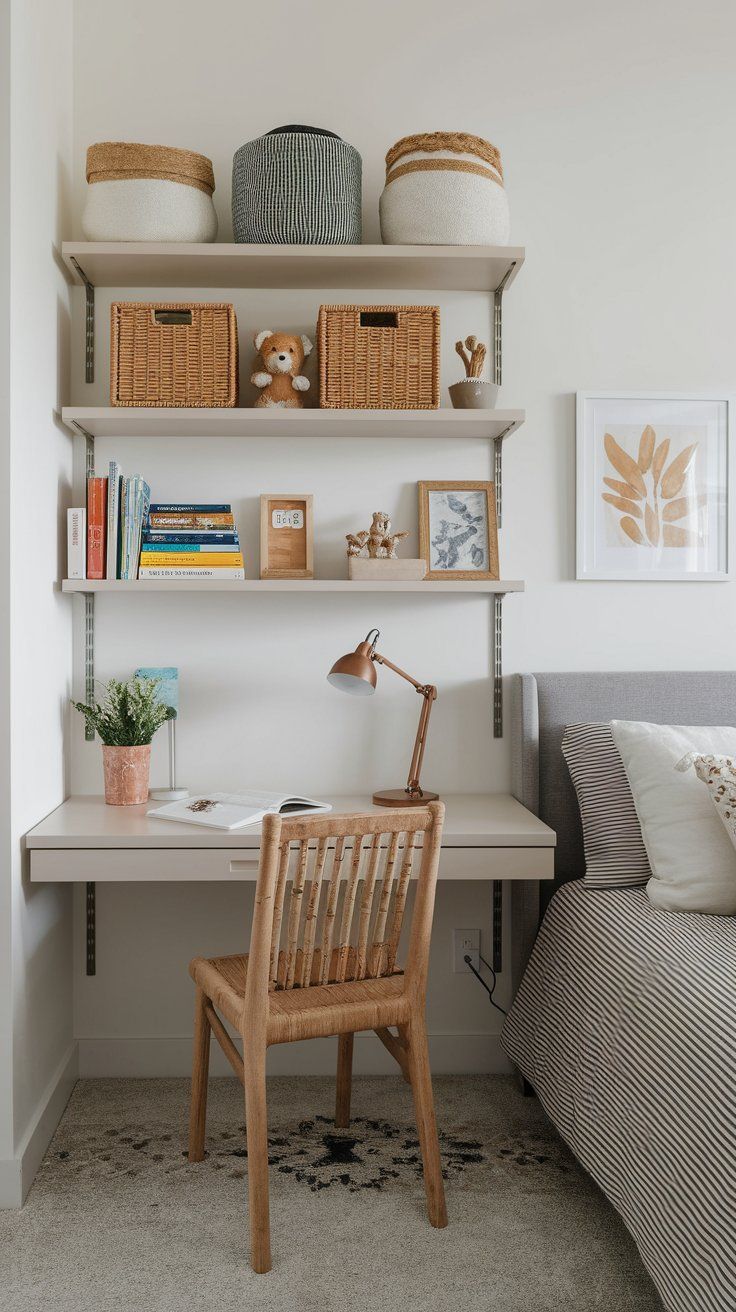
Closed furniture often makes a small room feel boxy. Opt for open shelving units, floating shelves, or wire baskets instead. These keep the room feeling airy and accessible.
Great spots for open storage:
- Above the bed or desk
- Along one side of the closet
- As corner shelves for displaying books or decor
Use matching storage bins or baskets to keep the look tidy and cohesive.
20. Floor-Length Curtains Hung High
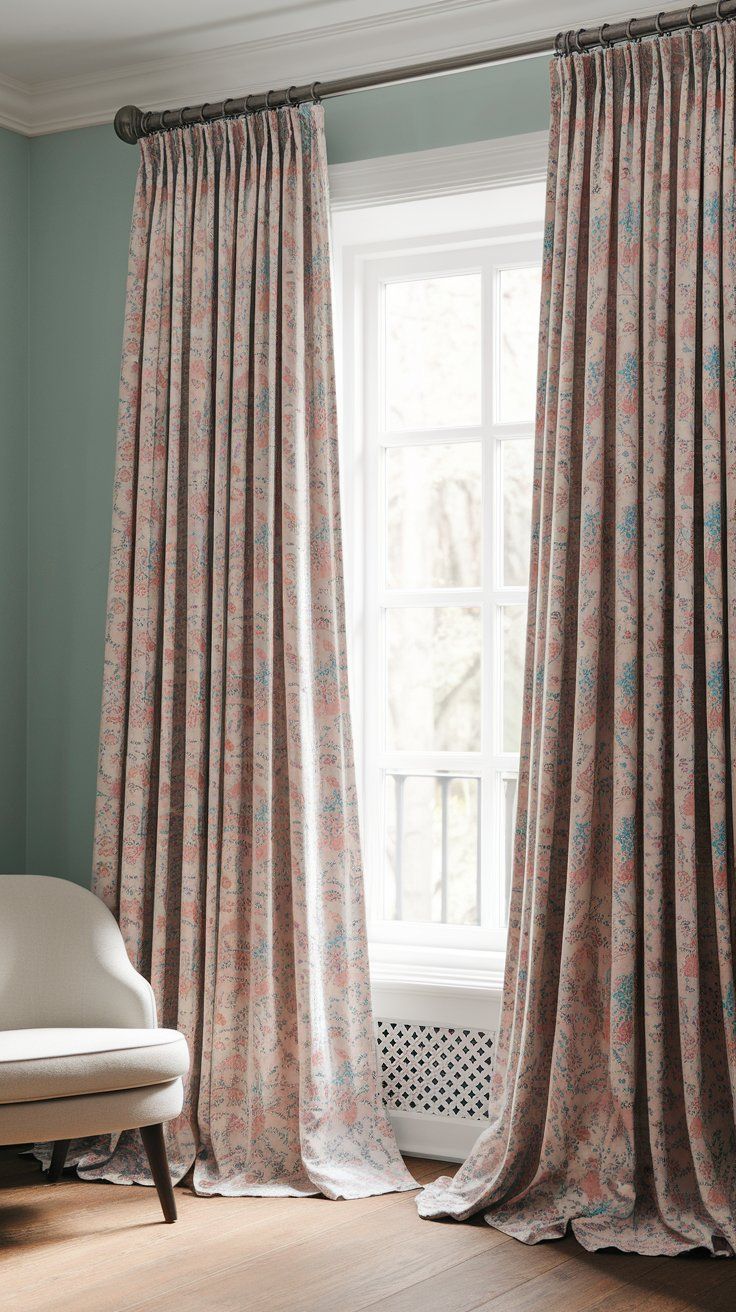
Hang your curtain rod closer to the ceiling instead of right above the window. This elongates the wall and makes the entire room feel taller. Use floor-length curtains even in a small space.
Why this works:
- Adds elegance without taking up real space
- Frames the window for better light flow
- Makes the wall feel much taller than it really is
Light, breezy curtain fabric also helps keep the room from feeling heavy or cramped.
Fun & Personality Without Clutter
Just because a room is small doesn’t mean it has to be boring. You can still add tons of charm and personality — as long as you keep the clutter under control. These creative ideas bring in fun and style without taking up too much space.
21. Wall Decals for Instant Style with No Bulk
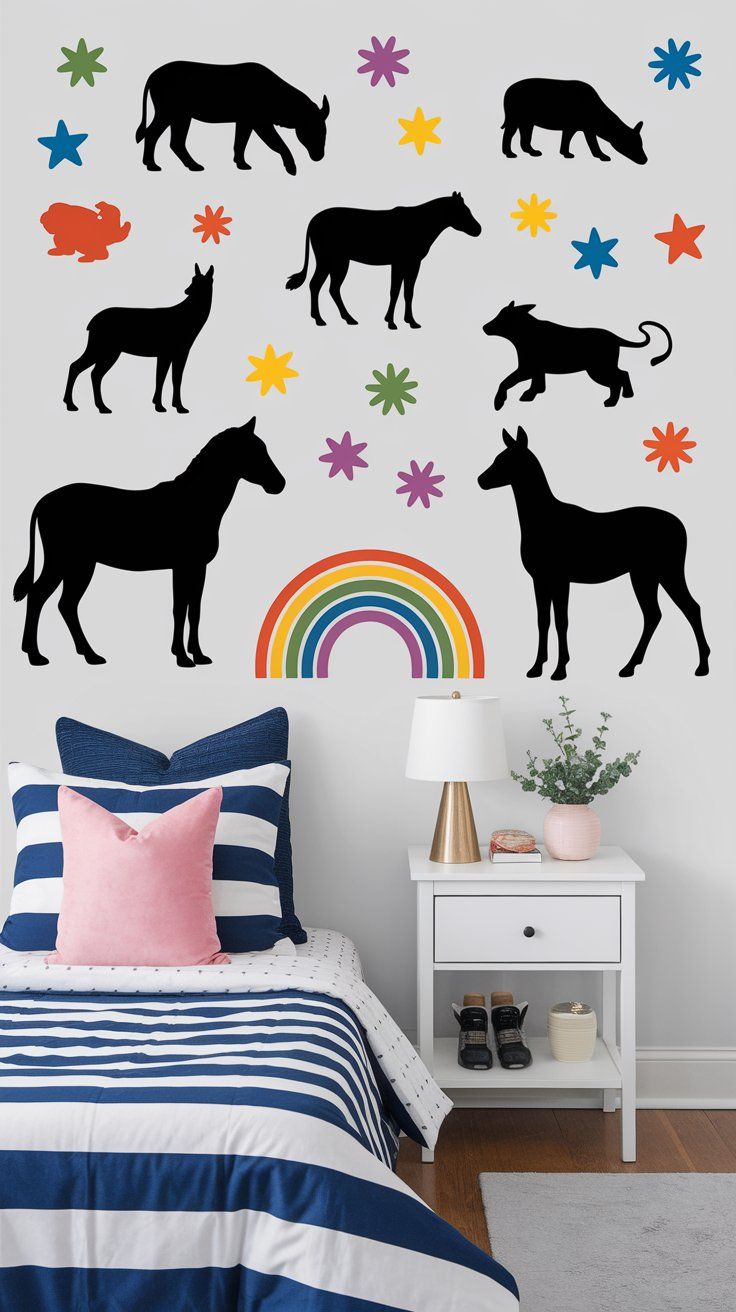
Wall decals are an easy way to add color, pattern, or a theme without needing shelves or bulky decor. From rainbows to space themes to animal silhouettes, they’re endlessly customizable and easy to remove when it’s time for a change.
Why they work:
- Flat to the wall, so they don’t take up space
- Affordable and renter-friendly
- Great for seasonal or evolving interests
Stick to one wall for a focal point, or scatter smaller decals around for playful touches.
22. Themed Corner Nooks: Reading, Art, or Lego
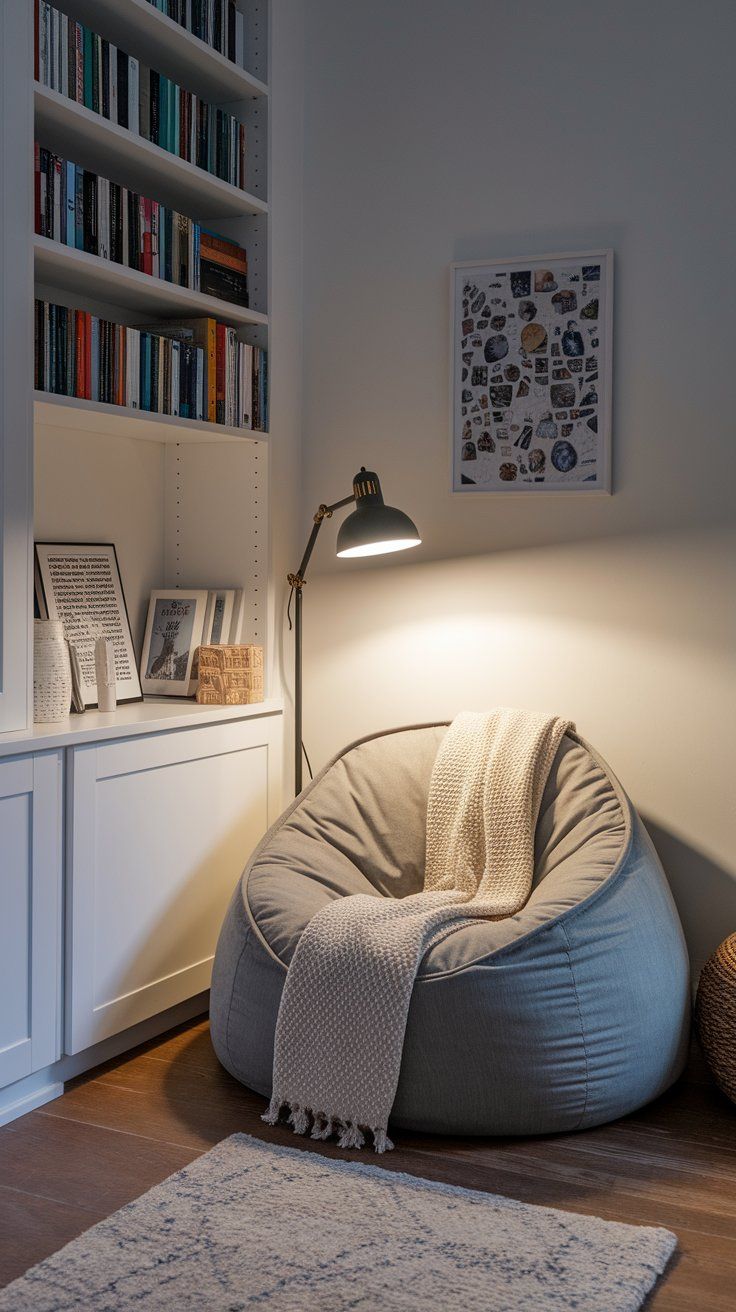
Use just one corner of the room to create a space tailored to your child’s interests. This keeps their hobbies organized and contained while giving them a special zone that feels personal.
Theme nook ideas:
- Reading nook: bean bag, clip-on light, small book ledge
- Art corner: easel or chalkboard, art supplies in wall bins
- Lego zone: small table, wall-mounted trays, color-coded bins
Keep it simple, low-profile, and easy to clean up after playtime.
23. Pegboards for Hanging Gear, Bags, and Decor
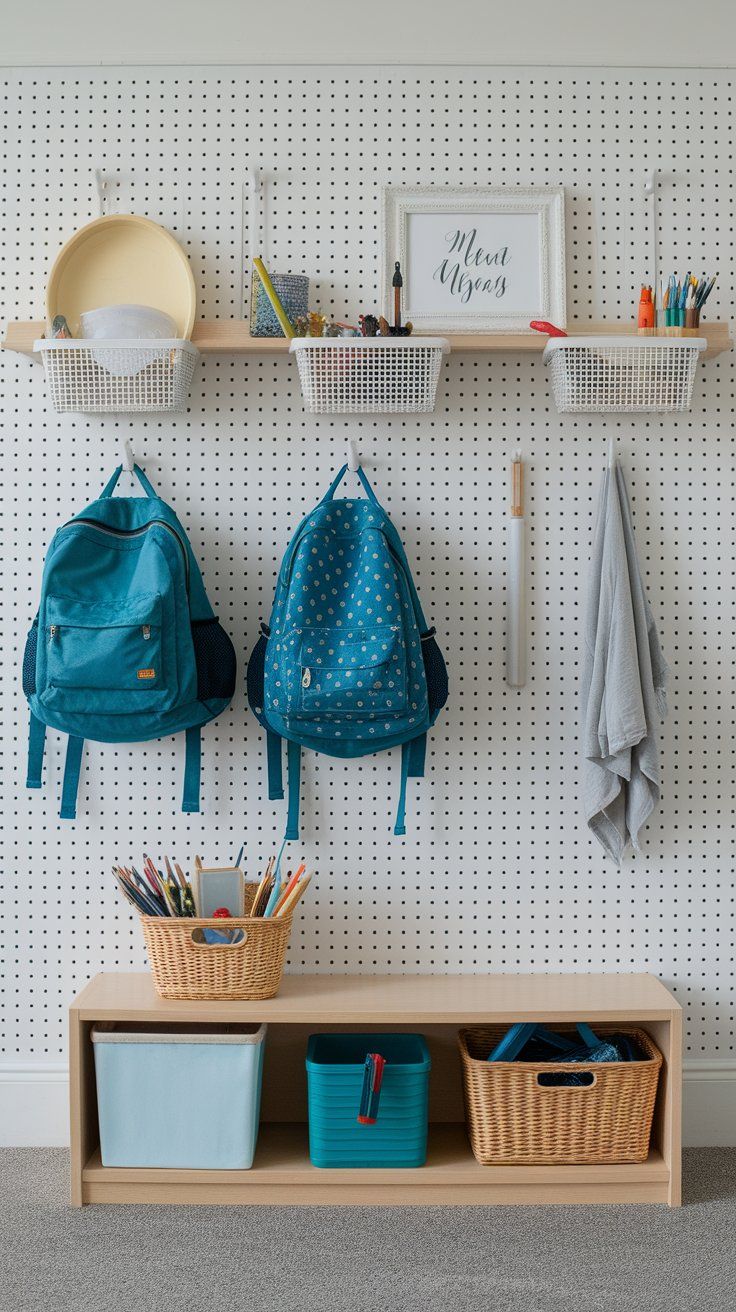
Pegboards are a small room’s best friend. They turn blank wall space into highly functional storage that can change as your child grows. Hooks, baskets, and small shelves can hold everything from hats to art supplies.
Pegboard layout ideas:
- A back-to-school setup with cubbies, calendars, and supply jars
- A craft zone with scissors, markers, and paper rolls
- A decor wall with hanging frames and plush animals
Paint the pegboard to match the wall or in a bright color for fun contrast.
24. Rotating Toy Display Shelf
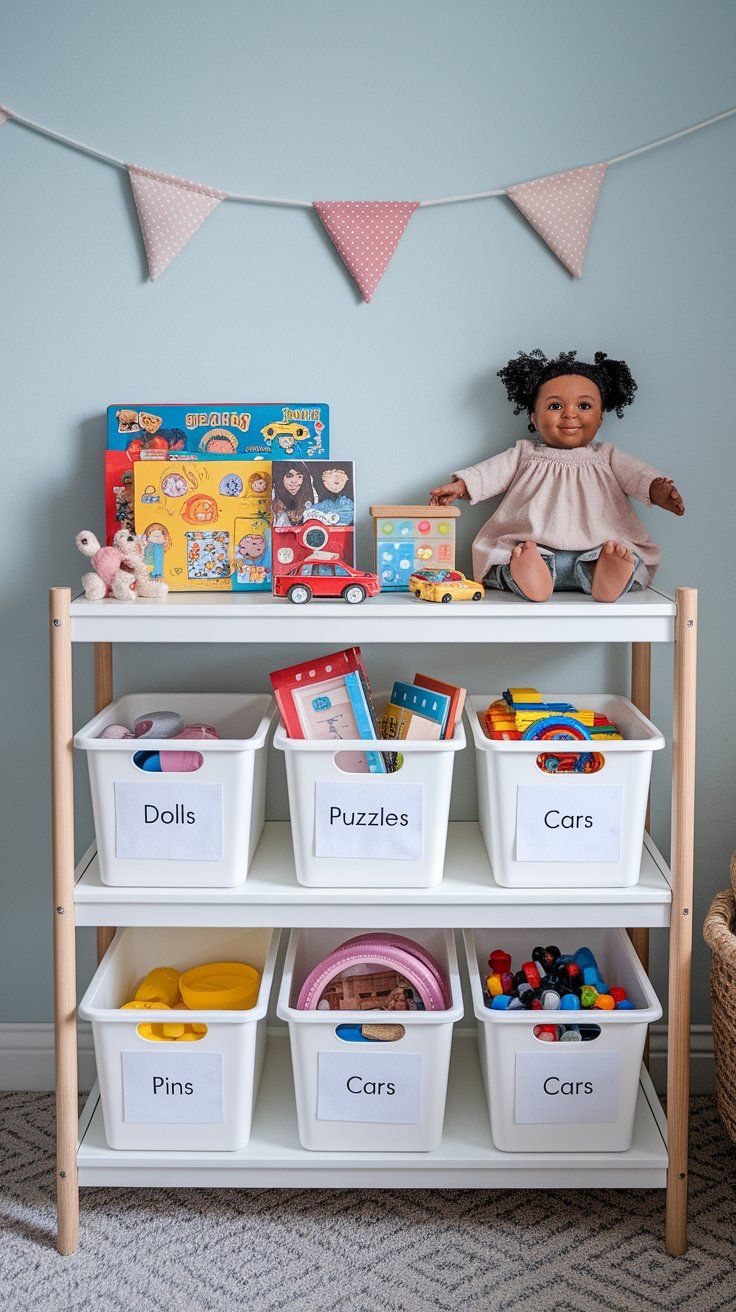
Instead of crowding shelves with every toy at once, set up a small rotating display. Keep most toys stored away and bring out a few favorites each week. This keeps the space tidy and makes old toys feel new again.
How to set it up:
- Use a 3-tiered shelf or small bookcase
- Organize by theme or category (dolls one week, cars the next)
- Store unused toys in labeled bins or baskets out of sight
This method helps control clutter and keeps kids more engaged during play.
25. A DIY Art Gallery Wall for Your Child’s Creations
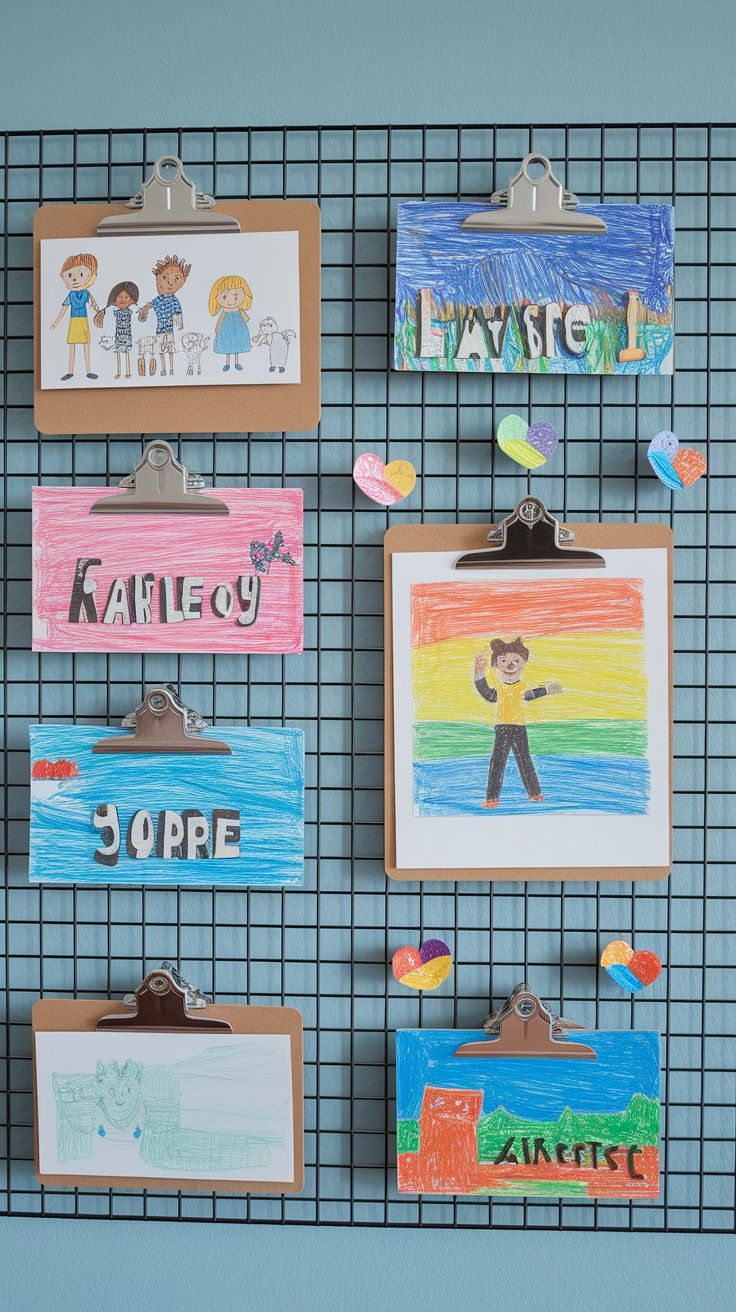
Showcase your child’s artwork with a dedicated gallery wall. It gives the room a burst of color and personal flair while letting you avoid piles of paper elsewhere in the house.
Easy ways to do it:
- Hang clipboards, frames, or a wire-and-clothespin system
- Rotate new art in and out as your child makes it
- Add nameplates or dates to track their creative journey
This turns your child into the star of the decor — and keeps the fridge clear.
Design That Grows with the Child
When you’re decorating a small bedroom, it helps to think long-term. Kids outgrow furniture, styles, and hobbies quickly, so building in flexibility from the start saves you both time and money down the road.
26. Modular Furniture That Can Be Reconfigured
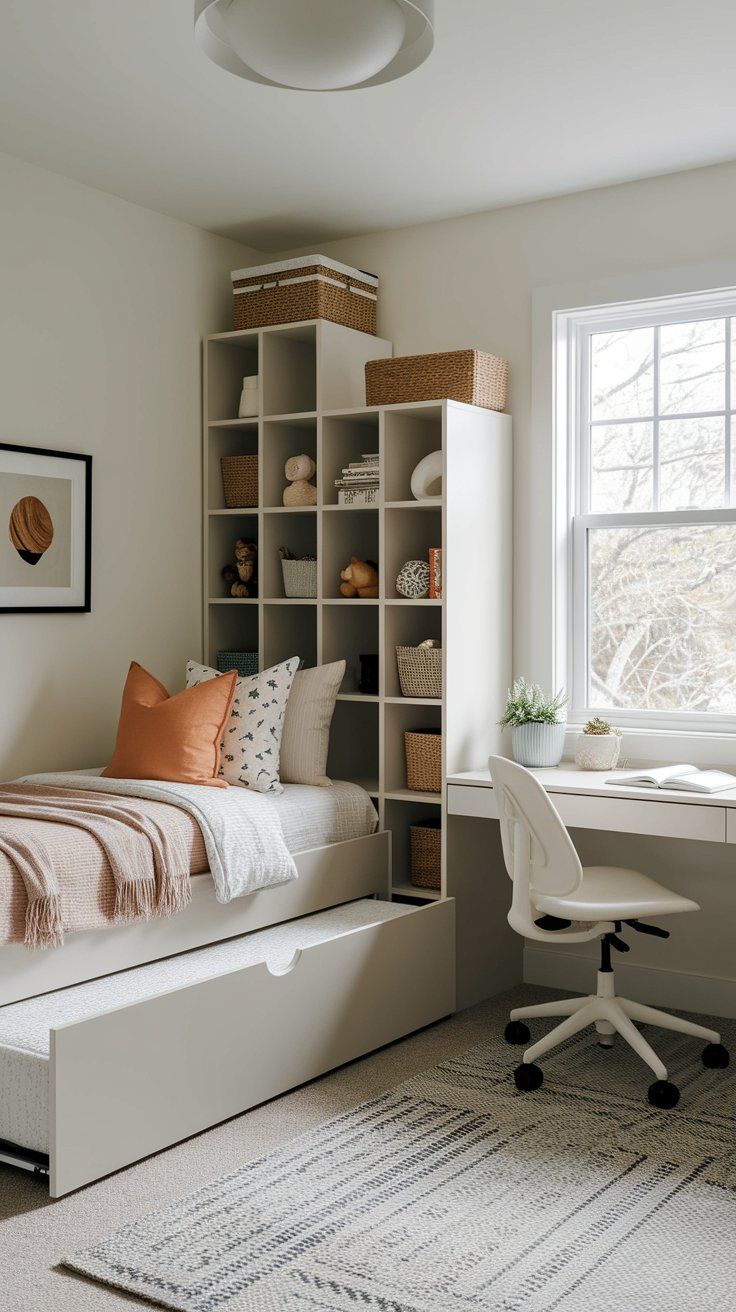
Instead of one-size-fits-all furniture, go for modular options that adapt over time. Modular beds, desks, and storage units can shift layout or purpose as your child gets older.
Smart examples:
- Stackable cubbies that become bookshelves or nightstands
- Adjustable desks that change height
- Twin beds that can later fit storage drawers or trundles underneath
This kind of setup means the room can evolve without a complete makeover.
27. Neutral Base Decor with Swap-In Accessories
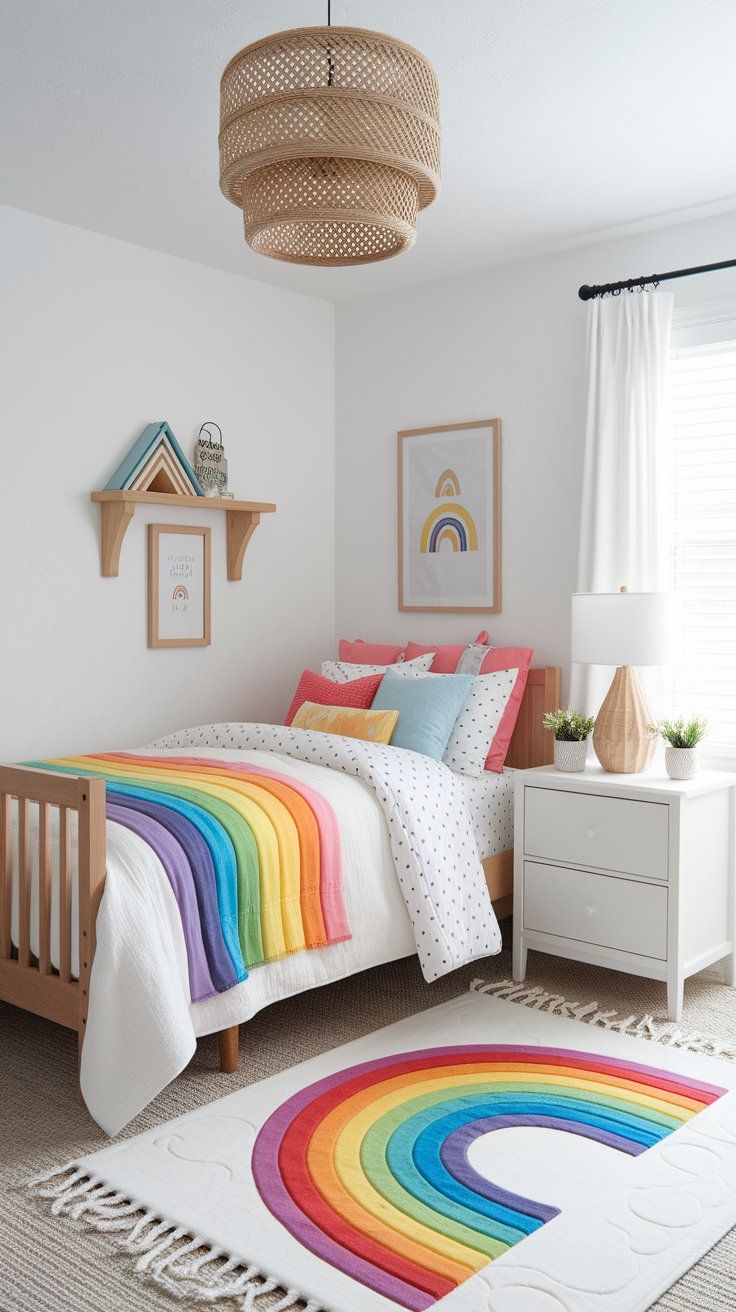
Start with a neutral palette for walls, floors, and major furniture, then use bedding, pillows, art, and rugs to bring in color and personality. This makes it easier to update the room as your child’s style or needs change.
What works best:
- White or light gray walls
- Simple wood or white furniture
- Swappable elements like curtains, wall art, or lamp shades
A dinosaur-themed rug or rainbow bedding can easily be replaced later — much easier than repainting a mural or buying all new furniture.
Final Thoughts
Designing a small bedroom for kids isn’t about squeezing things in — it’s about being intentional with every inch. With a little creativity and the right mix of smart storage, flexible furniture, and playful personality, even the tiniest room can become a cozy haven your child will love. Whether you’re working with a shared space, a tiny nook, or a narrow layout, these ideas help you make the most of it without sacrificing style or comfort.
Save this list, pin your favorite ideas, and most of all — have fun creating a space where your little one can rest, play, and grow.
FAQs
What’s the best color scheme for a small kids’ bedroom?
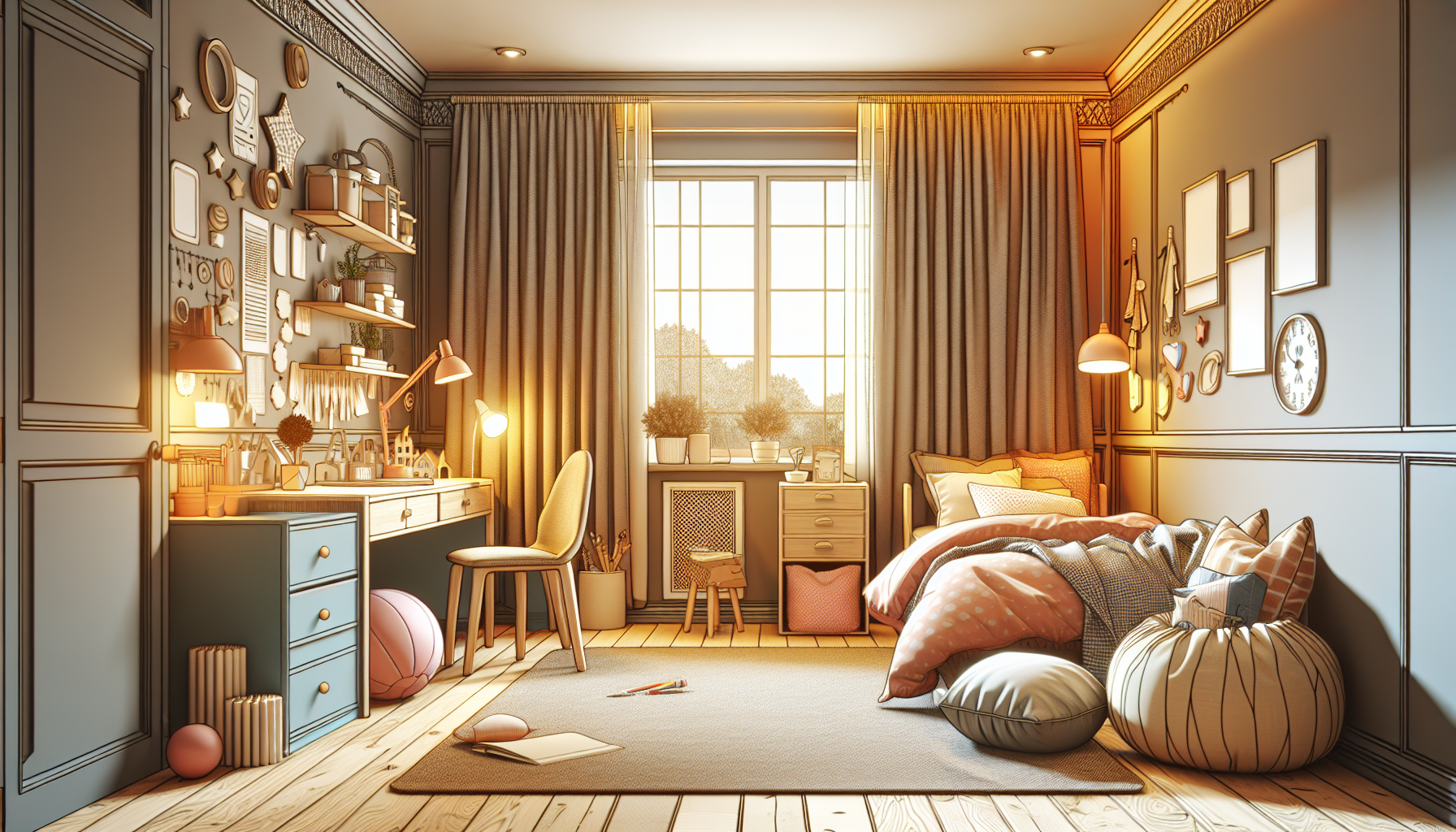
Light and neutral base colors like white, soft gray, or pale blue help make a small space feel larger and brighter. You can then layer in personality through accessories like colorful bedding, curtains, or wall art. This combination adds both warmth and energy without making the room feel cluttered.
How do I fit two kids in a small bedroom?
Start by thinking vertically. Bunk beds or loft beds free up floor space for desks, dressers, or play zones underneath. Use storage dividers, under-bed bins, and shared organizational zones like pegboards or bookshelves to keep everything accessible and tidy. Giving each child their own small “zone” also helps with harmony.
What furniture works best in a small bedroom?
Furniture that does double duty is ideal. Think beds with storage drawers, ottomans that hold toys, fold-down desks, or nightstands with shelves underneath. Choosing lightweight, low-profile furniture helps keep the room feeling open, while modular or adjustable pieces can grow with your child over time.
How can I make a small bedroom more fun without overcrowding it?
Get creative with wall space instead of adding more stuff to the floor. Use wall decals, murals, or pegboards to display your child’s personality. Themed corners like reading nooks or craft stations also help contain messes while adding a cozy and personal feel. A rotating toy display or gallery wall of your child’s art adds fun without adding bulk.
How do I keep a small kids’ room organized?
Start by limiting what’s visible. Use hidden storage under the bed, behind the door, or in closet organizers. Bins, baskets, and caddies help keep things grouped and easy to put away. Labeling helps younger kids build organizing habits, and rotating toys or decor regularly keeps clutter in check.
Related Articles:
- 27 Rainbow Bedroom Ideas for Kids That Are Pure Joy
- 20 Super Fun Kids Bedroom Decor Ideas You Can DIY Together