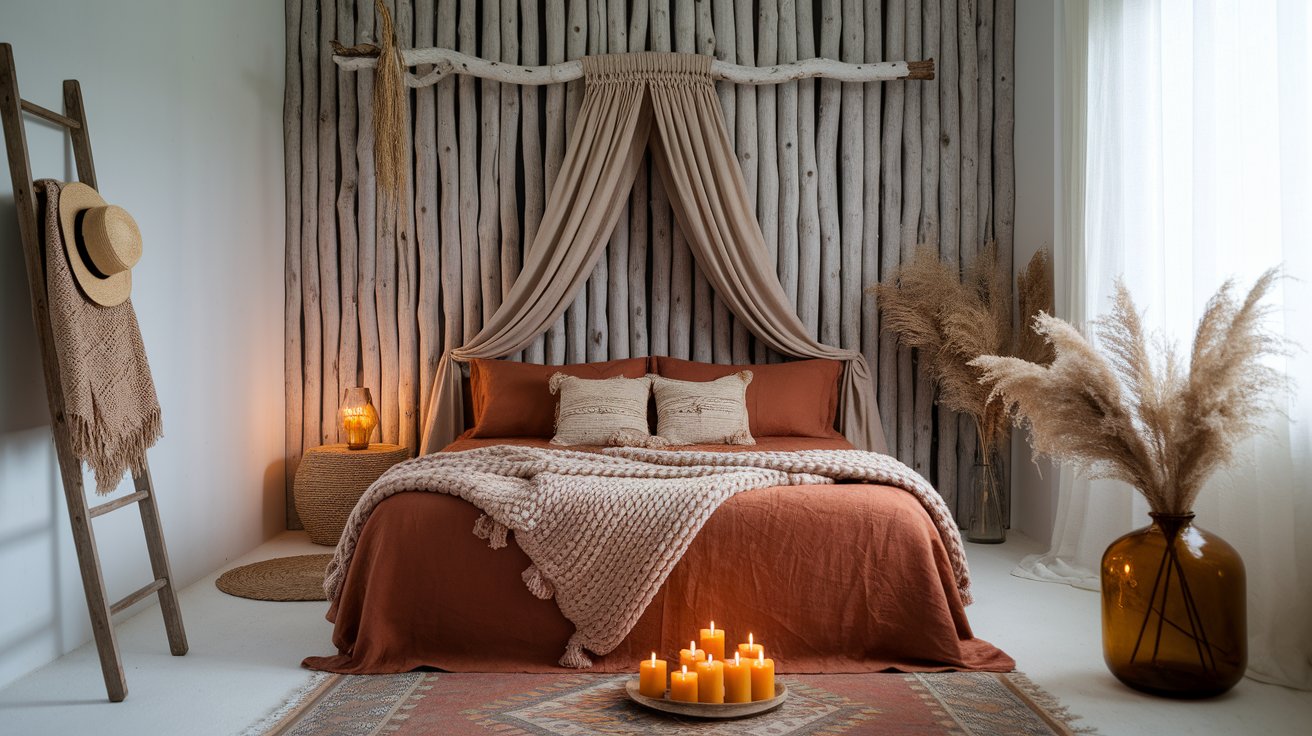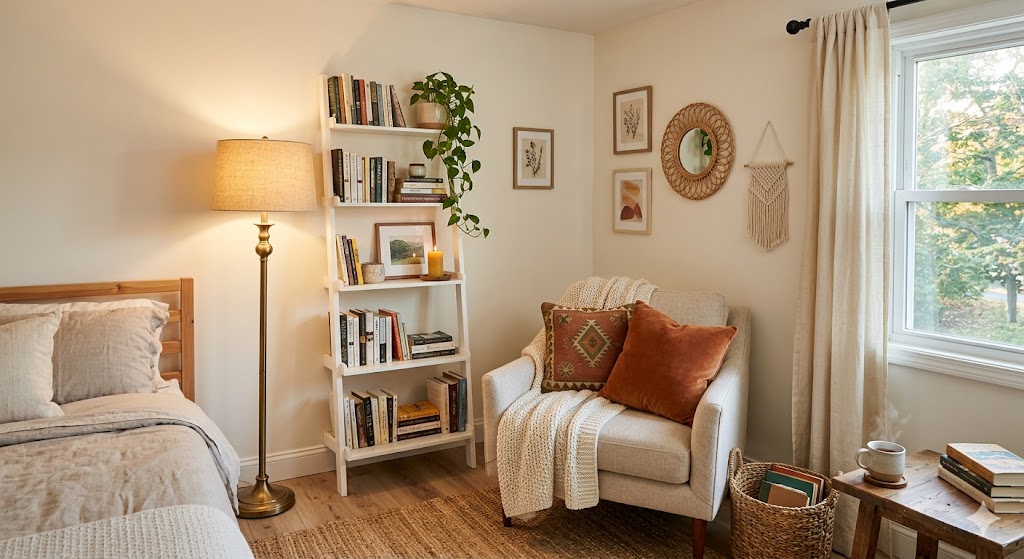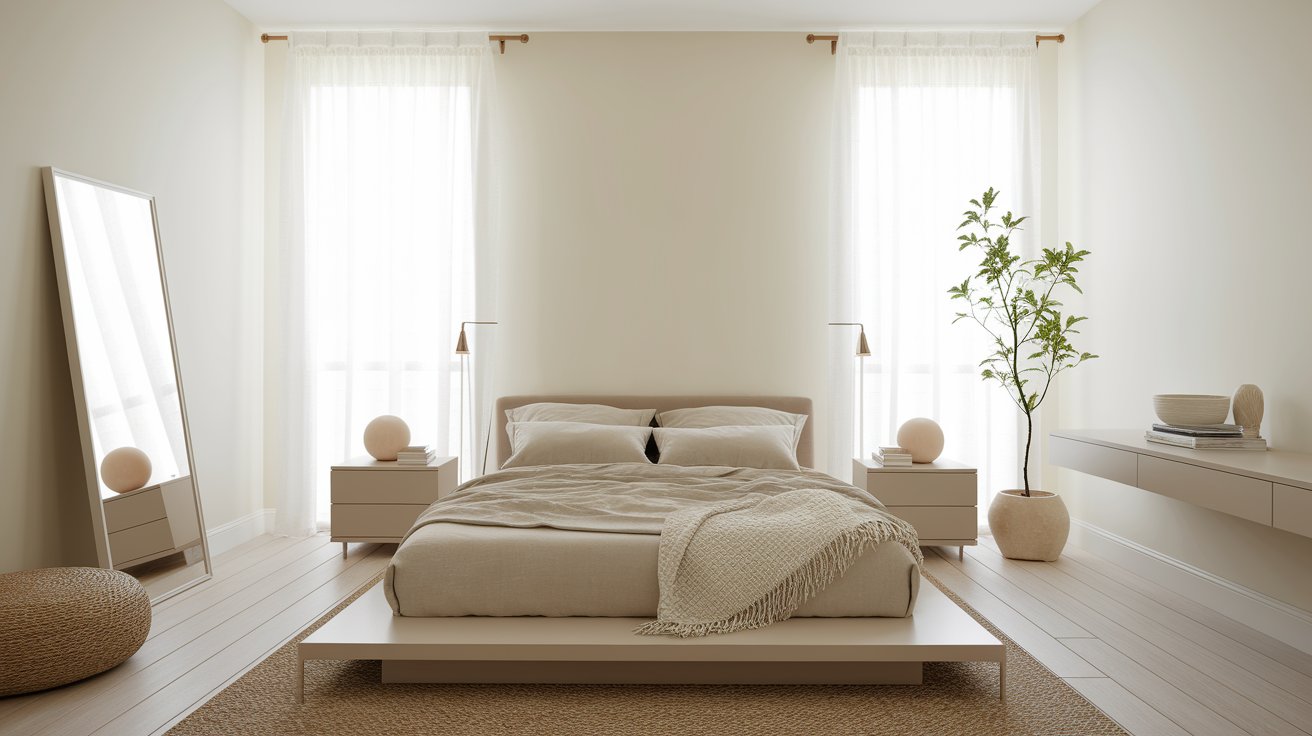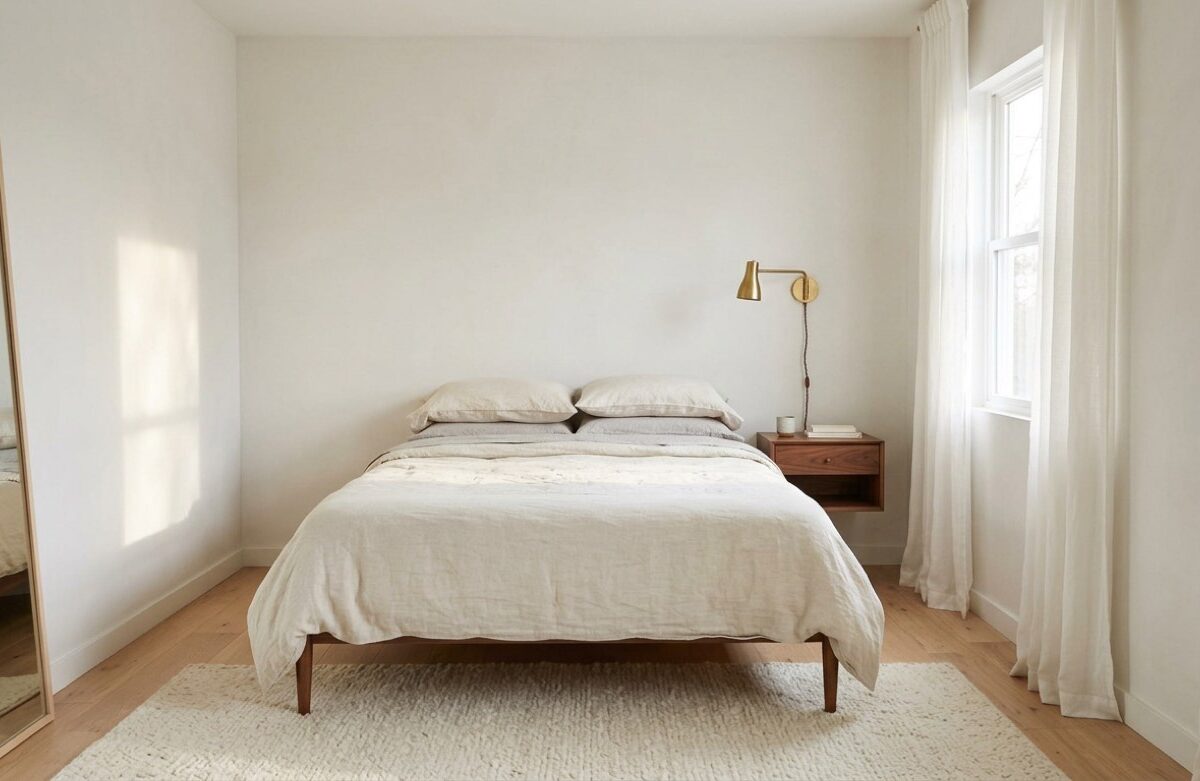
A small bedroom can feel cramped and cluttered, or it can feel like a snug, beautifully planned retreat. The difference is rarely the size. It is the layout, the storage and a few visual tricks that make the walls seem to step back. These small bedroom ideas show you how to fit everything you need and still have a room that feels open and calm.
Each idea works in apartments and rentals, and many need no tools at all.
Quick answer
The best small bedroom ideas are: push the bed against a wall or center it on the longest wall, use under-bed storage, swap nightstands for floating shelves or sconces, hang curtains high and wide, choose light colors and one large mirror, use vertical storage, and keep furniture low and leggy so you can see the floor.
Layout ideas for a small bedroom
The right layout is the foundation of all small bedroom ideas, because it decides how much floor you can actually see and use.
1. Center the bed on the longest wall
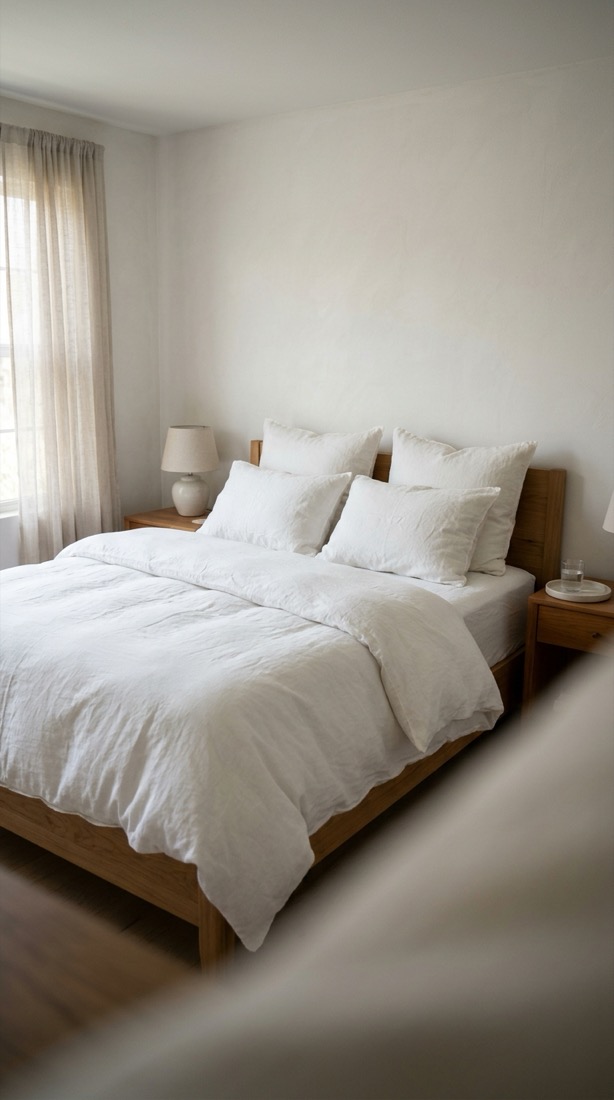
Placing the bed on the longest wall usually leaves the most open floor and the clearest path to the door and closet. Aim for at least 24 inches of walkway on each side, or on one side if you need to push the bed against a wall.
Before moving anything, sketch the room with measurements on paper. It takes ten minutes and saves you from dragging a heavy bed around twice.
2. Push the bed into a corner
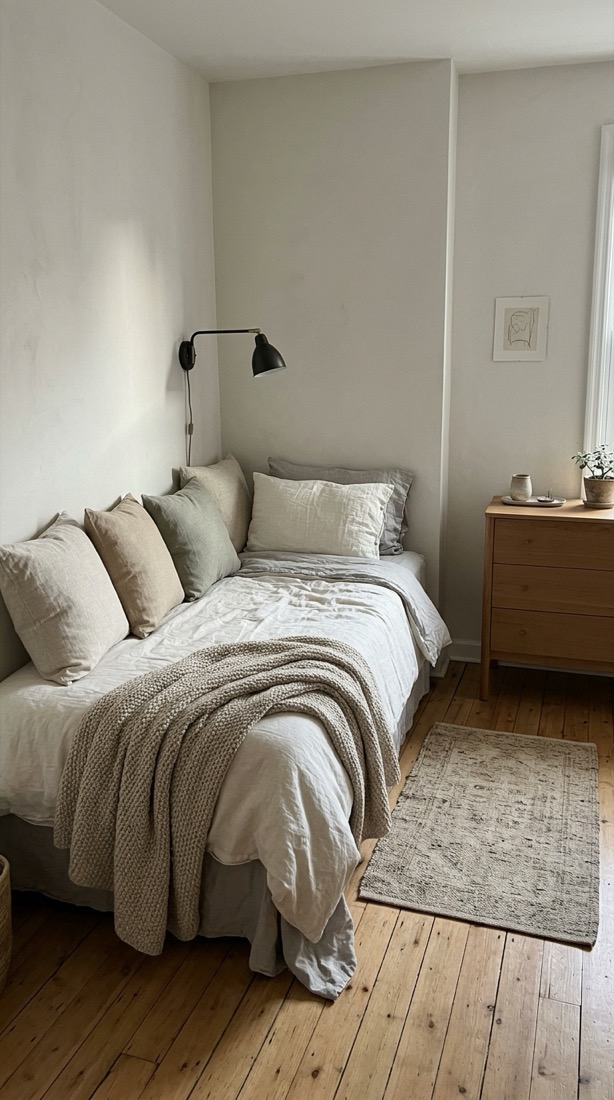
In very small rooms, tucking the bed into a corner frees up an entire side of the room. Add pillows along the wall side so it looks like a daybed during the day.
This works especially well for single and full beds, guest rooms and kids’ rooms.
Leave a small gap of an inch or two between the mattress and the wall so the bedding can tuck in neatly, and make the bed from the open side.
3. Choose a bed with legs
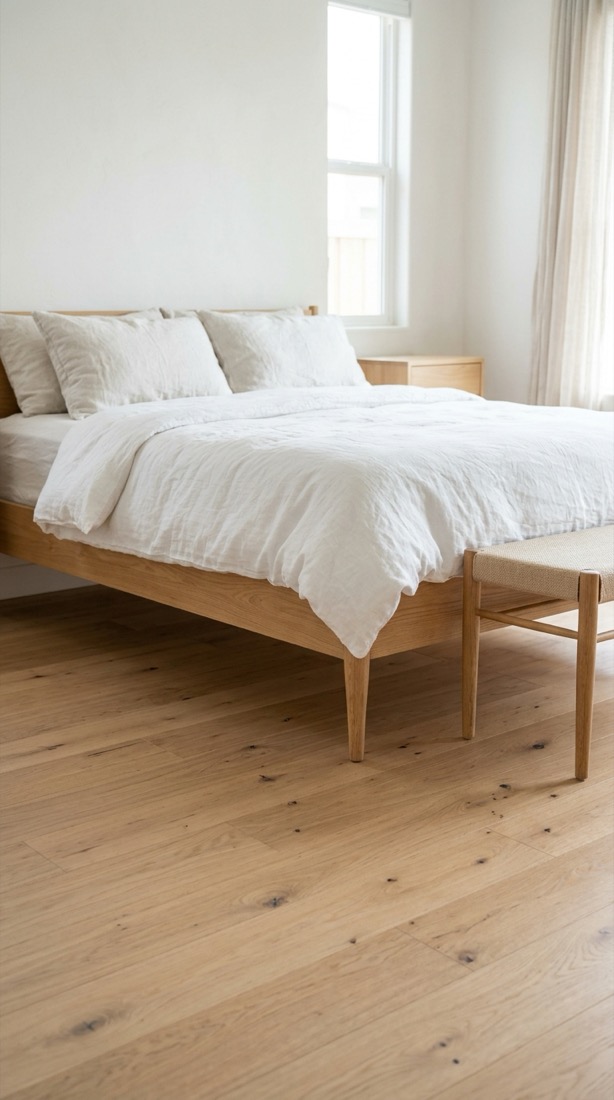
Furniture on legs lets you see the floor beneath it, which makes the room feel larger. A bed on slim legs looks lighter than a solid platform or a bed with a long skirt.
The same goes for dressers, chairs and benches. Visible floor space tricks the eye into reading the room as bigger.
Look for legs at least 6 inches tall. The higher the bed, the more floor shows and the more room there is for storage bins underneath.
4. Skip the footboard
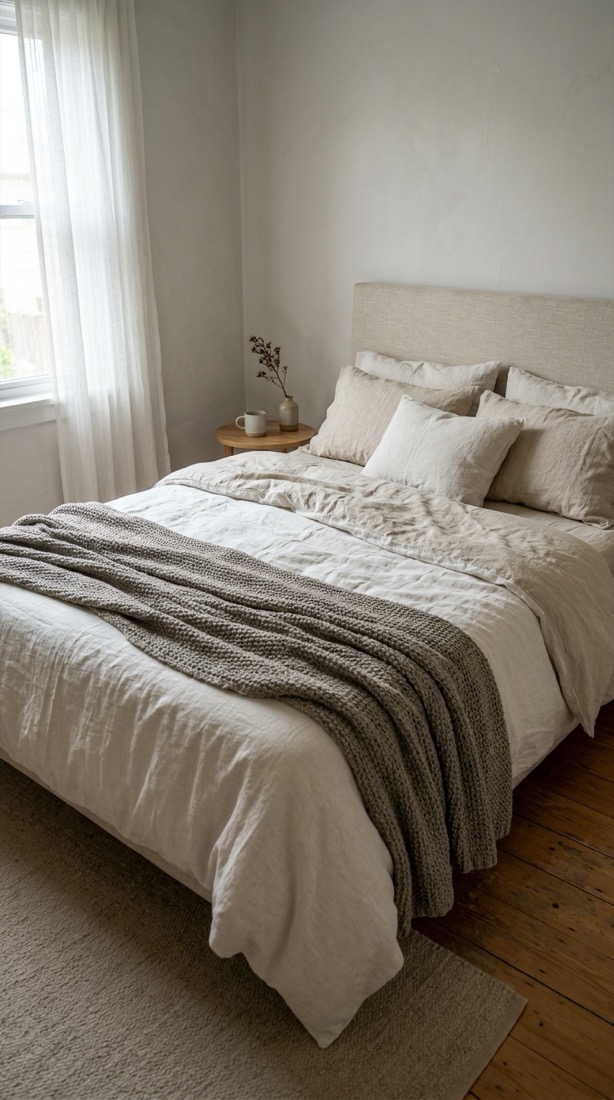
A footboard creates a visual wall across the room. Choosing a headboard only, or no headboard at all, keeps sight lines open and makes walking around the bed easier.
If you love the look of a footboard, choose a low one, no taller than the mattress, so it does not block the view across the room. A slim bench at the foot of the bed gives a similar finished look and adds seating.
Storage ideas
5. Use under-bed storage
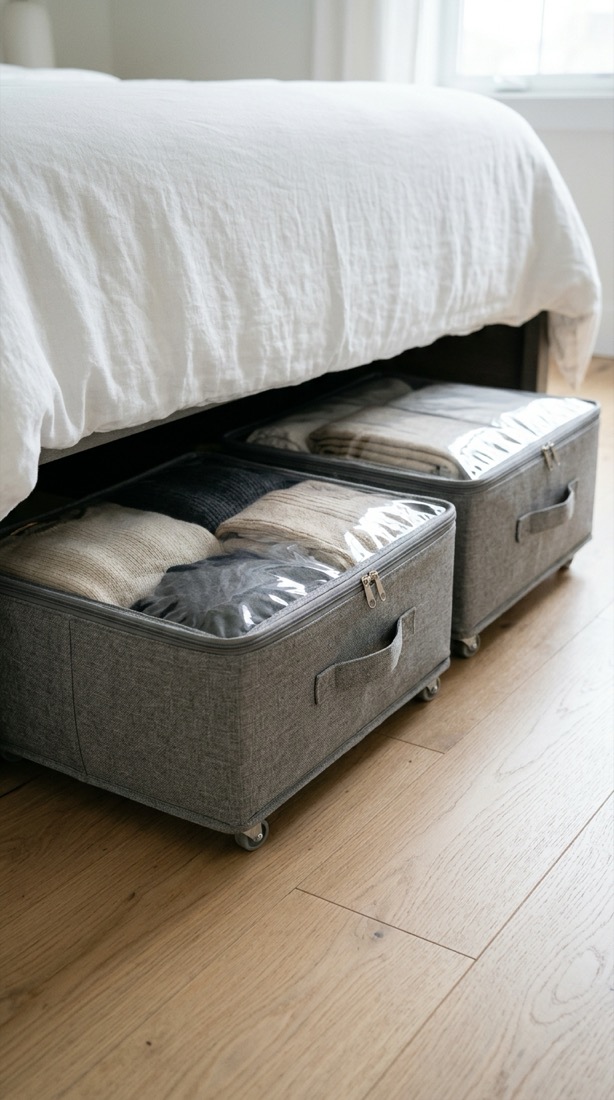
The space under the bed is the biggest storage area in most small bedrooms. Rolling bins with lids keep seasonal clothes, shoes and spare bedding dust-free and easy to reach.
Measure the clearance under your bed first. If it is less than 6 inches, bed risers can add a few more. The YAASHEEN rolling under-bed storage bins roll out easily and have clear lids so you can see what is inside.
6. Swap nightstands for floating shelves
A floating nightstand gives you a surface and a drawer without taking any floor space. The floor beneath stays visible, which makes the room feel more open.
The walnut floating nightstand with drawer has a drawer for chargers and a small shelf for a book.
Mount it level with the top of the mattress, and keep a small tray on top for a lamp or phone so it stays tidy.
7. Go vertical
When floor space is limited, use the walls. A tall, narrow dresser holds as much as a wide one with half the footprint. Shelves above the desk or door hold books and baskets.
Anchor tall furniture to the wall. The Anchor It campaign from the CPSC explains why and how.
Choose pieces that are tall but shallow, about 12 to 16 inches deep, so they do not stick out into the room.
8. Add a storage bench at the foot of the bed
A storage bench gives you a place to sit while you put on shoes and hides blankets and pillows inside. Choose one no wider than the bed.
The folding linen storage ottoman folds flat when you need the floor space.
Use the bench to hold the decorative pillows at night, so they are off the floor and out of the way.
9. Use the back of the door
Over-the-door hooks and organizers turn wasted space into storage for robes, bags and shoes. They need no tools and come off without a mark.
Choose an organizer with clear or neutral pockets and keep only what you use every week on it. Too many things on the back of a door look cluttered every time it swings open.
A slim over-the-door mirror is another smart option, giving you a full-length mirror without using a wall.
10. Choose a bed with drawers
If you are buying a new bed, choose one with built-in drawers. It can replace a dresser entirely in a very small room.
Check that the drawers can open fully with the bed in place, which needs about 20 inches of clearance. Use the drawers for bulky things like sweaters, spare bedding and extra pillows.
A storage bed often means you can skip the dresser entirely, freeing an entire wall for a desk or chair.
Visual tricks
These small bedroom ideas do not add storage, but they make the room feel noticeably larger.
11. Hang curtains high and wide
Mount the curtain rod close to the ceiling and extend it 8 to 12 inches past the window on each side. The window looks bigger and the ceiling looks higher.
No drilling allowed? The Kwik-Hang no-drill curtain rod brackets tap into the window trim without screws.
Choose light linen or cotton curtains in a color close to the wall, so they add softness without visually closing in the room.
12. Use one large mirror
A large mirror reflects light and space and can make a small room feel almost twice as big. Place it opposite or beside a window to bounce daylight around the room.
One large mirror always works better than several small ones, which tend to look busy.
A mirror on the back of the bedroom door or on a closet door gives the same effect when there is no free wall.
13. Paint the walls a light color
Light, warm colors such as soft white, cream or pale sage reflect light and make walls recede. Painting the ceiling the same color blurs the edges of the room.
Choose a warm white, not a stark one, so the room feels soft rather than clinical. Matching the trim to the walls also makes edges disappear and the room feel larger.
If you rent, ask your landlord about painting, or bring light colors in through bedding and curtains instead.
14. Keep the color palette tight
Too many colors make a small room feel busy. Pick two or three and repeat them in the bedding, curtains and art.
A simple combination such as white, oak and sage, or cream, linen and soft blue, gives a calm, connected look. Repeat each color at least twice, for example in a pillow and a print, so the palette feels planned.
Save bold color for one small accent, such as a vase or a single pillow.
15. Use wall sconces instead of lamps
Sconces free up nightstand space and give a hotel feel. The plug-in swing arm wall sconces plug in, so there is no wiring.
Mount sconces about 5 feet from the floor, or so the shade sits just above your shoulder when you sit up in bed. Swing arms let you pull the light close for reading.
Freeing the nightstand from a lamp gives you space for a book, a glass of water and a small plant.
16. Choose a low bed
A low bed leaves more wall above it, which makes the ceiling feel higher. It also suits a relaxed, modern look.
Low beds suit rooms with sloped ceilings or small windows, where a tall bed would feel cramped. Pair the bed with low nightstands and keep art above the bed simple so the wall feels open.
Choose a mattress height that is still easy to get in and out of, about 18 to 20 inches from the floor.
Finishing touches
17. Use a large rug
It sounds backward, but a large rug makes a small room look bigger than a small one does. A rug that runs under the bed and out on both sides unifies the space.
For a queen bed, a rug of 8 by 10 feet usually works best. Place it so it starts about two thirds of the way down the bed and extends past the foot.
18. Hang art above the bed only
In a small room, one large piece of art above the bed looks calmer than several small frames around the walls.
Choose a piece about two thirds the width of the bed and hang it so the bottom sits 8 to 12 inches above the headboard. Keep the other walls mostly clear, perhaps with one mirror, so the room feels open.
Adhesive picture strips work well for lightweight frames in rentals.
19. Add a slim desk or vanity
If you need a workspace, a wall-mounted desk or a narrow console with a stool takes far less space than a full desk.
A desk 18 to 20 inches deep is enough for a laptop. Choose a stool that tucks fully underneath so the desk takes up no extra space when you are not working.
A floating shelf above the desk holds books and supplies without crowding the room.
20. Keep surfaces nearly empty
Leave at least half of every surface clear. Clear surfaces are the quickest way to make a small bedroom feel calm and spacious.
Use a small tray to corral the things that do need to live out, such as perfume, a candle or jewelry, so they look tidy. Everything else gets a drawer or a basket.
Do a five-minute reset each evening and the room will stay calm all week.
21. Add something personal
A favorite photo, a plant or a piece of art makes the room yours. One or two personal touches give a small bedroom character without crowding it.
Choose things that make you happy every time you see them, such as a photo from a trip or a print you love. Keep them grouped on one shelf or the dresser rather than scattered around the room.
Frequently asked questions
How do I make a small bedroom look bigger?
Use light colors, one large mirror, curtains hung high and wide, furniture on legs and a large rug, and keep surfaces clear.
Where should the bed go in a small bedroom?
Usually centered on the longest wall, or pushed into a corner in very small rooms to free up floor space.
How do you add storage to a small bedroom?
Use under-bed bins, a bed with drawers, tall narrow dressers, wall shelves, a storage bench and over-the-door organizers.
What size rug for a small bedroom?
Choose a rug that extends at least 18 inches beyond each side of the bed, or use two runners.
Make it work for you
Start with the layout, add smart storage, then use light and mirrors to open the room up. For very small spaces, see our tiny bedroom ideas, and for a softer feel, read how to make your bedroom cozy.