20 Small Living Room Ideas That Make a Cramped Space Feel Like a Room
The small living room problem is not actually a size problem. It is a decision problem. Too many furniture pieces fighting for the same floor space, rugs too small to anchor anything, lighting that comes from one central overhead fixture and nowhere else, and walls so crowded that the eye has nowhere to land. The room reads as small because of how it is arranged and what is in it, not because of how many square feet it contains.
The living rooms that look roomier than they should on Pinterest are not bigger. They have fewer pieces, better proportioned furniture, a rug that is doing its job, and lighting that works at more than one level. These are decisions, not purchases. Most of them cost nothing to implement if you already own the right pieces and are willing to subtract rather than add.
Here are 20 specific ideas for making a small living room feel like a proper room, starting with the changes that have the most immediate spatial impact.
1. Lay a Rug That Extends Under All the Furniture
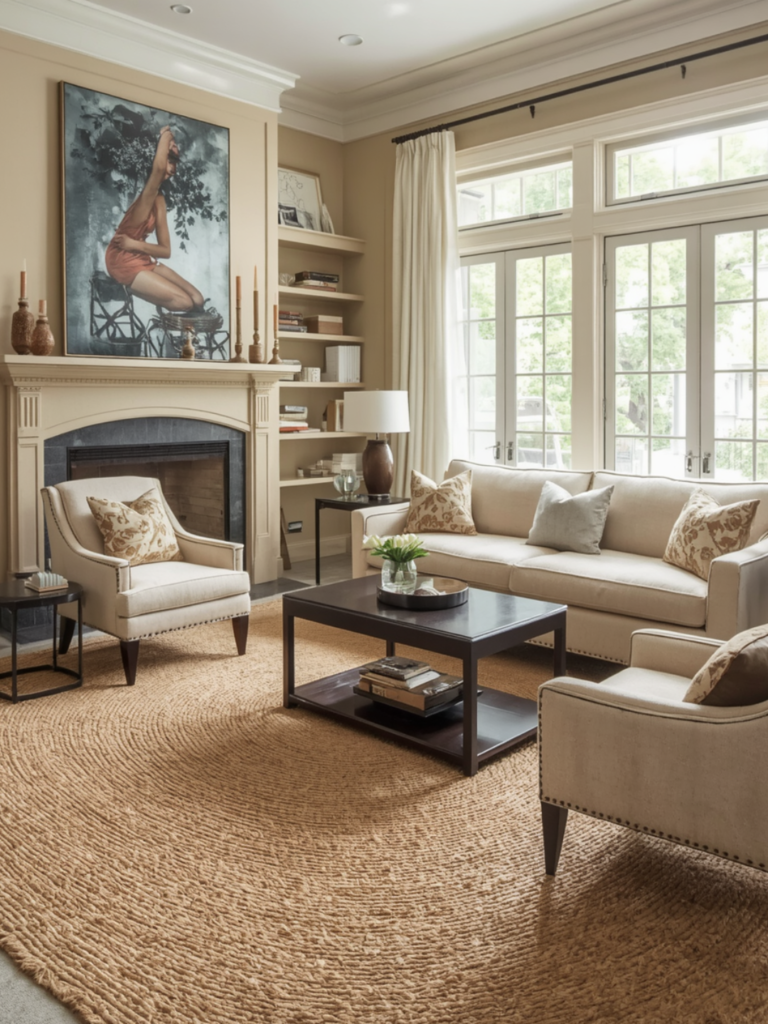
An undersized rug is the single most common reason a small living room feels smaller than it is. A rug that only covers the center of the seating zone, floating between the sofa and the coffee table without touching anything, has no grounding effect. A properly sized rug goes under the front legs of every piece of seating in the arrangement.
- A large natural jute area rug in a neutral tone anchors the room without competing with any other element in the space: jute reads as warm and organic, which works in almost any living room palette
- If the budget allows only one size up from your current rug, go up: the next size larger always reads better than the current one
- In a small living room, a 8×10 rug is often the right starting point where most people settle for a 5×8
- A solid or low-pattern rug makes the room read larger than a bold patterned one: the eye moves across a solid surface without stopping
2. Choose Furniture That Sits on Visible Legs
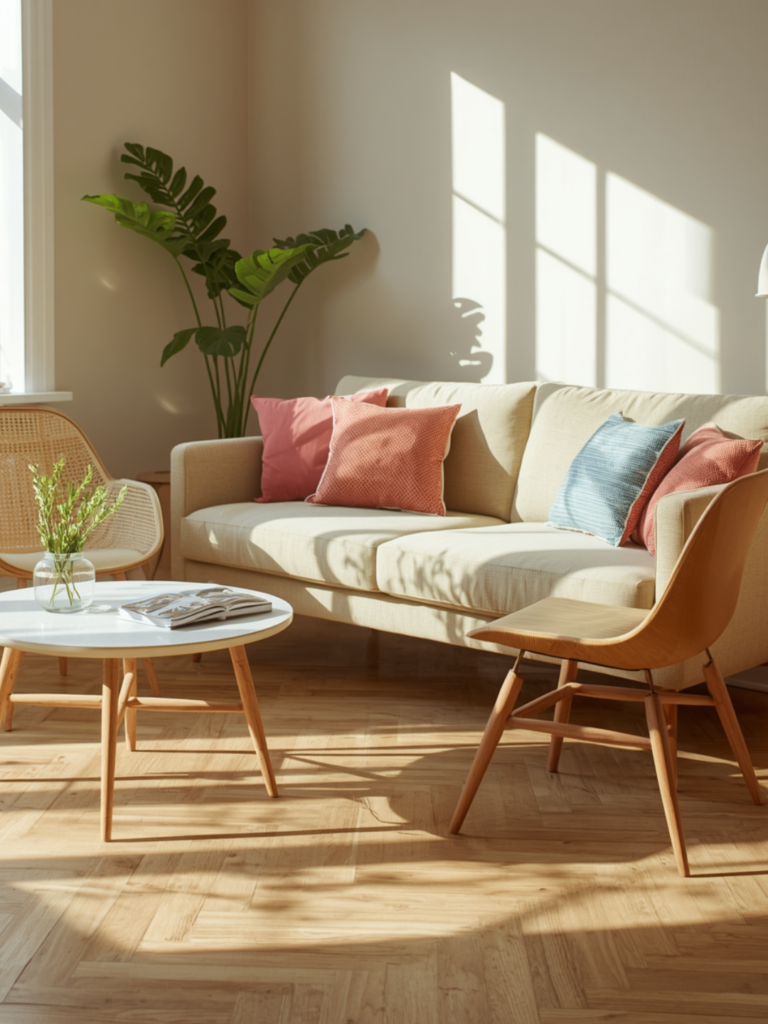
Furniture that sits directly on the floor blocks sightlines and makes a room feel lower and more crowded. Furniture on legs lets the floor continue underneath it visually, which makes the room feel larger than it is.
- A sofa, chair, or sideboard on legs rather than on a base or skirt allows the rug to read under and around the furniture rather than disappearing beneath it
- Even two or three inches of clearance between the furniture base and the floor makes a measurable difference in how open the room feels
- Glass, lucite, or thin metal coffee tables have the same visual lightness effect: they take up the same floor space as a solid table but don’t interrupt the sightline
3. Mount the TV on the Wall
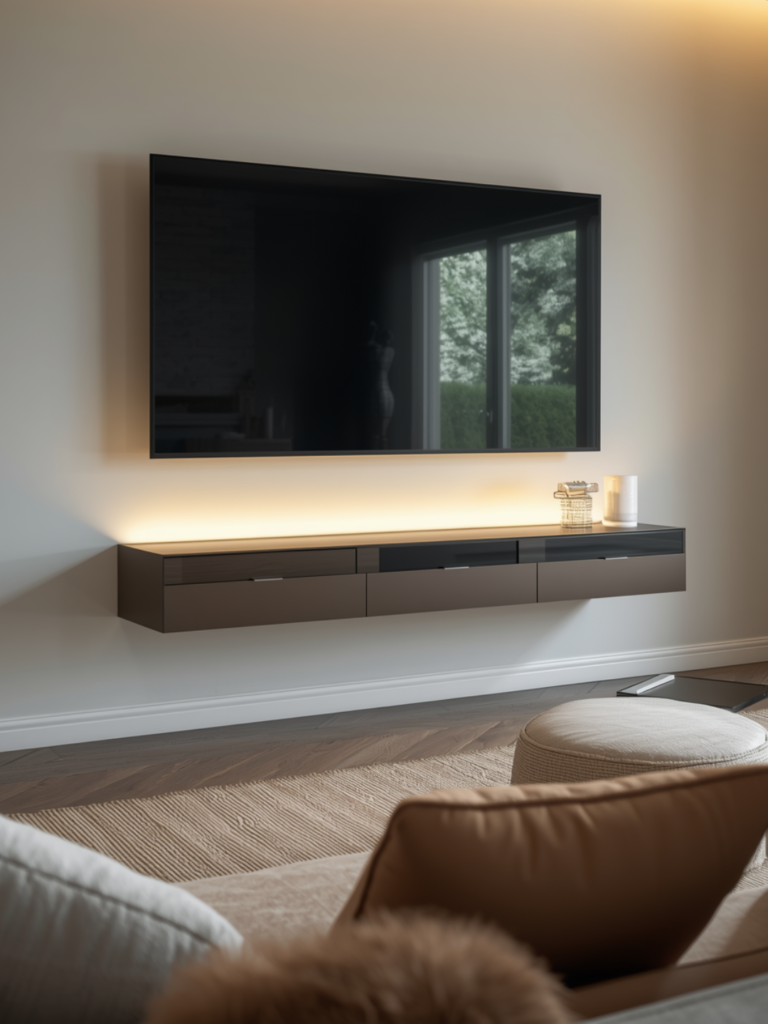
A TV console or media unit takes up a significant footprint of a small living room floor. Wall-mounting the TV eliminates that furniture piece entirely and replaces it with a floating bracket that takes no floor space at all.
- Cord management is the detail that separates a wall-mounted TV that looks intentional from one that looks improvised: use a cord cover raceway or run cables inside the wall for a finished look
- A floating console or a small sideboard below the mounted TV is smaller than a full media unit and leaves more visible floor space around it
- Mount the TV at seated eye level, not above the fireplace height: too high causes neck strain and reads as incorrect in a well-designed room
4. Pull the Sofa Away From the Wall
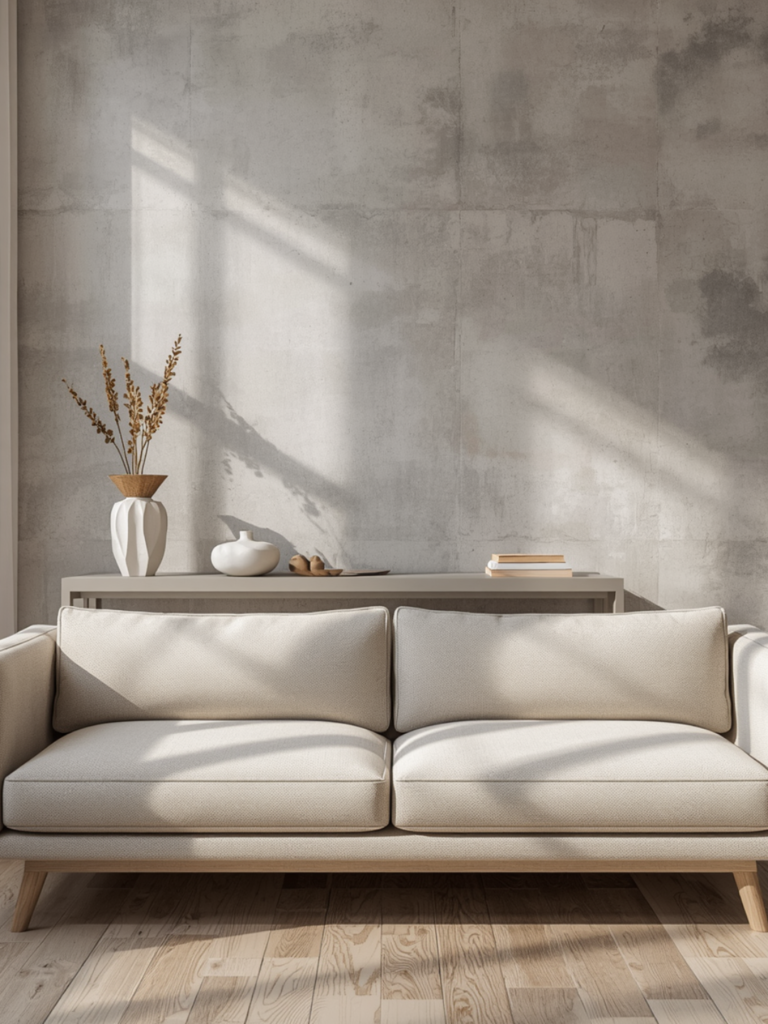
The instinct in a small living room is to push every piece of furniture against a wall to preserve the center. This creates a waiting-room quality rather than a room quality. Pulling the sofa even 6 to 12 inches from the wall and floating it in the space creates a zone that reads as intentionally designed.
- A sofa pulled from the wall with a console table behind it creates a natural room division and an additional surface without consuming more floor space
- The gap between the sofa and the wall does not need to be large: even a small float changes the spatial logic of the room significantly
- The floating arrangement also makes the room look larger on camera, which is why it is the default in interior design photography
5. Add a Tall Arc Floor Lamp for Overhead Ambiance
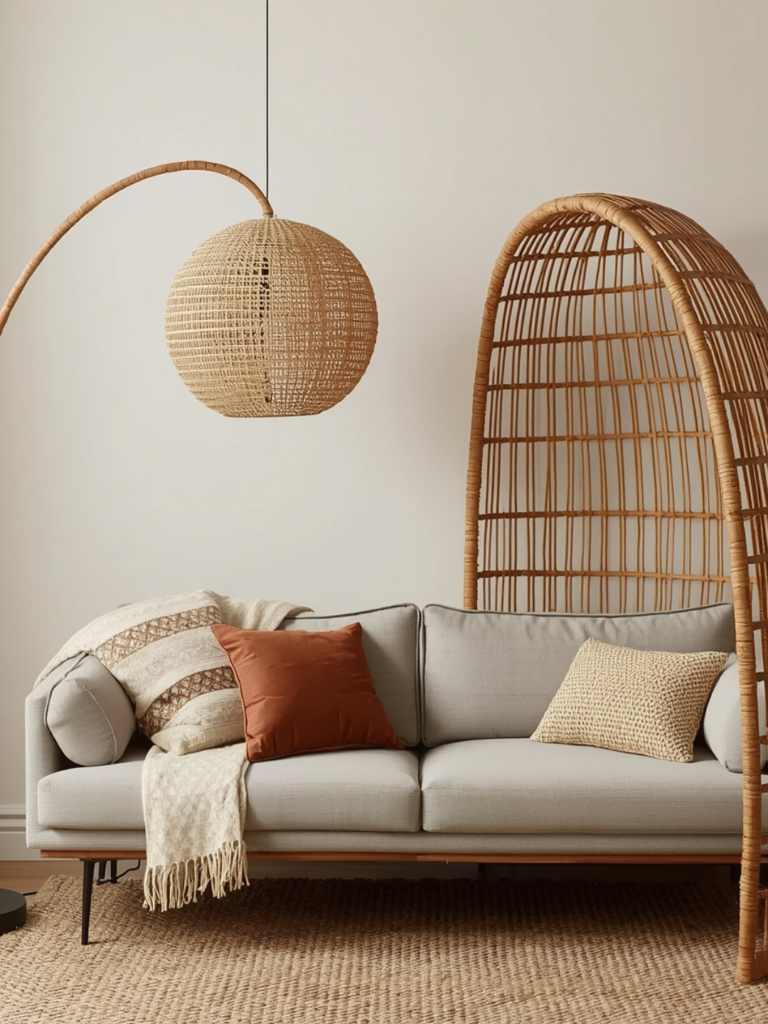
A single overhead ceiling fixture is the least effective lighting arrangement for a living room. An arc floor lamp positioned behind or beside the sofa creates overhead light from a better angle without requiring any electrical work and adds visual height to the room at the same time.
- An ILLMTW rattan arc floor lamp with a dimmable wicker shade provides the warm overhead light of a pendant fixture without any ceiling installation, and the natural material shade casts the ambient, textured glow that a bare bulb cannot
- Position the arc so the shade floats over the seating zone rather than beside it: the overhead quality of the light is what makes it feel like a room rather than a corner lamp
- Dimming capability is worth seeking out: a floor lamp at full brightness reads as task lighting; dimmed to 60 percent, it reads as ambient atmosphere
6. Hang Mirrors Opposite or Adjacent to the Windows
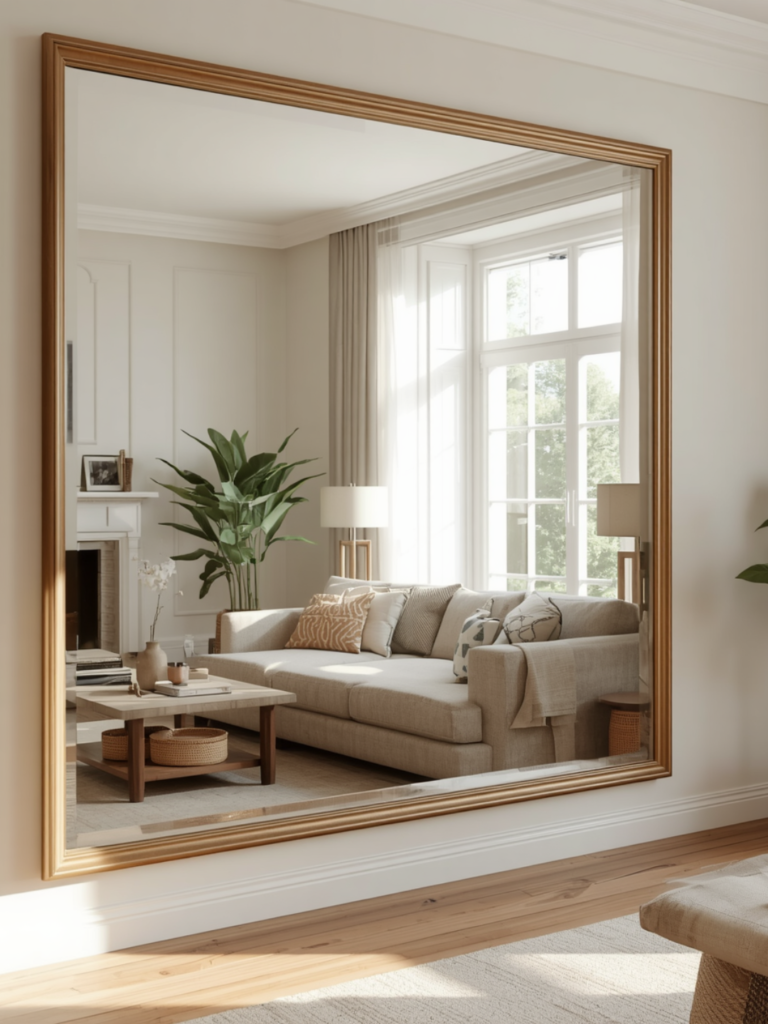
A large mirror on the wall opposite a window doubles the apparent brightness and depth of the room. The eye reads the reflection as additional space and the bounced light makes the room feel more open regardless of its actual size.
- The larger the mirror, the stronger the effect: a full-length or oversized wall mirror reads much better than a decorative small one in a space-expanding context
- Position it to reflect either the window or the best-looking part of the room: a mirror that reflects the TV or a cluttered corner adds chaos rather than space
- A leaning floor mirror is the most renter-friendly version: no wall damage, repositionable as the light changes seasonally
7. Hang Curtains From Ceiling Height
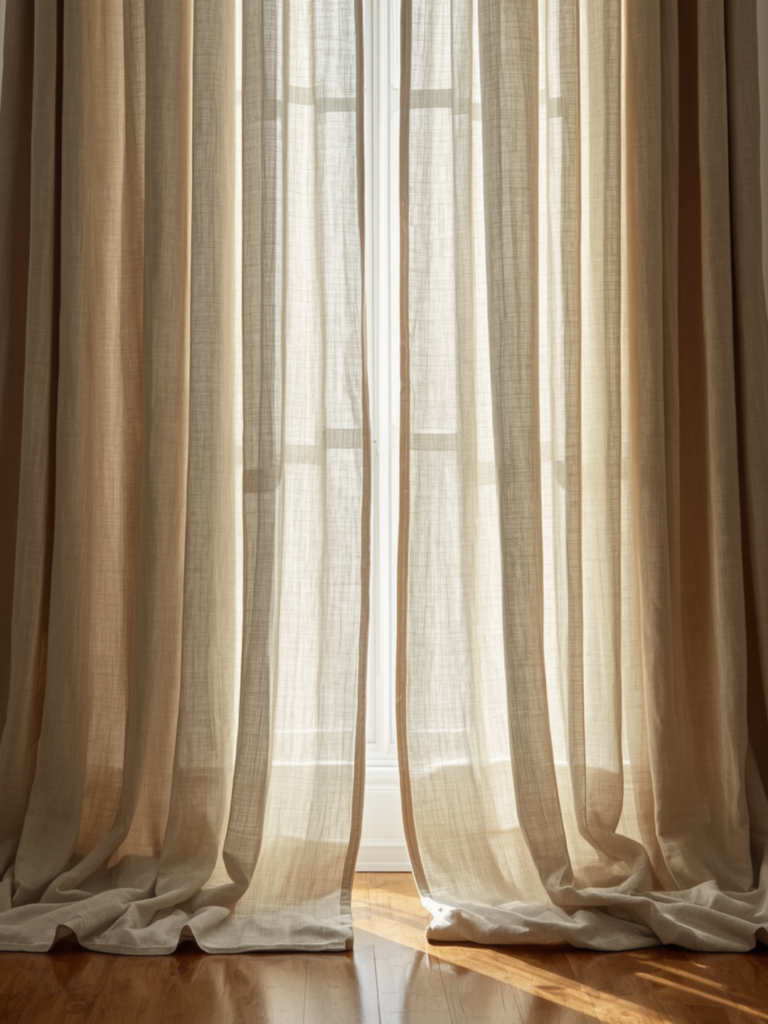
Curtains hung directly above the window frame cap the room at window height. Curtains hung at ceiling height pull the eye upward and make the room feel significantly taller, which directly contributes to the feeling of more space.
- Mount the rod 4 to 6 inches below the ceiling, not above the window trim: the gap between the rod and the window frame reinforces the ceiling height rather than interrupting it
- Floor-length curtains that touch or slightly pool on the floor are more effective than those that end at the sill or at standard window height
- Sheer or lightweight curtains in warm white or linen allow maximum light through while maintaining the ceiling-height effect
8. Reduce the Number of Furniture Pieces
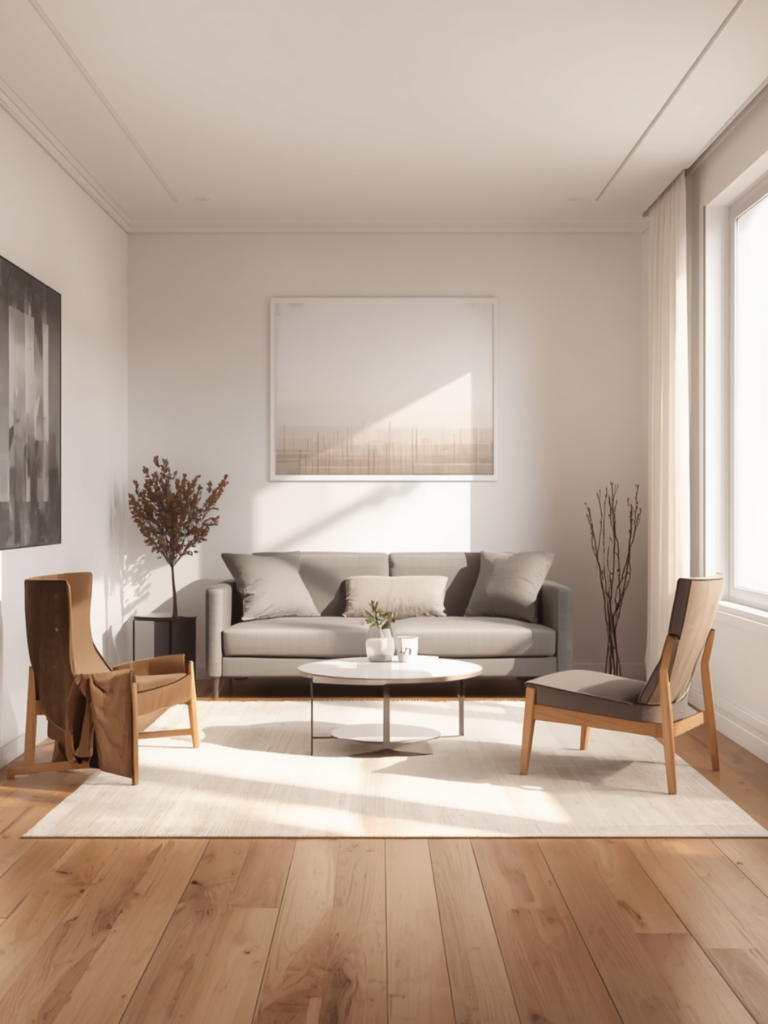
The fastest way to make a small living room feel larger is to remove one piece of furniture. Not reorganize it, not replace it with something smaller: remove it. Most small living rooms have one excess piece that is in the room out of habit rather than out of need.
- The most common excess pieces in a small living room: a second accent chair that nobody uses, an oversized coffee table that crowds the walking path, a floor lamp that duplicates the light from another source
- Live with the reduced arrangement for a week before deciding whether the piece should come back: most people discover they don’t miss it
- The visual breathing room created by one fewer piece of furniture usually outweighs whatever function the removed piece was providing
9. Apply a Single Consistent Color Palette
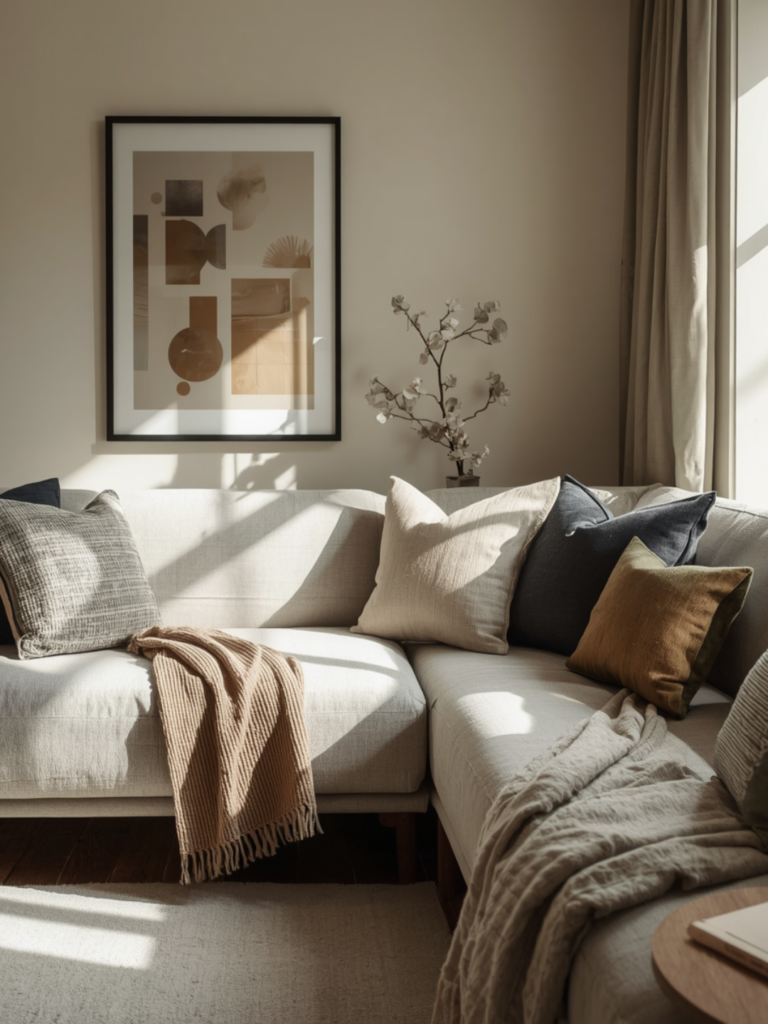
A small living room with a coherent color palette reads larger than one with more objects in competing colors. When the eye doesn’t have to resolve multiple color relationships across a small space, the room feels calmer and more expansive.
- A working small living room palette: one neutral as the dominant tone (cream, warm white, warm grey), one mid-tone (dusty blue, sage, terracotta), and one dark anchor (forest green, charcoal, rust)
- Apply the palette consistently across textiles, objects, and art: a random color in the wrong tone reads as a mistake rather than an accent in a small room
- Plants count as green which reads as neutral: they don’t compete with the chosen palette the way a patterned textile in a different color does
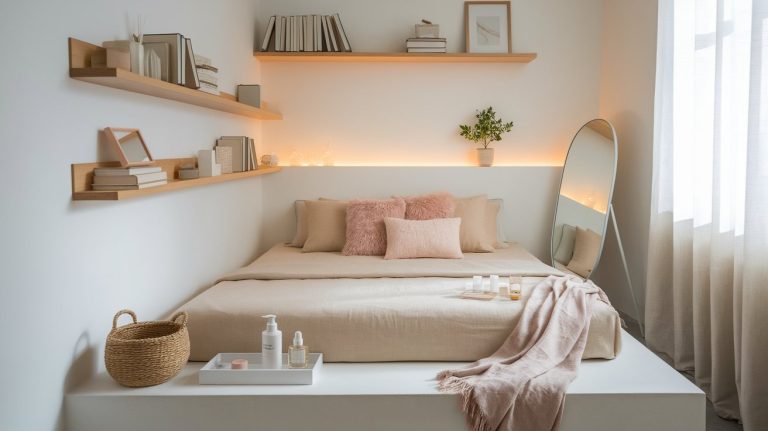
10. Use Floating Shelves Instead of a Freestanding Bookcase
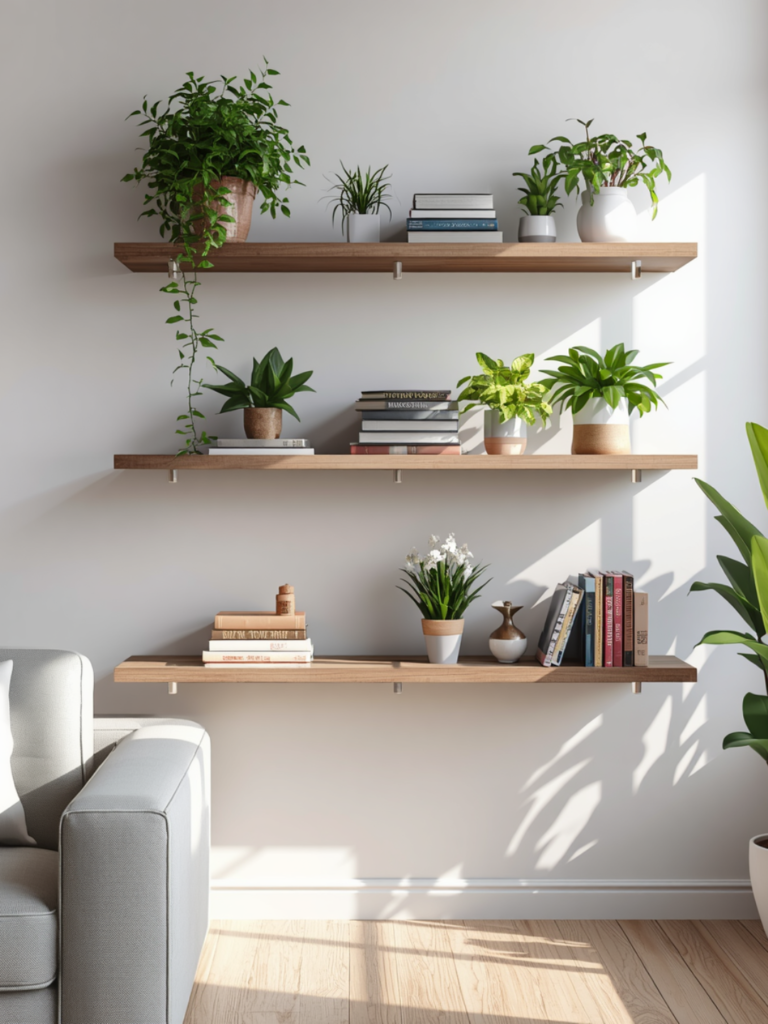
A freestanding bookcase against the wall takes up floor space and creates a visual mass that interrupts the room’s flow. Floating shelves carry the same storage and display function without using any floor space and can be arranged to leave more wall visible between them.
- Two or three shelves at different heights read as more designed than a uniform floor-to-ceiling arrangement in a small room
- Style the shelves with breathing room: one-third books or objects, two-thirds empty reads as edited and intentional rather than full
- Align the shelf height with other horizontal elements in the room (sofa back height, window sill height) to create visual continuity rather than a floating shelf that sits at an arbitrary height
11. Add Velvet Accent Pillows as the Only Pattern Layer
In a small living room, pattern competes for attention and makes the space feel busier than it is. One pattern source, velvet pillows in a rich solid tone, delivers visual interest without the visual noise of competing prints.
- A set of emerald green velvet throw pillow covers in 18×18 on a neutral sofa delivers the richness and color depth of a patterned textile without the pattern complexity: the jewel tone does the work of pattern without competing with everything around it
- Two velvet pillows on a sofa is the right quantity for a small living room: two delivers impact, more than two starts to crowd the seating
- Keep every other textile in the room (rug, throw, curtains) in solid neutrals so the velvet pillow color reads clearly
12. Choose One Large Piece of Art Instead of a Gallery Wall
A gallery wall in a small living room adds visual complexity that the room cannot absorb. One large print or canvas in the right palette, properly sized for the wall, reads as confident and deliberate where a cluster of small frames reads as busy.
- The art should be at least 24×30 inches on a standard living room wall: anything smaller reads as a detail rather than a focal point
- Center it at eye level (57 to 60 inches from floor to the center of the piece) rather than at furniture height
- A simple, low-detail image (abstract, botanical, a landscape with open sky) keeps the wall restful: busy or colorful art adds visual noise in a small room
13. Keep the Floor Completely Clear
Every object on the living room floor, a spare bag, a dog bed, a stack of magazines, an extra pair of shoes, reduces the visible floor area and makes the room feel smaller. The floor is the room’s largest single surface: keep it clear and the room feels larger regardless of what else is in it.
- Give every floor-level object a home that isn’t the floor: a basket for the dog toys, a hook for the bags, a magazine rack mounted to the wall
- The only floor objects that belong in a living room: furniture, rug, and one large plant. Everything else should be stored or removed
- Cleaning the floor takes no time when there’s nothing on it to move: the practical benefit of a clear floor compounds over time
14. Use Multi-Functional Furniture in Every Position
In a small living room, every piece of furniture should serve more than one function. A coffee table with interior storage, an ottoman that doubles as seating and a table surface, a console that functions as both a room divider and a sideboard: multi-functional pieces reduce the number of pieces the room needs.
- A storage ottoman in the center of the seating zone replaces both the coffee table and a separate storage box, and can function as extra seating when needed
- Nesting tables replace a side table when one is needed and disappear completely when not in use: they take up the footprint of one when both are stacked
- A lift-top coffee table that functions as a work surface eliminates the need for a separate desk in a studio or small apartment
15. Use Warm-Toned Lighting Throughout
Cool overhead lighting makes a small living room feel like a commercial space rather than a home. Replacing every bulb in the room with a warm 2700K equivalent and turning off the overhead in the evening entirely transforms the atmosphere and the apparent size of the space.
- Layered lighting from multiple sources at different heights (floor lamp, table lamp, a candle grouping) is always more effective in a small room than one overhead fixture at full brightness
- A lamp in each corner of the room draws the eye to the edges of the space, which visually expands it: light in the center contracts it
- Dimmers on every light in the room give you complete control over the atmosphere across different times of day
16. Add a Large Statement Plant in the Corner
A tall plant (fiddle leaf fig, bird of paradise, tall monstera, snake plant) in the corner of the room fills vertical space that would otherwise read as empty, adds organic life to a neutral palette, and gives the room a living focal point at floor level that furniture cannot provide.
- The plant should be tall enough to fill roughly two-thirds of the wall height from its base: a short plant in a large corner reads as a failed attempt at a statement plant
- Place it in the corner that has the least furniture around it: a plant beside a chair or sofa crowds the corner rather than opening it
- A large terracotta or ceramic pot makes the plant read as a decor choice rather than a houseplant that wandered into the room
17. Style the Coffee Table as a Single Composed Vignette
A coffee table with scattered objects, a remote, coasters, a magazine, a small plant, and a candle all randomly placed, reads as disorganized regardless of how good each individual object is. The same objects grouped intentionally on a tray read as styled.
- One tray in the center corrals the core items: a candle, a small ceramic or book stack, a small plant. The remote and coasters live outside the tray at the edge of the table
- The tray material should connect to another element in the room: a wooden tray with a wooden coffee table leg, a woven tray with a jute rug beneath it
- The coffee table arrangement should be reset after every use: a room that looks good only before anyone sits in it is a room that doesn’t actually function
18. Remove Everything Decorative That Doesn’t Earn Its Place
Most living rooms have accumulated decorative objects over time with no editing pass. A small living room cannot absorb this accumulation the way a larger one can. Every object that is not beautiful, meaningful, or functional is taking up visual space that the room cannot spare.
- Do a full audit: remove everything from every surface and every shelf, then return only what earns its place by being beautiful, useful, or both
- Objects that “came with” the room (default artwork, random throw pillow from a set, a candle holder from a gift bag) are the first candidates for removal
- Less on every surface in a small living room reads as more designed, not as more minimal: the space between objects is part of the composition
19. Create a Focal Point at One End of the Room
A room without a focal point forces the eye to wander without resolution, which makes the space feel restless. In a small living room, a deliberate focal point at one wall, a fireplace, a large piece of art, a styled shelving unit, or a TV wall, gives the room an anchor that everything else organizes around.
- All seating should face or angle toward the focal point: furniture that doesn’t have a clear relationship to the room’s anchor reads as furniture that wandered in from somewhere else
- The focal wall should have one dominant element, not three competing ones: a large mirror, a TV, and a gallery wall on the same wall cancel each other out
- If the room has a natural focal point (a fireplace, a large window with a view) orient the furniture to it rather than overriding it with a TV on the adjacent wall
20. Add a Scent That Signals the Room Is Lived In
A living room that smells pleasant when you walk in is a living room that already reads as welcoming before you’ve processed a single visual element. One reed diffuser on the sideboard or a consistently used candle establishes the room’s sensory identity in a way that decor alone cannot.
- Choose a scent that suits how the room is used: a fresh, clean scent (white tea, eucalyptus, linen) for a room used for work and daily living; a warmer scent (cedar, amber, vanilla) for an evening space
- A reed diffuser requires no maintenance after initial setup: it scents the room consistently without needing to be remembered or relit
- Keep the diffuser vessel in the room’s material palette: a clear glass or ceramic vessel disappears into the room while doing its job
Start With the Rug. Add the Arc Lamp. Pull the Sofa Forward.
Those three changes, a properly sized rug, a floor lamp that provides overhead ambiance, and a sofa pulled off the wall, immediately make the living room feel more like a designed room and less like a box with furniture in it. Everything else on this list refines that foundation at whatever pace the space and budget allow.
Save this and drop a comment with your living room dimensions and what it currently looks like: rented apartment, house, studio, open plan. Happy to suggest which three ideas from this list will have the most impact on your specific situation.