Small homes are not hard to decorate because they are small. They are hard because the usual rules backfire. Furniture that looks fine in a showroom swallows a studio, and decor that adds charm in a big house adds clutter in an apartment. These small space decorating mistakes are the ones that make a home feel cramped, along with the simple fix for each.
Most fixes take an afternoon, and every one works in a rental.
Quick answer
The most common small space decorating mistakes are furniture that is too big or too small, pushing everything against the walls, a tiny rug, too many small decorations, blocking the light, ignoring vertical space, too many colors, no hidden storage, heavy curtains hung low, one overhead light, closed-off furniture with no legs, and no defined zones in an open room.
12 small space decorating mistakes and how to fix them
Walk through your home with this list. Most people find three or four of these small space decorating mistakes right away.
1. Furniture that is the wrong scale
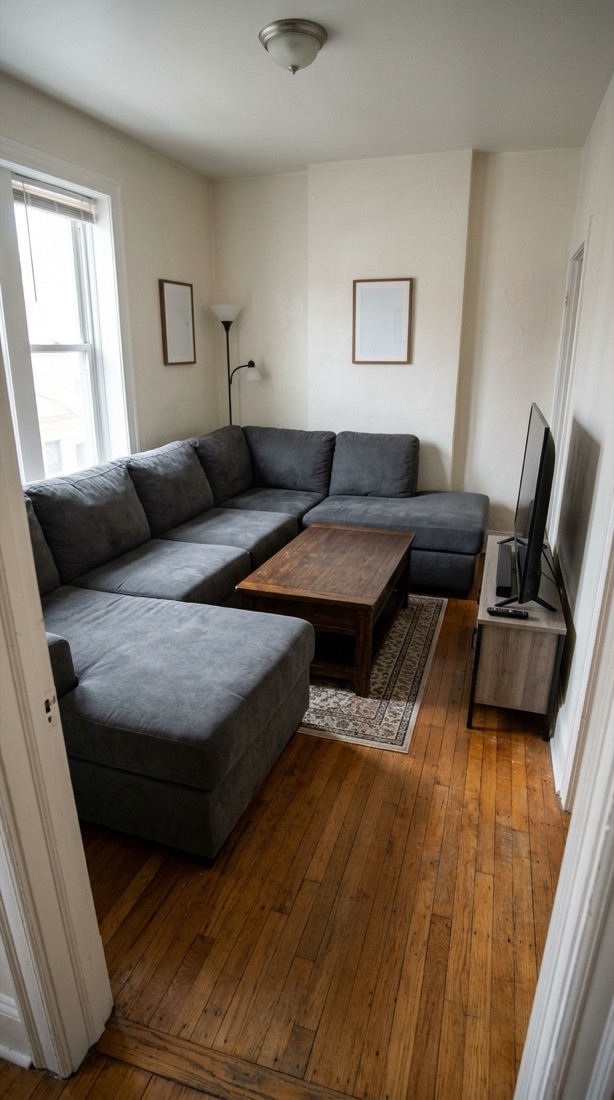
An oversized sectional or a king bed can swallow a small room. But the opposite mistake is just as common: lots of tiny furniture, which makes a room look like a dollhouse and offers less seating.
The fix: choose fewer, right-sized pieces. A full-size sofa with slim arms often works better than a loveseat plus two chairs. Measure the room and mark furniture sizes on the floor with painter’s tape before you buy.
2. Pushing everything against the walls
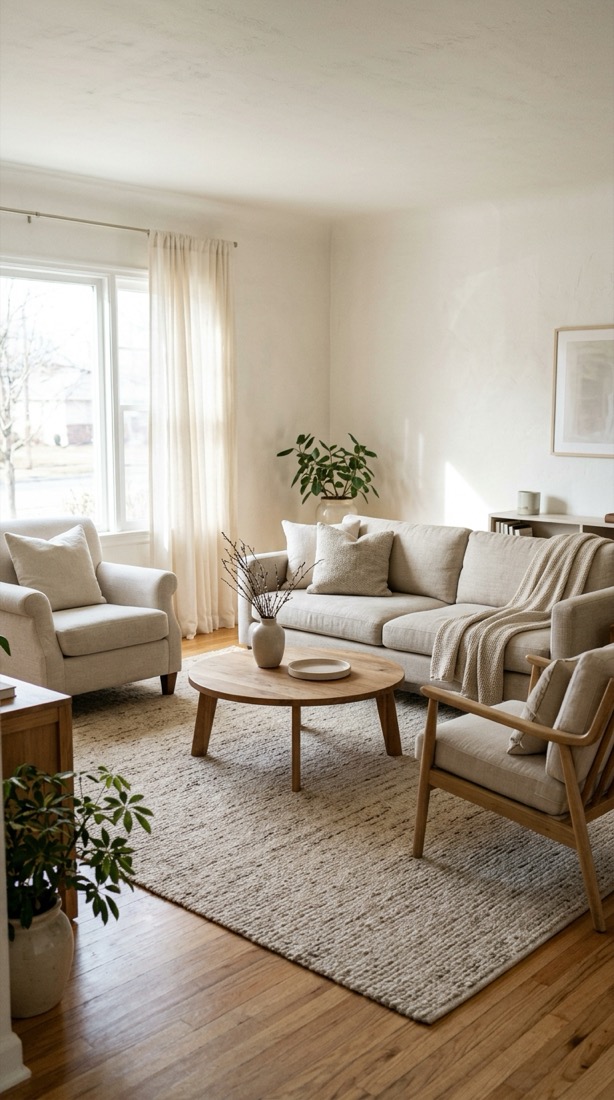
Lining every wall with furniture leaves an empty middle and makes the room feel like a waiting room.
The fix: pull the sofa a few inches off the wall and group seating around a rug or coffee table. Even a small gap behind the sofa makes the room feel more relaxed.
In a narrow room, angle one chair slightly toward the sofa to soften the layout.
3. A rug that is too small
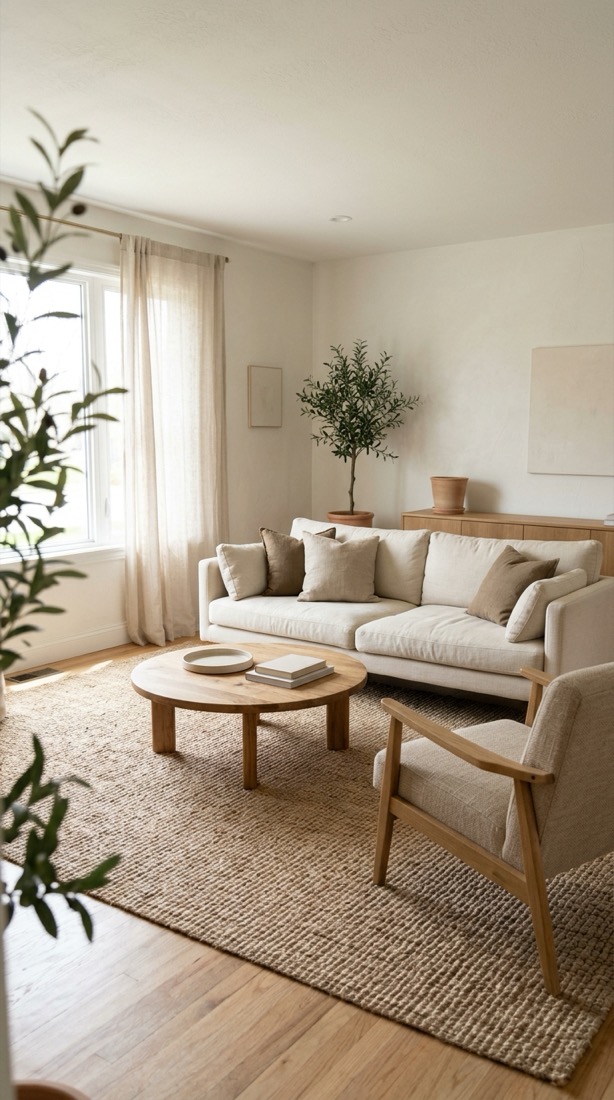
A small rug floating in the middle of the floor chops the room up and makes it look smaller.
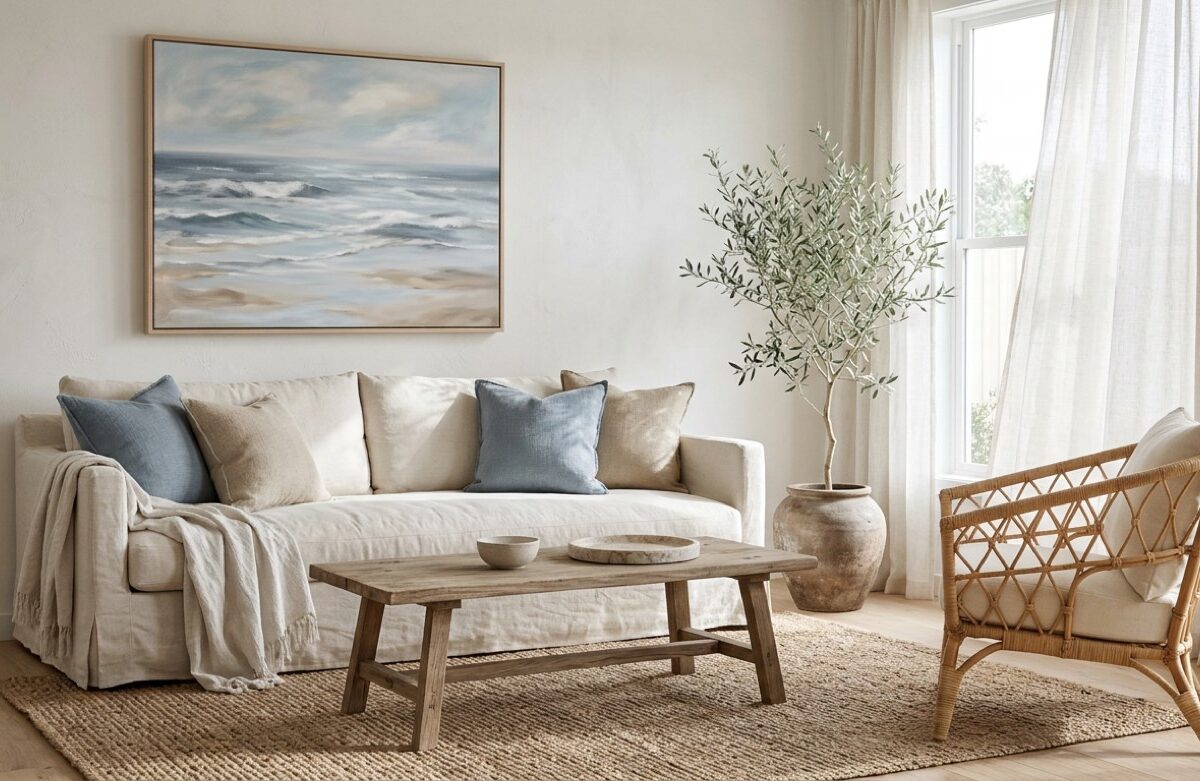
The fix: choose a rug large enough for at least the front legs of every seat to rest on it. In a living room, that is usually 5 by 8 or 8 by 10 feet.
If you already own a small rug, layer it on top of a larger, plain jute rug. You keep the pattern you love and gain the size the room needs.
4. Too many small decorations
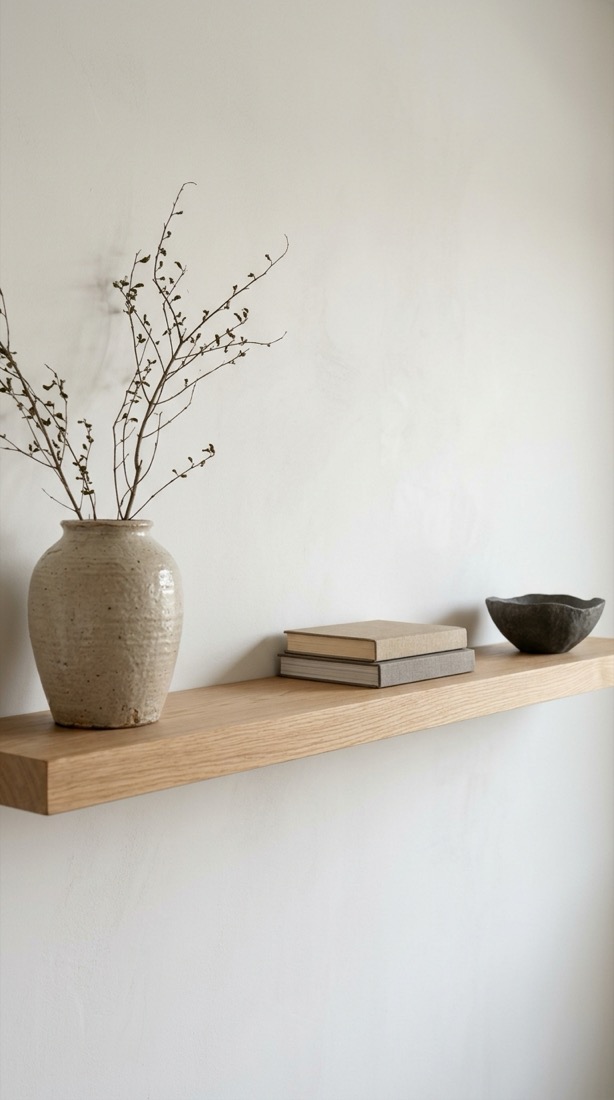
Lots of small objects on every surface look like clutter in a small home.
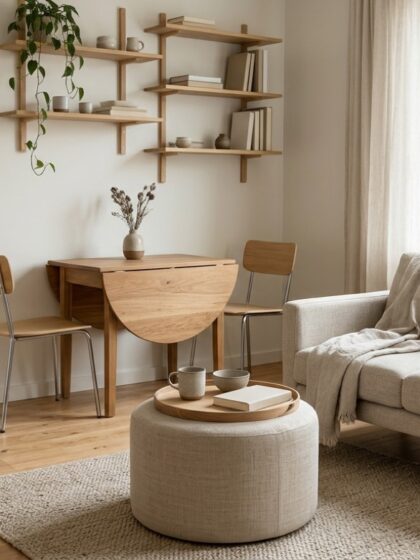
The fix: choose fewer, larger pieces. One big vase looks calmer than five small ones. Group small items on a tray, like the round wooden decorative tray, so they read as one.
Edit each surface down to three things and let the rest rotate in from a cupboard each season.
5. Blocking the light
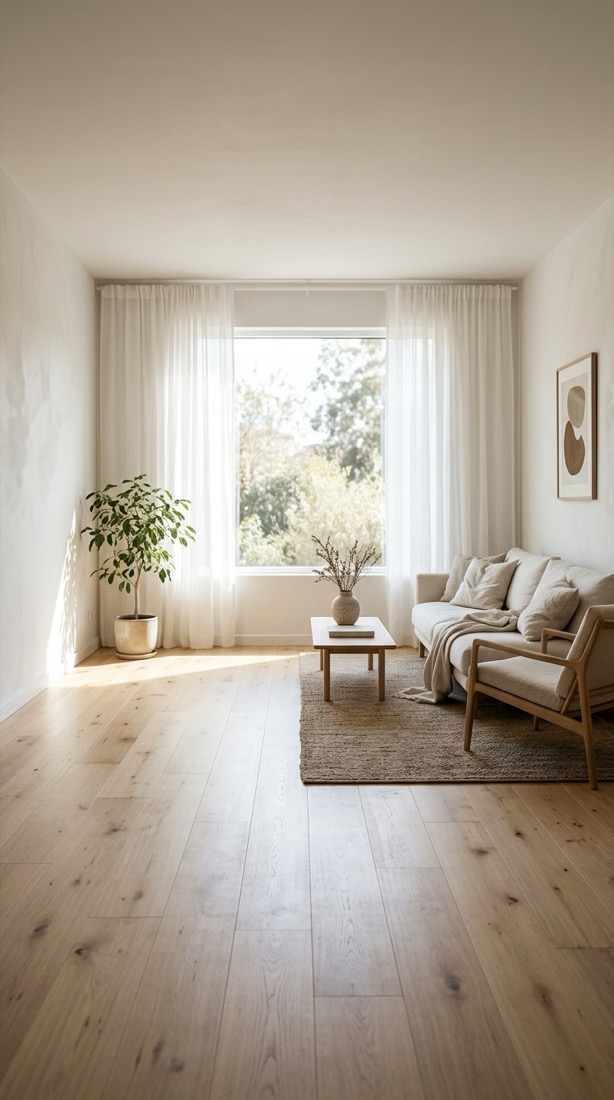
Tall furniture in front of a window, or heavy curtains that cover part of the glass, take away the light that makes small rooms feel open.
The fix: keep windows clear, use light, sheer curtains, and extend the curtain rod past the frame so the curtains stack beside the glass, not on it.
Mirrors placed beside a window spread the light even further into the room.
6. Hanging curtains too low
Curtains hung right at the top of the window frame make ceilings look lower.
The fix: hang them as close to the ceiling as possible and let them just touch the floor. The Kwik-Hang no-drill curtain rod brackets brackets need no drill, so they work in rentals.
Choose curtains in a color close to the walls so they add height without visually closing the room in.
Panels that are twice the width of the window look full and generous even when they are open.
7. Ignoring vertical space
In small homes, the walls are your biggest unused storage.
The fix: use tall, narrow bookcases, wall shelves and hooks. Anchor tall furniture to the wall. The Anchor It campaign explains how to prevent tip-overs.
Floating shelves above doors and windows are often forgotten. Use them for books or lidded baskets.
Hooks on the back of doors and inside closets hold bags, scarves and robes that would otherwise land on chairs.
8. Too many colors and patterns
A different color in every corner makes a small home feel chaotic.
The fix: choose two or three colors and repeat them in every room. A consistent palette makes a small home flow and feel larger.
Choose a neutral base, such as warm white and oak, and one or two accent colors, such as sage and rust. Carry the accents from room to room in pillows, art and small objects.
The same rule applies to patterns. Pick one bold pattern per room and keep the rest subtle.
9. No hidden storage
Open storage looks busy in small spaces, and things end up on the floor.
The fix: choose furniture that hides things: an ottoman with storage, a bed with drawers, a coffee table with a shelf. The folding linen storage ottoman is a footrest, a seat and a blanket box in one.
A bed with drawers and a coffee table with a shelf are two of the easiest swaps.
10. Only one overhead light
A single ceiling light makes small rooms feel flat and boxy.
The fix: use three light sources at different heights, such as a floor lamp, a table lamp and a plug-in sconce. Warm white bulbs make the room feel cozy.
Plug-in sconces and battery candles add light where there is no outlet. Put lamps on timers so the room glows when you come home.
Use the same warm bulb color everywhere so the light feels consistent.
11. Bulky furniture with no legs
Heavy, skirted furniture that sits flat on the floor looks massive in a small room.
The fix: choose sofas, chairs and dressers on slim legs. Seeing the floor underneath makes the room feel larger. Glass or acrylic tables almost disappear.
When you shop, look for at least 6 inches of space under sofas and chairs. Even a leggy dresser or nightstand makes a noticeable difference.
Acrylic and glass coffee tables are a great choice where floor space is tight.
12. No zones in an open room
In a studio or open plan room, furniture scattered without a plan makes the space feel messy.
The fix: define zones with rugs, lighting and furniture placement. A bookcase or a sofa back can divide the sleeping area from the living area.
Use lighting to separate zones too, such as a pendant over the dining table and a floor lamp by the sofa. A different rug under each zone makes the layout clear at a glance.
Keep sightlines open between zones so the whole room still feels connected.
Frequently asked questions
How do I make a small room look bigger?
Use fewer, right-sized pieces, a large rug, light colors, mirrors, curtains hung high and furniture on legs.
Should furniture be against the walls in a small room?
Not always. Pulling the sofa a few inches off the wall and grouping seating makes the room feel more relaxed.
What color makes a small room look bigger?
Light, warm colors such as soft white, cream and pale green, used consistently across the home.
Are big rugs good for small rooms?
Yes. A large rug that fits under the front legs of all the seating makes a small room look bigger.
Fix one mistake at a time
Pick the mistake that bothers you most and fix it this weekend. For more ideas, see our small living room ideas and small space storage ideas.