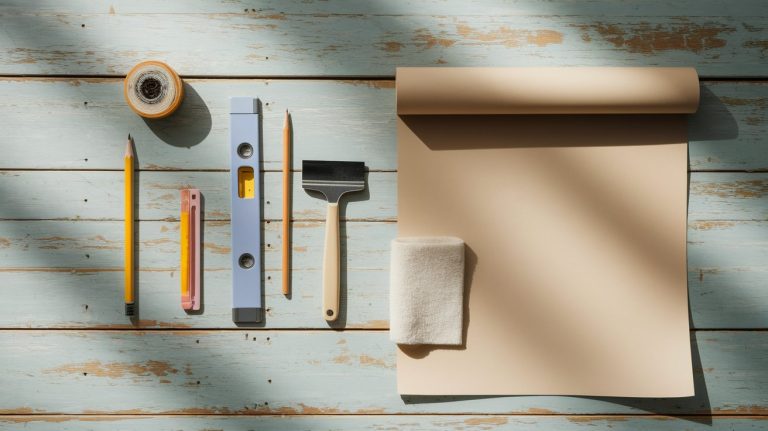
How to Make DIY Curtains That Wow (Easy, Affordable, and Perfect for Any Room)
Curtains have the power to transform a space, softening the light, adding texture, and creating a sense of privacy and warmth. But custom window treatments can get expensive fast.
That’s where DIY curtains come in. You can make beautiful, budget-friendly curtains tailored to your space and style, without needing a sewing machine or a big-box budget.
This guide walks you through smart, creative ways to make your own curtains, no matter your skill level.
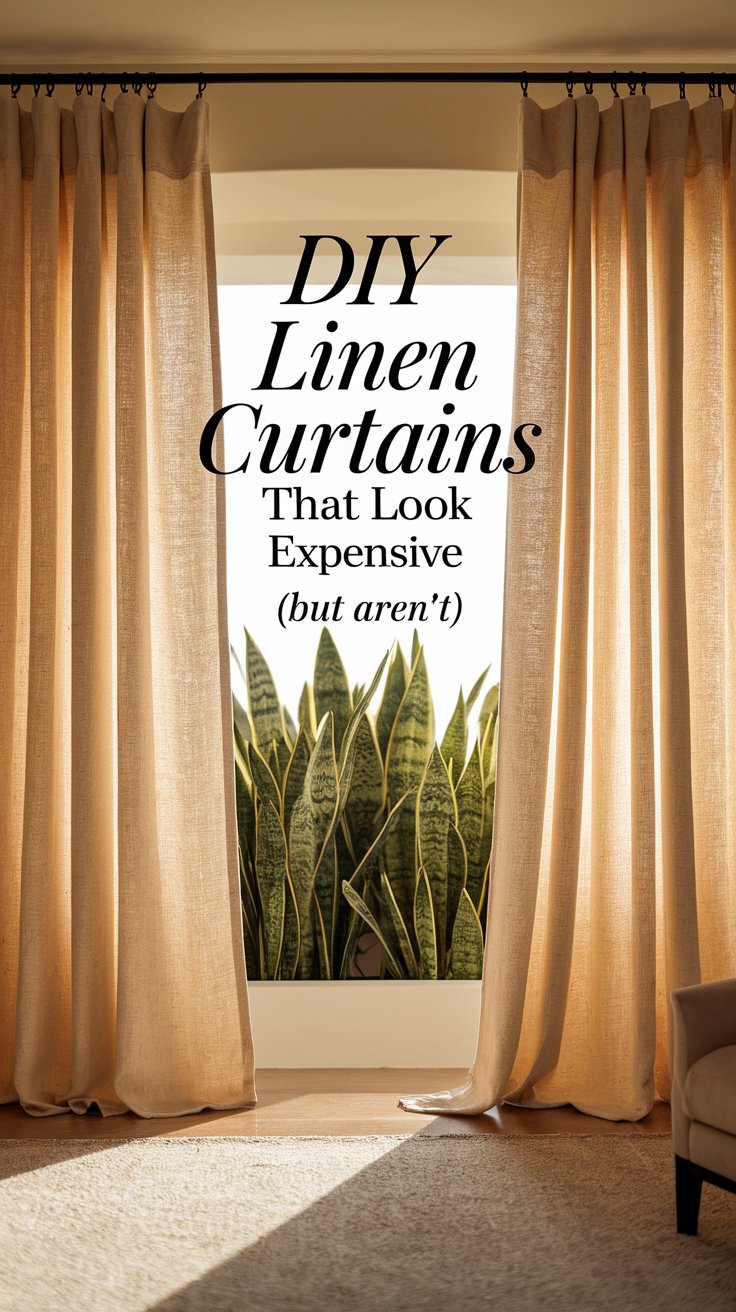
No-Sew DIY Curtain Ideas for Beginners
Fast, functional, and renter-friendly curtain hacks with real style, no sewing machine required.
1. Drop Cloth Curtains (Staple Gun or Clip Rings)
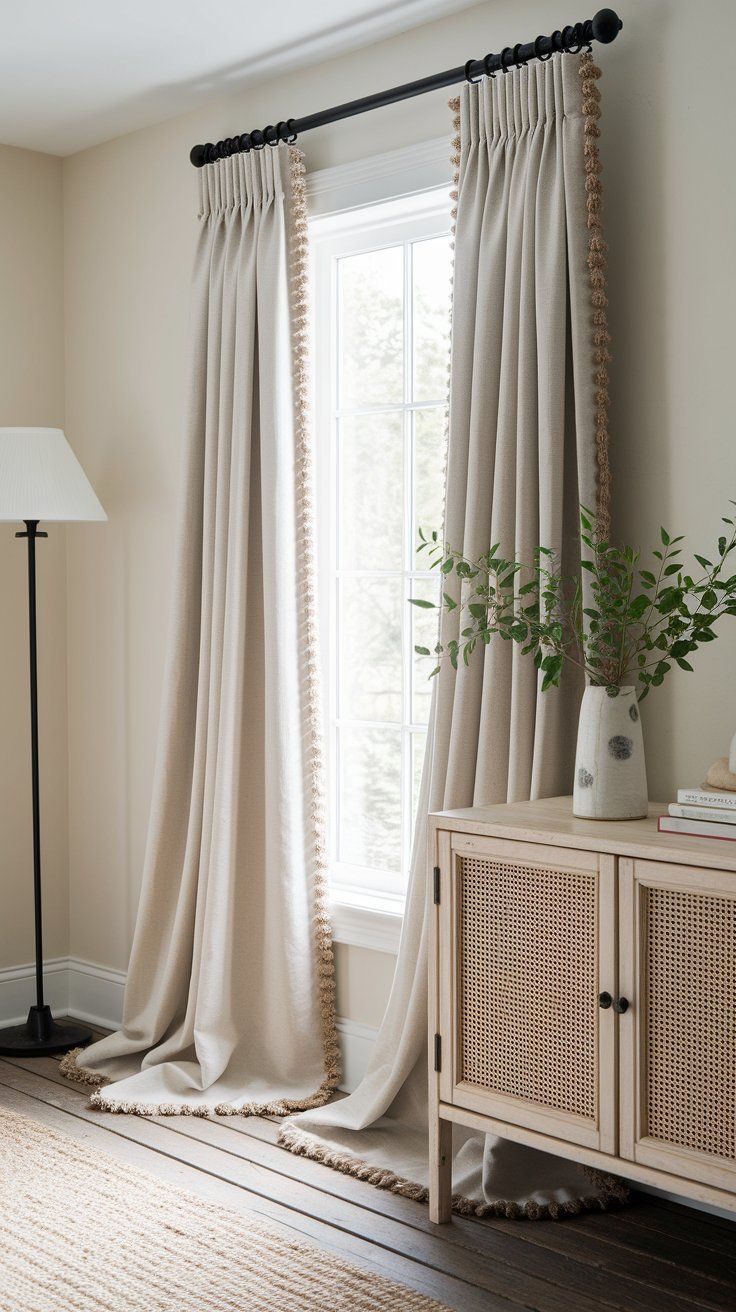
Drop cloths are a DIY favorite for good reason: they’re durable, affordable (as low as $10), and already come hemmed on the sides. The texture resembles linen, and they can be styled rustic, industrial, or even modern farmhouse.
What You’ll Need:
- Cotton drop cloth (6×9 or 9×12 depending on window size)
- Curtain rod + clip rings
- Iron-on hem tape (optional for bottom hem)
- Iron or steamer
- Bleach (optional, if you want to whiten them)
- Staple gun (if creating pleats)
Steps:
- Wash and dry the drop cloth to soften and remove wrinkles.
- Fold over the top edge about 3–4 inches to create a faux pleated top.
- Use clip rings to attach every 6–8 inches, or staple behind the fold for a tailored look.
- Hang and adjust to desired length, let them puddle or use hem tape for a cleaner finish.
Style Variations:
- Dip-dye the bottom half for a boho vibe
- Stencil patterns using fabric paint
- Add curtain tie-backs made from braided jute rope
2. Sheet Curtains with Ribbon Ties
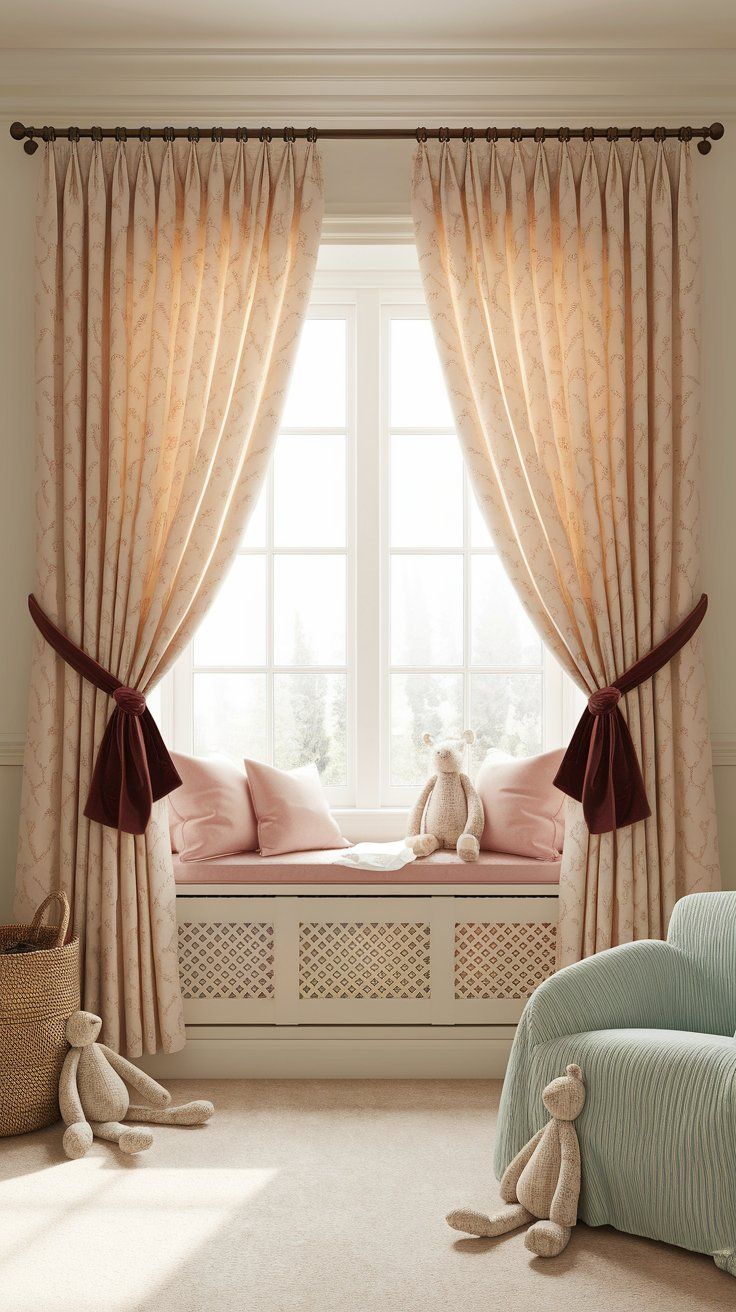
Flat sheets are an affordable fabric source and come in endless colors and prints, perfect for a quick curtain solution that feels custom.
Best For:
- Bedrooms, nurseries, and playrooms
- Lightweight windows
- Coordinating with bedding sets
Materials Needed:
- Flat sheet (twin or full size)
- Ribbon, jute, or fabric strips for ties
- Curtain rod or dowel
- Scissors and measuring tape
How to Make Them:
- Cut or fold your flat sheet to your window’s height.
- Use scissors to make evenly spaced slits along the top hem.
- Thread ribbon through the slits and tie loose knots or bows for hanging.
- Alternatively, use curtain clips with safety pins if you want to skip the ribbons.
Styling Ideas:
- Use contrasting ribbon colors for playful flair
- Mix solid and patterned sheets for layered curtains
- Tie them with velvet ribbon for a luxe touch on a budget
3. Fabric Shower Curtain Hack for Small Windows
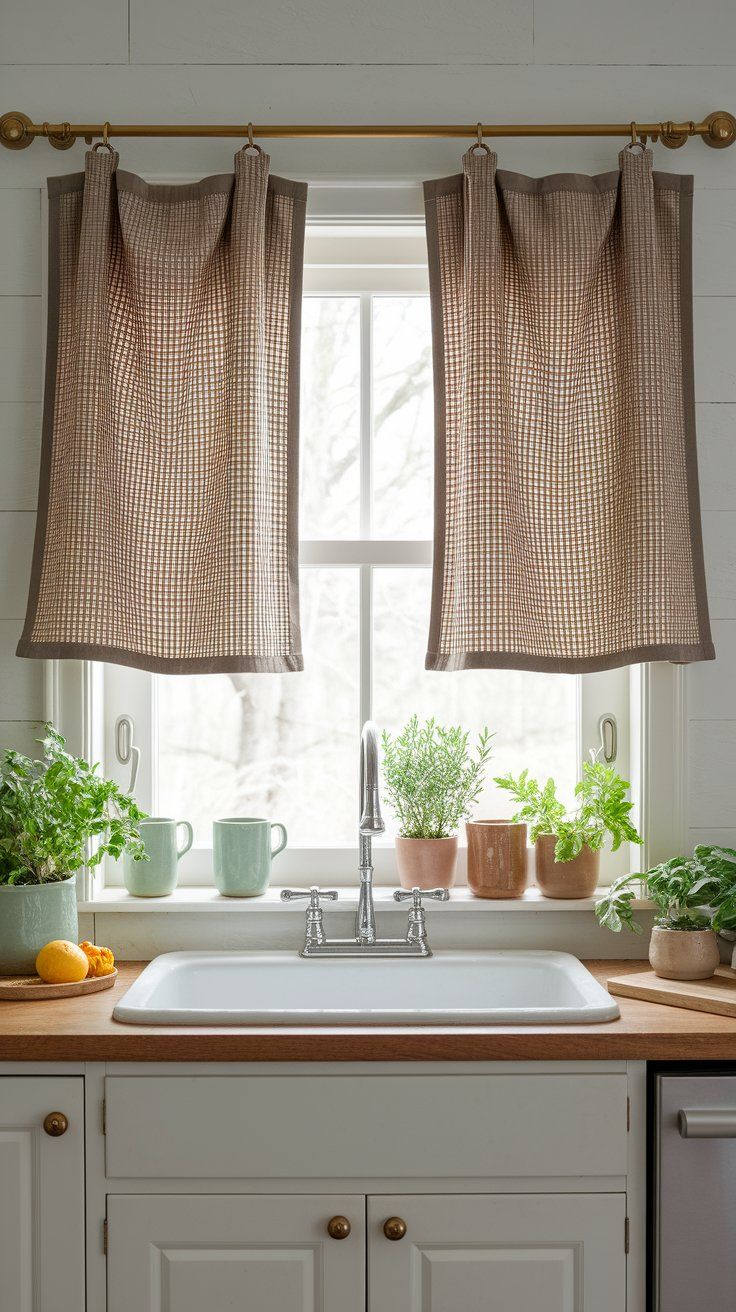
This hack is brilliant for laundry rooms, bathrooms, kitchens, or studios. A single fabric shower curtain can be turned into two café-style curtains or one stylish window panel.
What You’ll Need:
- Fabric shower curtain
- Fabric scissors
- Iron-on hem tape
- Clip rings or rod
Instructions:
- Cut the shower curtain in half vertically if using for two windows or a split panel.
- Fold the raw edges ½ inch twice and iron flat.
- Secure the fold using iron-on hem tape to create a clean edge.
- Hang using curtain clips for a polished finish.
Pro Tip: Look for waffle weave, floral, or geometric fabric shower curtains from discount stores or thrift shops. The water resistance makes them easy to clean, too.
4. Tablecloth Curtains for a Chic Statement
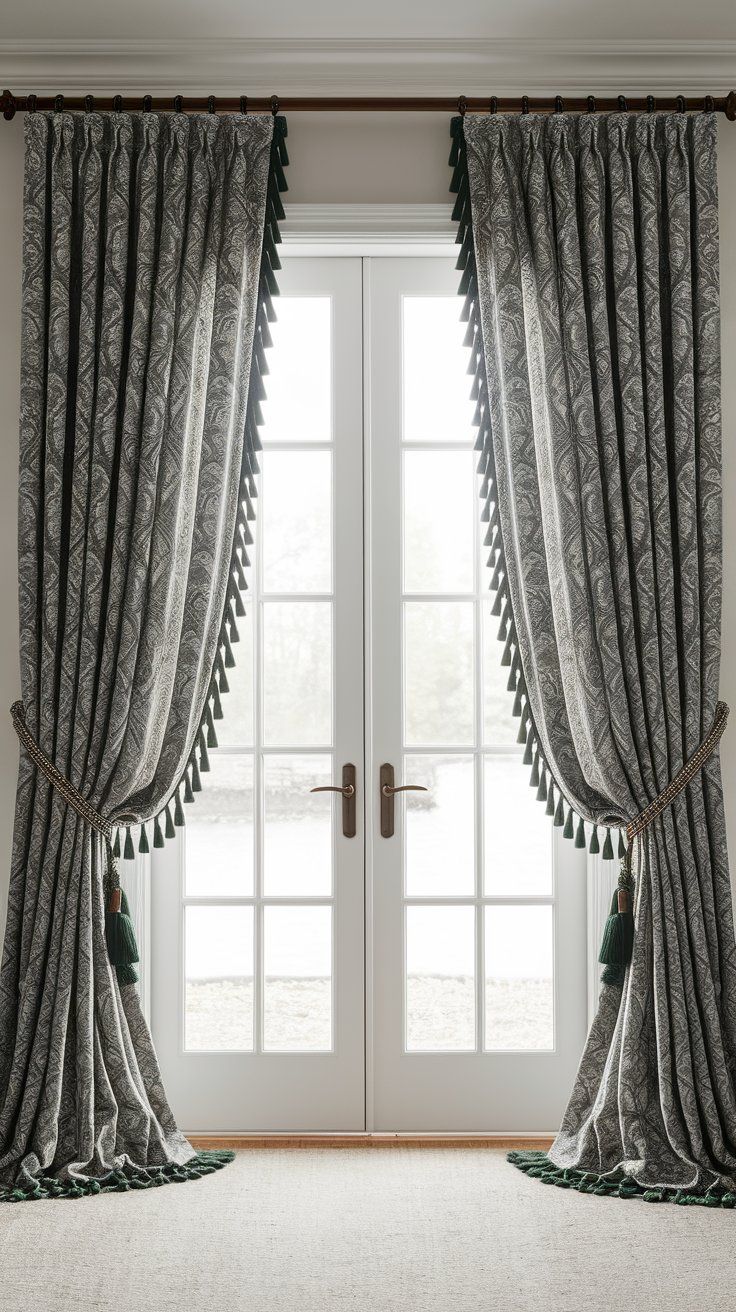
Oversized printed or solid tablecloths are a design trick used by stylists and renters alike. They often have a sophisticated drape and come in elegant prints that mimic designer fabrics.
Where It Works Best:
- Sliding doors
- Dining rooms
- French doors
- Statement windows
Materials:
- Rectangular tablecloth (60×84 or larger)
- Curtain clips or tension rod
- Hem tape (optional)
Steps:
- Fold the top 3–4 inches of the tablecloth and secure it with hem tape to form a rod pocket.
- Or use clip rings to preserve the full height of the fabric.
- Adjust the length to your window size, hem with tape if necessary.
Design Tips:
- Use two identical tablecloths for a symmetrical pair
- Add fabric fringe or tassels along the bottom for visual interest
- Choose textured linen or damask cloths for a more upscale look
5. No-Sew Blackout Curtains with Hem Tape
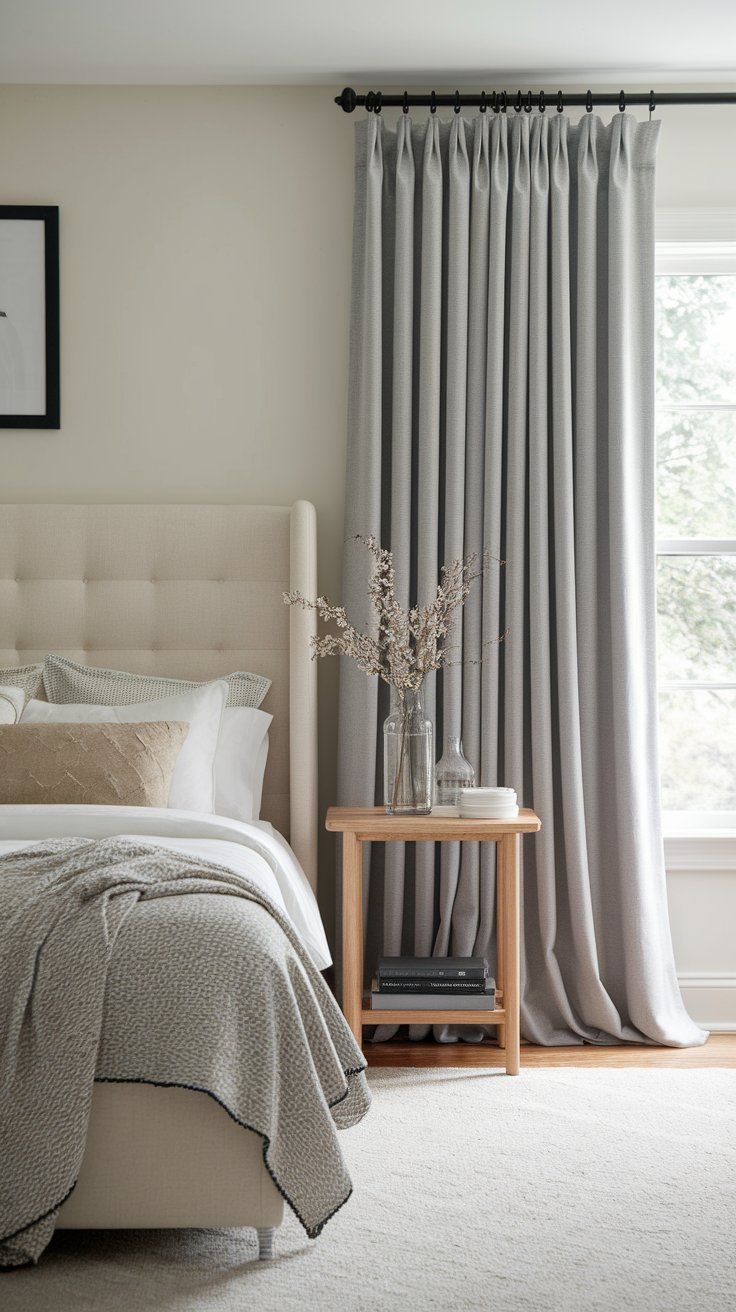
When light-blocking is the priority, you can DIY blackout curtains that are just as effective (and better looking) than many store-bought versions.
Ideal For:
- Bedrooms and nurseries
- Shift workers
- Media rooms
Materials Needed:
- Blackout fabric (buy by the yard or repurpose blackout liners)
- Decorative fabric (optional for layering)
- Iron-on hem tape
- Clip rings or rod pocket tape
How to Make Them:
- Cut blackout fabric to the height + width of your window (add 2 inches all around).
- Fold over all four edges ½–1 inch and press with an iron.
- Use hem tape to secure edges and create a clean border.
- Clip to curtain rings or apply a rod pocket strip at the top.
Bonus Tip: Use decorative linen or cotton fabric as a front panel and layer blackout fabric behind it to get beauty and function in one.
Section 2: DIY Curtains for the Living Room
Elegant, cozy, and functional curtain ideas that elevate your main gathering space, without the cost of custom panels.
6. Painted Canvas Curtains (Custom Patterns or Stripes)
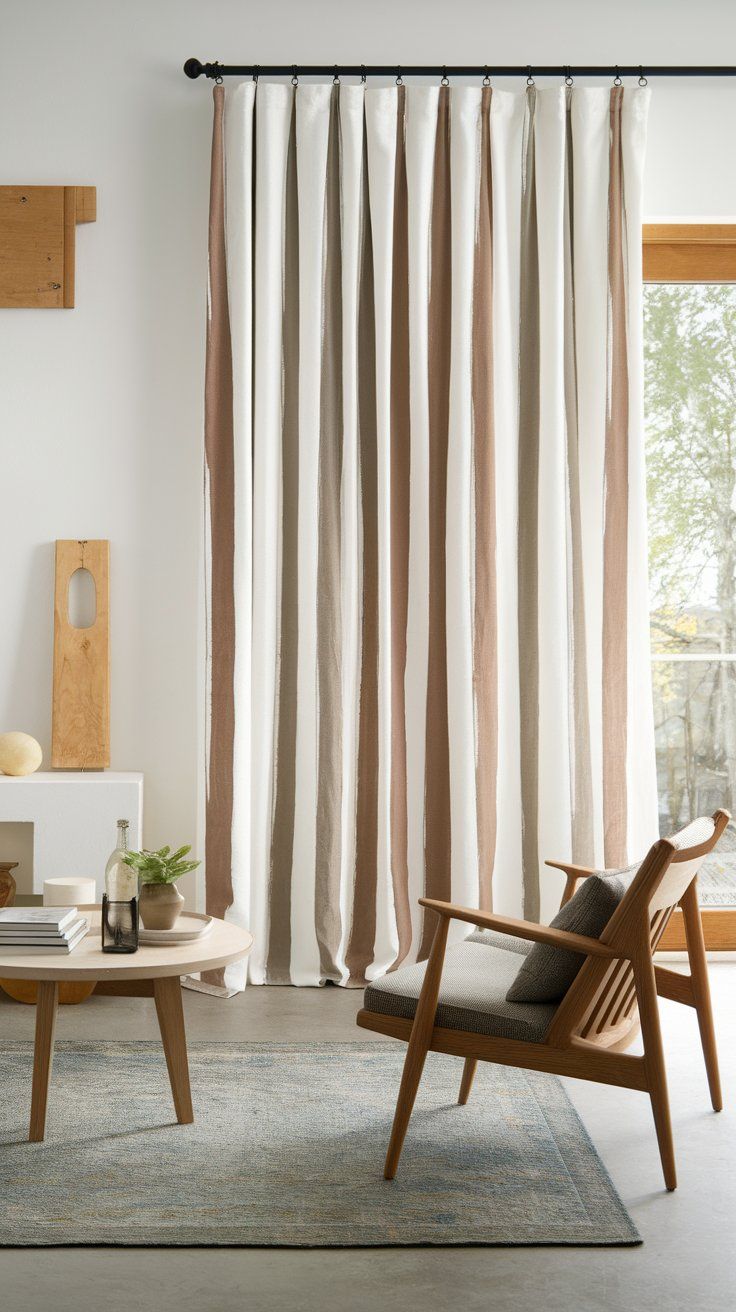
If you want bold, artistic, or unique curtains without splurging on designer fabric, start with plain white canvas and add your own touch using fabric paint.
Best For:
- Modern, artsy, or eclectic interiors
- Making a large visual impact on a budget
What You’ll Need:
- Plain white canvas drop cloths or heavyweight cotton panels
- Fabric paint or diluted acrylic paint
- Painter’s tape (for stripes or patterns)
- Large work surface (floor or table)
- Foam brush or roller
How to Make Them:
- Lay your drop cloth out flat and iron to remove creases.
- Use painter’s tape to create stripes, grids, or shapes.
- Paint between tape lines with a roller or foam brush.
- Let dry for 24 hours, then clip to rings and hang.
Style Options:
- Vertical stripes for a taller-looking room
- Abstract brush strokes for a playful vibe
- Tone-on-tone colors (e.g. taupe on ivory) for subtle texture
7. Grommet-Top Curtains with Heavyweight Fabric
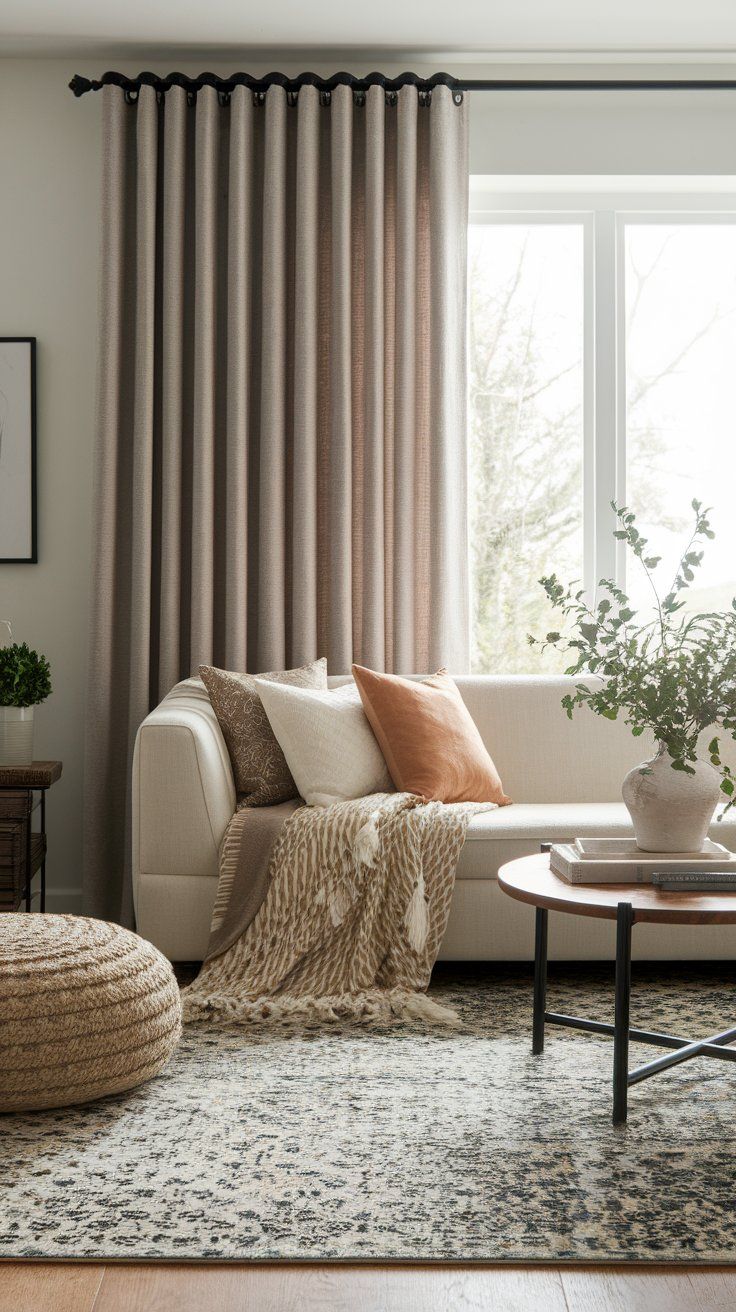
This no-sew grommet hack gives you a tailored, high-end look using just a grommet kit and some patience. It’s a great option if you want smooth slide-on functionality without clips or tabs.
Materials Needed:
- Upholstery or curtain fabric (linen, velvet, or cotton duck)
- Grommet kit (snap-on plastic or metal set)
- Curtain rod
- Iron-on hem tape
How to Assemble:
- Cut your fabric panels to size and hem the top with tape.
- Mark equal spaces across the top (usually 6–8 inches apart).
- Punch holes and snap in grommets.
- Slide onto your rod.
Design Tip: Heavier fabric adds warmth and helps block drafts or excess light, perfect for living rooms that double as cozy night-time spaces.
8. Rustic Burlap Curtains with Decorative Ties
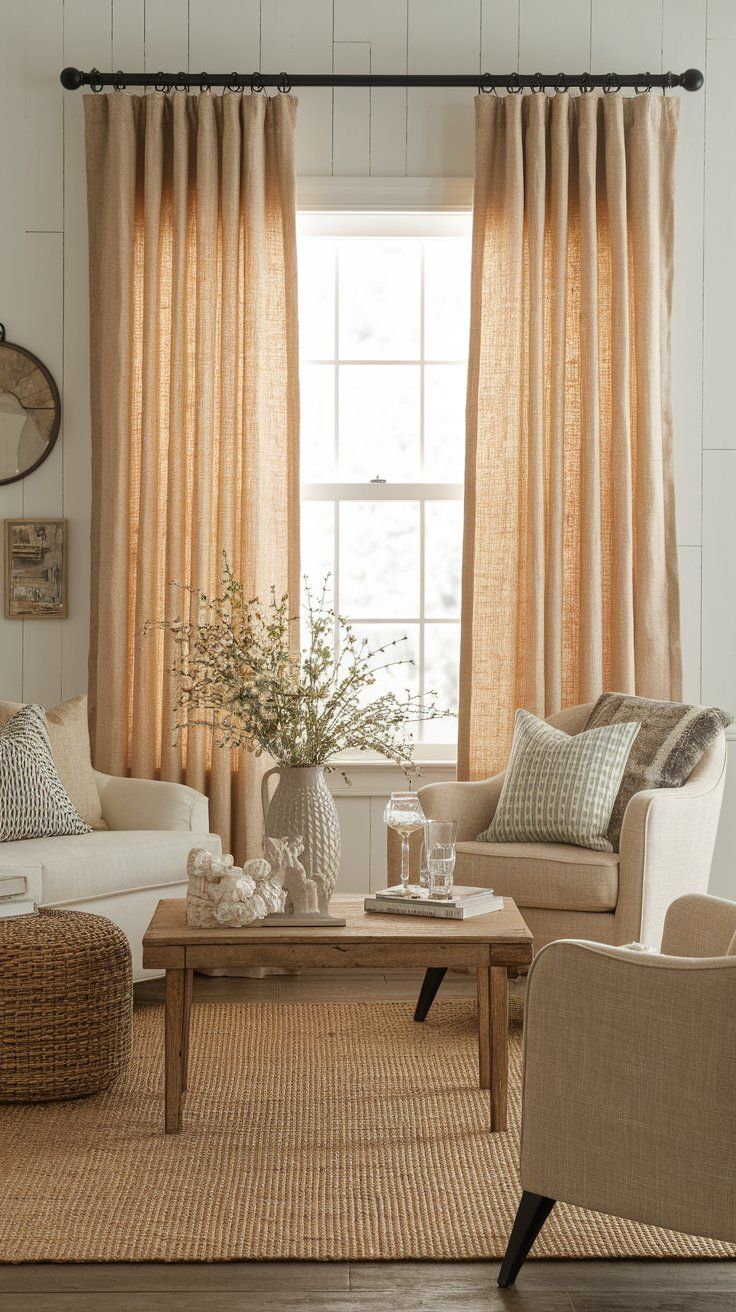
Burlap offers a rustic, textural quality that works well with farmhouse, vintage, or boho styles. It’s also affordable and easy to work with.
Best For:
- Farmhouse living rooms
- Earth-toned or vintage spaces
- Adding texture to neutral decor
Supplies:
- Burlap fabric (cut to size)
- Iron-on hem tape
- Curtain rings with clips or twine for tie-ups
- Optional: lace ribbon or cotton lining
Steps:
- Hem the edges using tape to keep burlap from fraying.
- Attach with clip rings or fold the top and secure with twine to create loops.
- Use ribbon, rope, or scrap fabric as curtain tie-backs.
Optional: Add a cotton lining if you want to reduce light penetration or rough texture.
9. DIY Layered Sheer + Opaque Panels
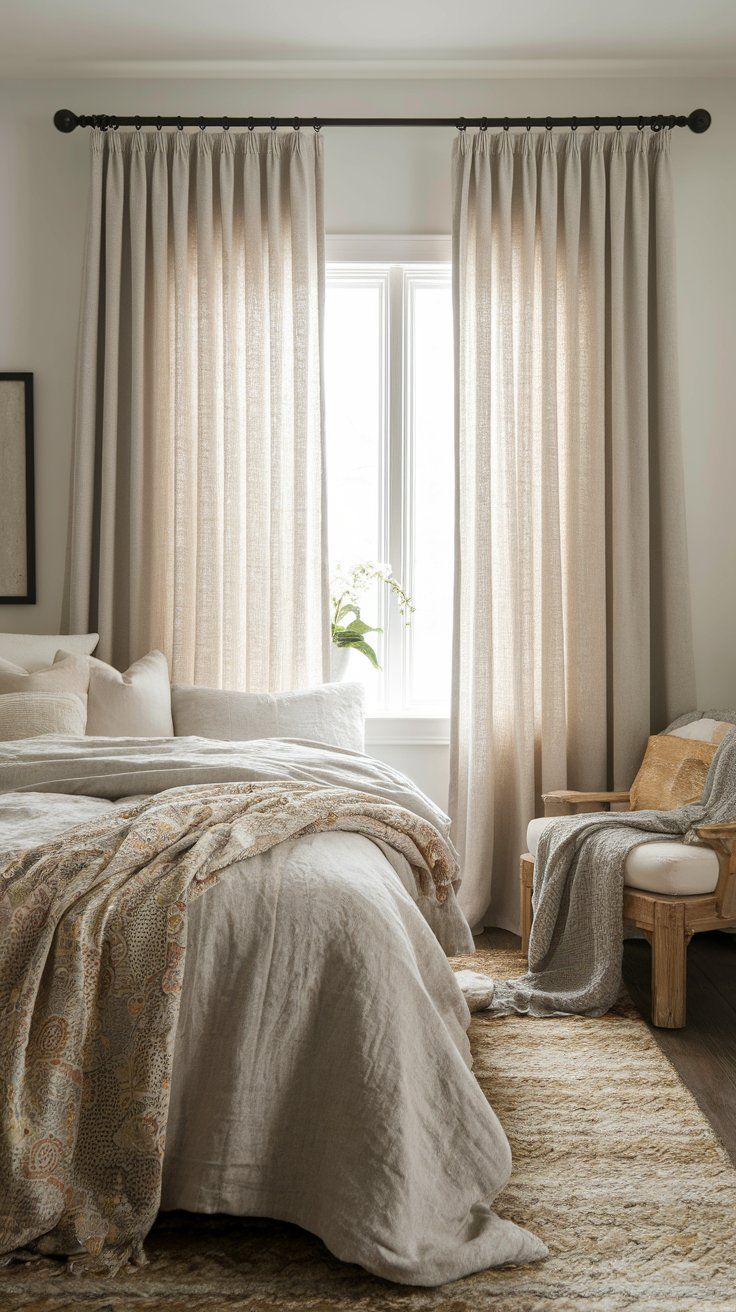
Layered curtains are ideal for controlling privacy and light throughout the day. Combine lightweight sheer fabric with solid or blackout panels for a flexible, polished look.
How to Build Them:
- Use a double curtain rod or mount two rods one behind the other
- Hang sheer panels (like voile or gauze) on the inner rod
- Hang solid DIY curtains (drop cloth, linen, velvet) on the outer rod
Styling Tips:
- Mix neutral sheers with rich outer fabrics like emerald green or navy
- Use two tones of the same color (e.g., ivory and sand) for an elevated look
- Add subtle tie-backs to pull the outer layer aside without losing the sheer glow
10. Ceiling-Mounted Curtain Rod for Drama
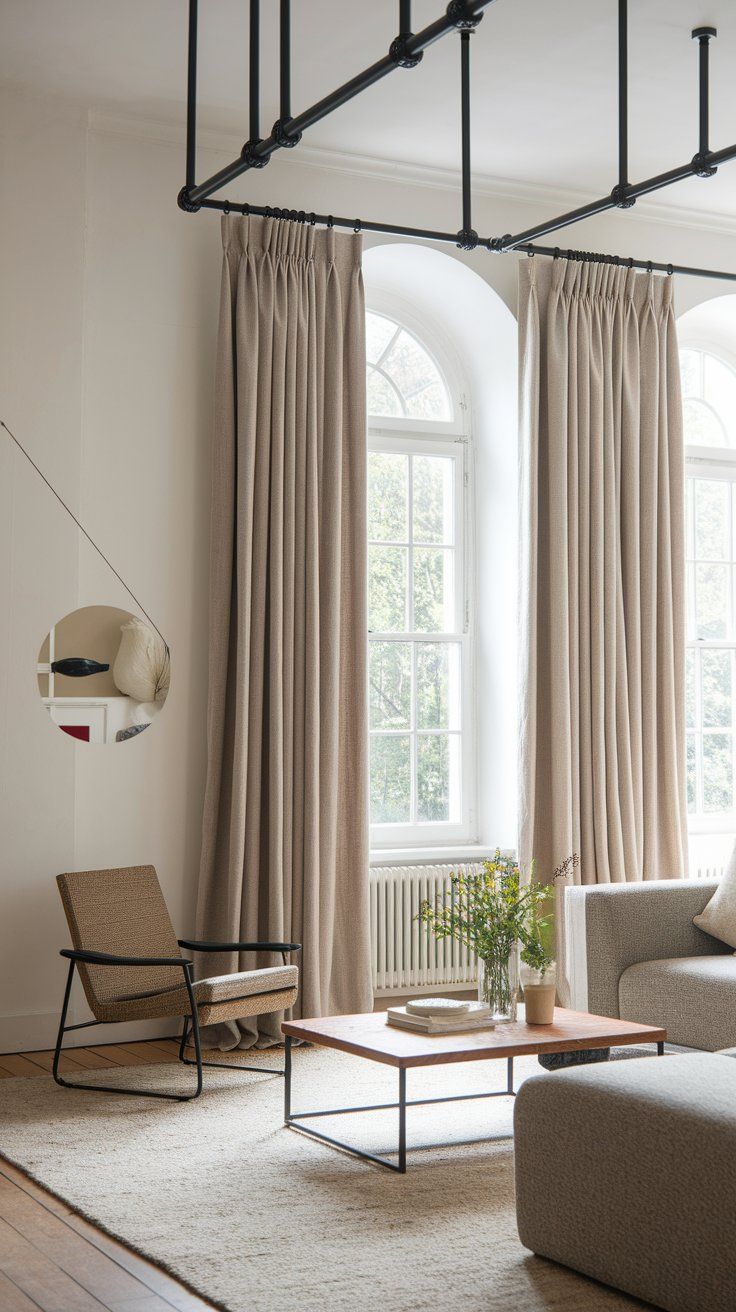
Mounting your curtains at ceiling level (rather than just above the window) gives the illusion of taller ceilings and a grander space. You can use budget-friendly conduit pipe or IKEA hacks to pull this off.
Materials:
- Ceiling-mounted brackets
- Electrical conduit pipe (cut to window width)
- Spray paint (optional)
- Curtain clips or grommets
- Lightweight-to-medium weight fabric
Steps:
- Mount brackets directly into ceiling joists or use heavy-duty anchors.
- Paint your conduit rod (if desired) and rest in the brackets.
- Hang curtains from clips or grommets, ensure your fabric is long enough to touch the floor or puddle slightly.
Design Tip: Go long with your panels, floor-length or longer, for instant luxury, even with inexpensive fabric.
Bedroom Curtain Ideas for Privacy & Mood
Create a cozy, restful retreat with curtains that balance softness, coverage, and style, all without expensive custom work.
11. Roman Shade Style Using Fabric and Tension Rods
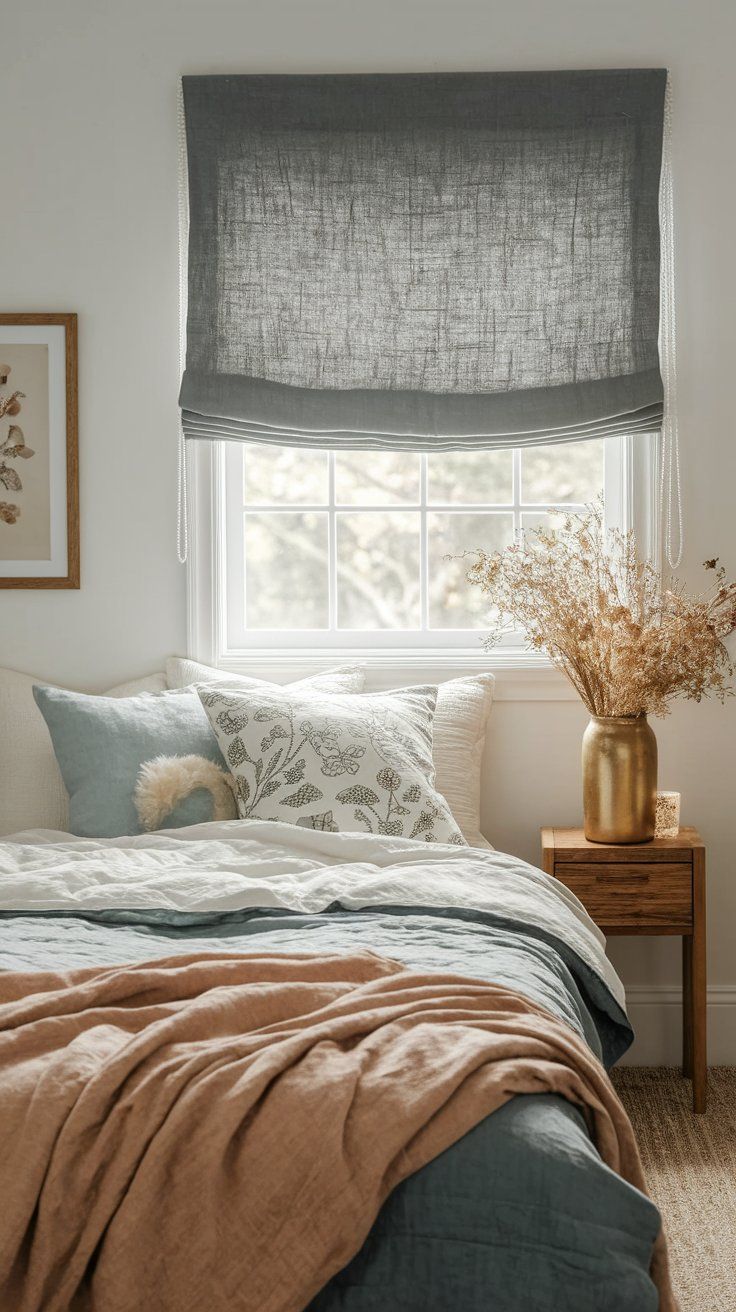
Roman shades bring elegance and structure to your windows. You can make a simplified version using fabric, dowels, and tension rods, no sewing required.
What You’ll Need:
- Medium-weight fabric (cotton, linen, canvas)
- 3–4 thin dowel rods (cut to window width)
- Fabric glue or iron-on tape
- Two tension rods (top and bottom of the window)
How to Do It:
- Cut fabric to the window’s height and width, with a few extra inches for folds.
- Use iron-on tape to create horizontal pockets spaced every 10–12 inches for the dowels.
- Insert dowels to form folds, then hang with a tension rod at the top.
- Use another tension rod to anchor the fabric at the bottom or let it hang loose.
Perfect for: Small bedroom windows, narrow bathroom windows, or a polished rental upgrade.
12. Pom-Pom Edge Curtains with Simple Stitching or Glue
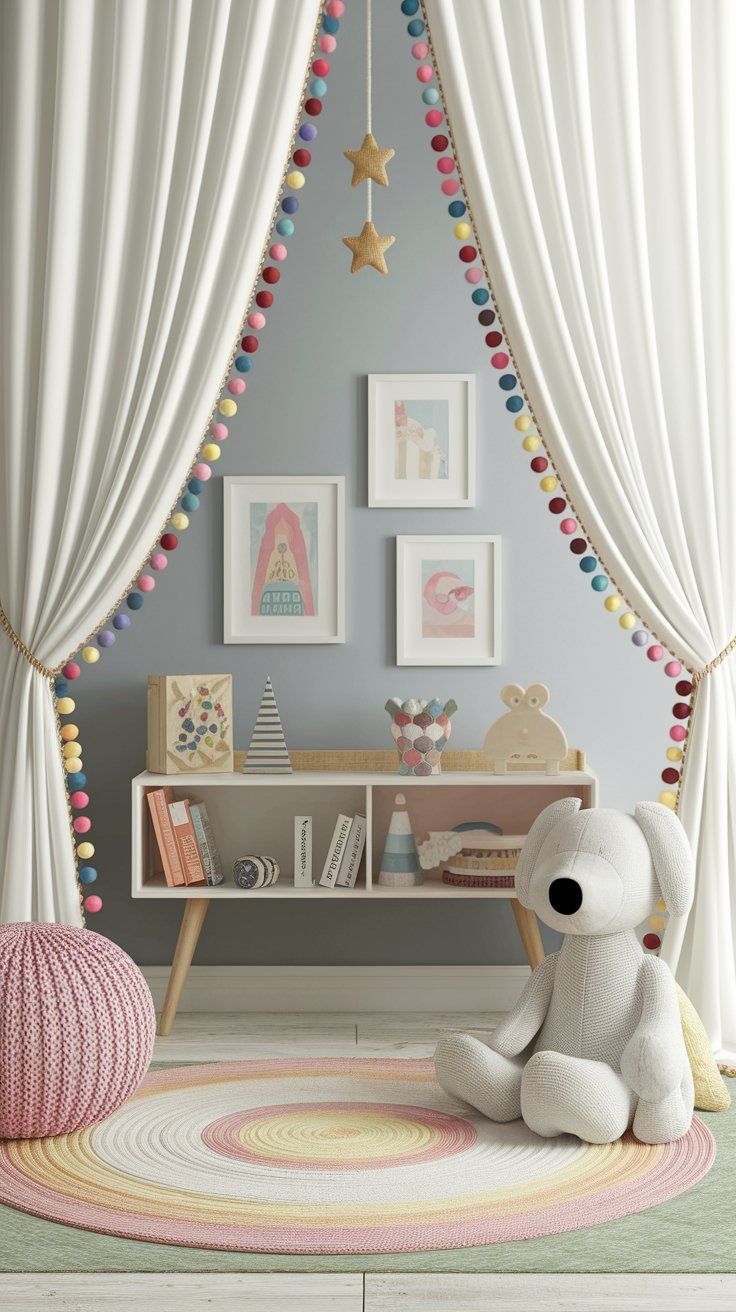
Add charm and personality to plain curtain panels by gluing or lightly stitching pom-pom fringe along the edges.
Best Fabric Base:
- White cotton sheets
- Drop cloths
- Lightweight curtains you already own
Materials:
- Pom-pom trim in a contrasting or matching color
- Fabric glue or fusible hem tape
- Scissors and ruler
- Curtain rod + clips or grommets
Steps:
- Lay curtain flat and align trim along both vertical sides.
- Use fabric glue or iron-on tape to secure trim from top to bottom.
- Let dry fully, then hang as usual.
Why It Works: This small addition instantly transforms plain curtains into boutique-style window treatments.
13. DIY Tie-Top Curtains in Linen or Gauze
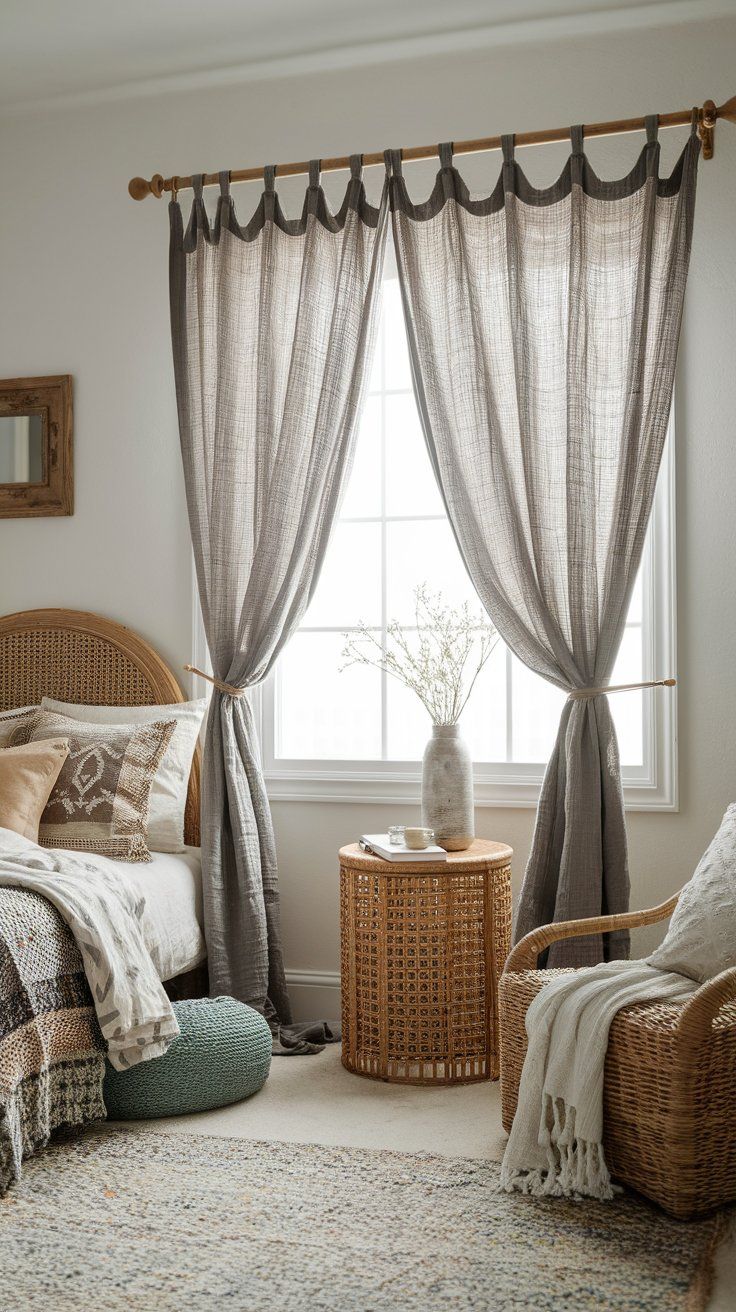
Tie-top curtains feel romantic, lightweight, and relaxed, ideal for creating a serene bedroom atmosphere.
How to Make Them:
- Use lightweight linen, gauze, or muslin fabric
- Cut fabric to the full height of your window + 12 inches for ties
- Cut small strips (approx. 10” long) of matching or contrast fabric
- Tie the strips directly onto the curtain rod in loose bows or knots
Optional: Hem the sides with iron-on tape, or leave raw for a breezy, organic texture.
Style Tip: Try layering two tie-top panels with different opacities for added dimension.
14. Blackout Curtains with Patterned Liners
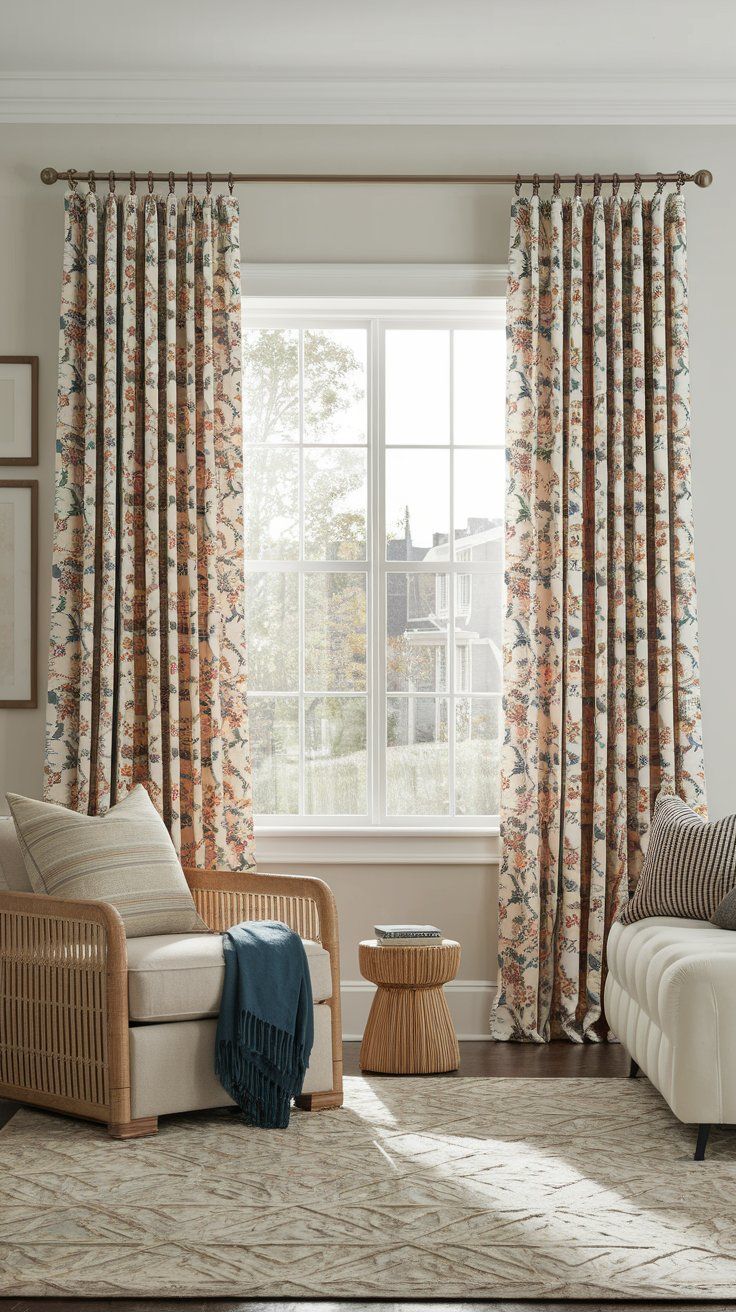
You can make beautiful blackout curtains by pairing plain blackout fabric with a fun or elegant patterned layer.
What You’ll Need:
- Blackout fabric
- Lightweight patterned cotton or muslin
- Fabric glue or fusible tape
- Curtain rings or grommet tape
Steps:
- Cut both fabrics to the same size (slightly larger than your window).
- Use fusible tape or glue to join them along all four edges.
- Clip to curtain rings and hang with blackout layer facing out, or reverse depending on your style.
Room Benefits: Blocks sunlight, muffles noise, and adds personality without sacrificing function.
15. Bed Canopy Curtains for a Boho Look
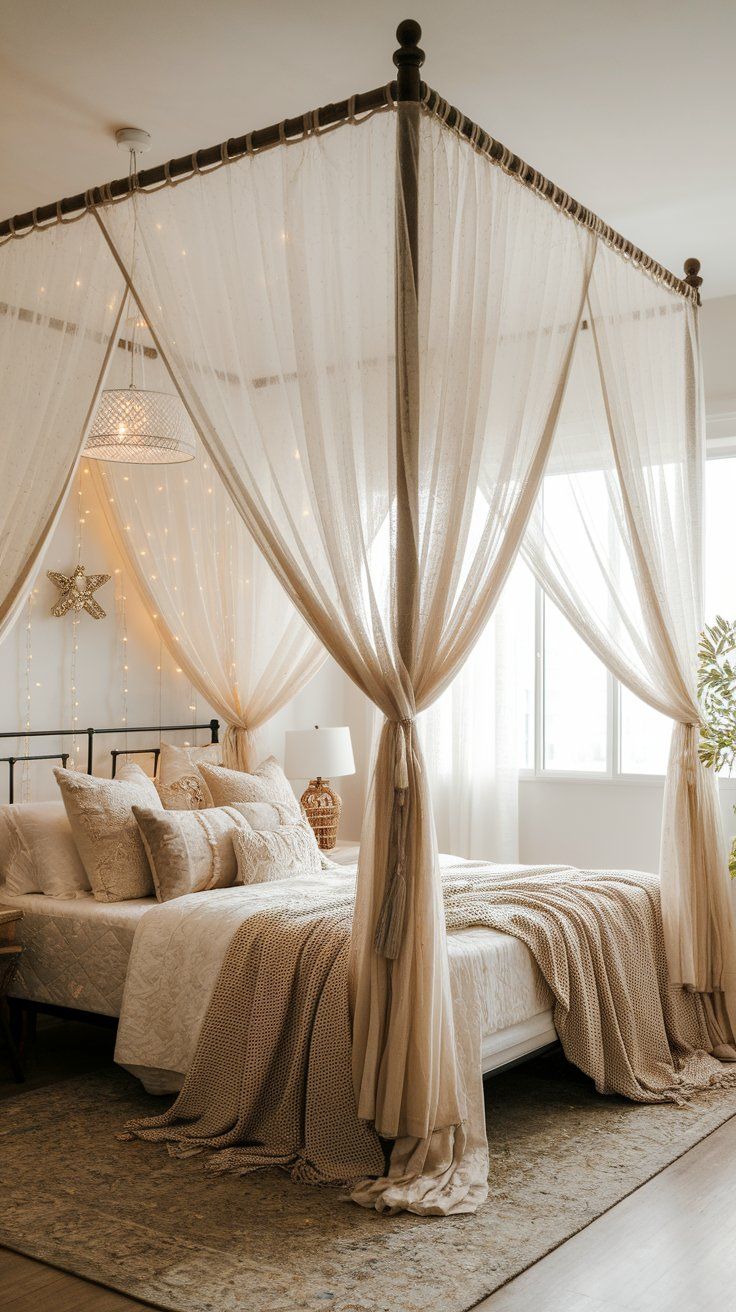
Turn your bed into a soft, dreamy sanctuary using sheer curtains as a DIY canopy. No canopy bed frame needed.
Materials:
- Four tension rods (or ceiling-mounted curtain rods)
- 2–4 sheer curtain panels
- Ceiling hooks (if not using rods)
- String lights (optional)
How to Create the Look:
- Mount rods or hooks on the ceiling to frame the bed (rectangle or square pattern).
- Drape sheer curtains over the rods or hang from hooks with rings.
- Let fabric fall to the floor on each side of the bed.
- Add fairy lights along the top edges for a magical glow.
Perfect for: Boho bedrooms, reading nooks, or romantic rentals without structural changes.
Creative Curtain Ideas for Small Spaces
These clever DIY curtain ideas help you divide, conceal, or soften tight corners, without crowding the room.
16. Curtain Wall Divider Using Command Hooks
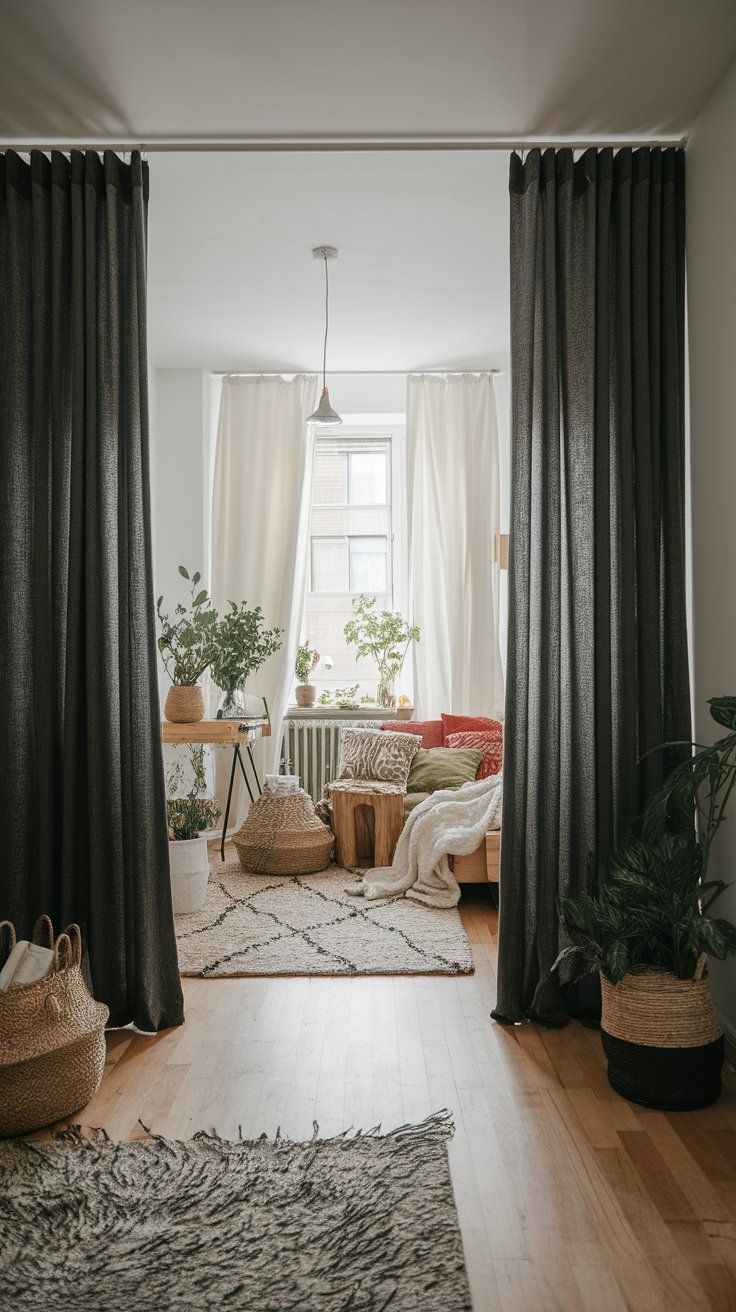
Need to break up an open space or create a little privacy in a studio? You don’t need a construction project, just a curtain and some adhesive hooks.
Where to Use It:
- Studio apartments
- Shared bedrooms
- Home offices or creative zones
What You’ll Need:
- Medium- to heavyweight fabric panel or pre-made curtain
- Large Command hooks or adhesive rod brackets
- Lightweight curtain rod or tension rod
- Measuring tape
Steps:
- Measure the width of the space to divide.
- Attach adhesive hooks at even intervals (use a level).
- Mount your rod and hang the curtain.
- Pull aside or let drape depending on use.
Design Tip: Use velvet or dark linen for a cozy, intentional look, perfect for creating the feeling of a “room within a room.”
17. Under-Sink Curtains for Open Vanities
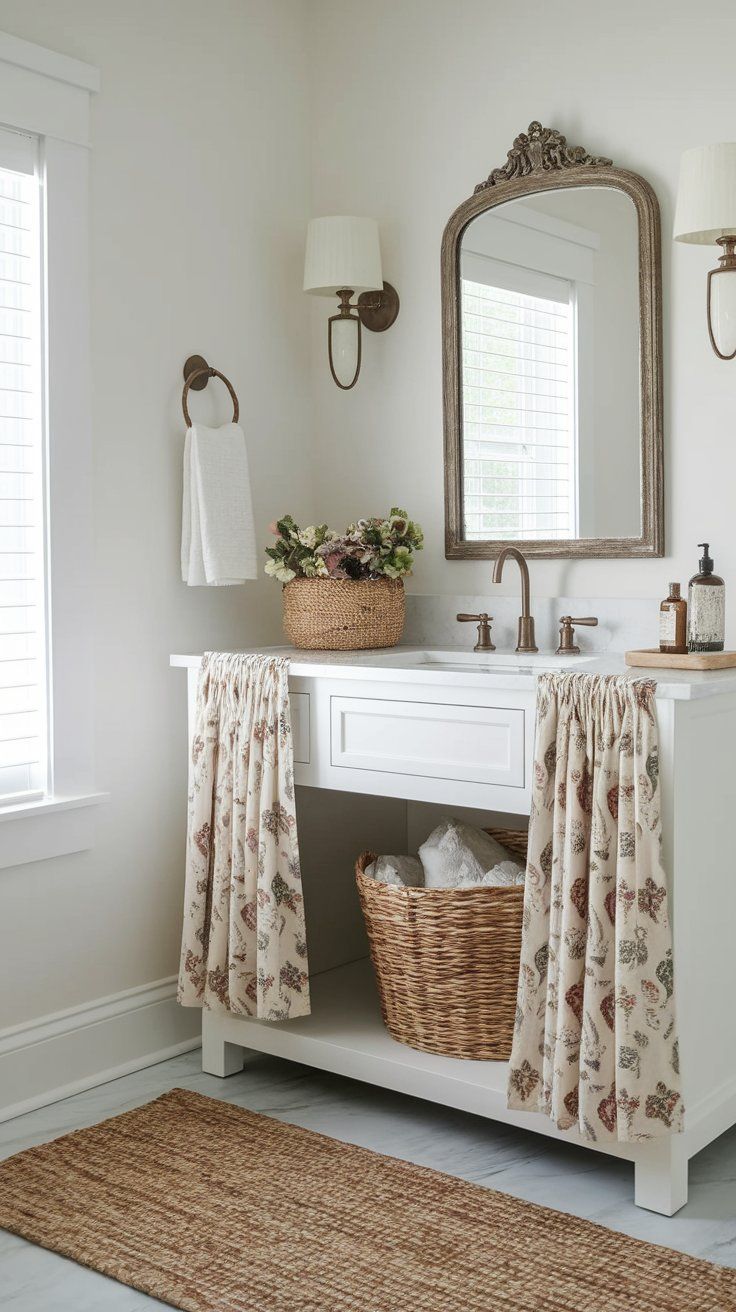
If your vanity, kitchen sink, or utility area has no doors, curtains are an easy way to add color, texture, and storage coverage.
Materials:
- Half-yard of cotton or linen fabric
- Iron-on hem tape
- Adhesive Velcro or tension rod
- Optional: pleating tape or ribbon for a polished look
Instructions:
- Measure the opening width and desired curtain length.
- Hem raw fabric edges using iron-on tape.
- Attach the top to the underside of the counter with adhesive Velcro OR mount a tension rod and slide on the panel.
Pro Tip: Choose prints to liven up a dull room or keep it neutral with linen or canvas.
18. Tension Rod Café Curtains for Kitchens
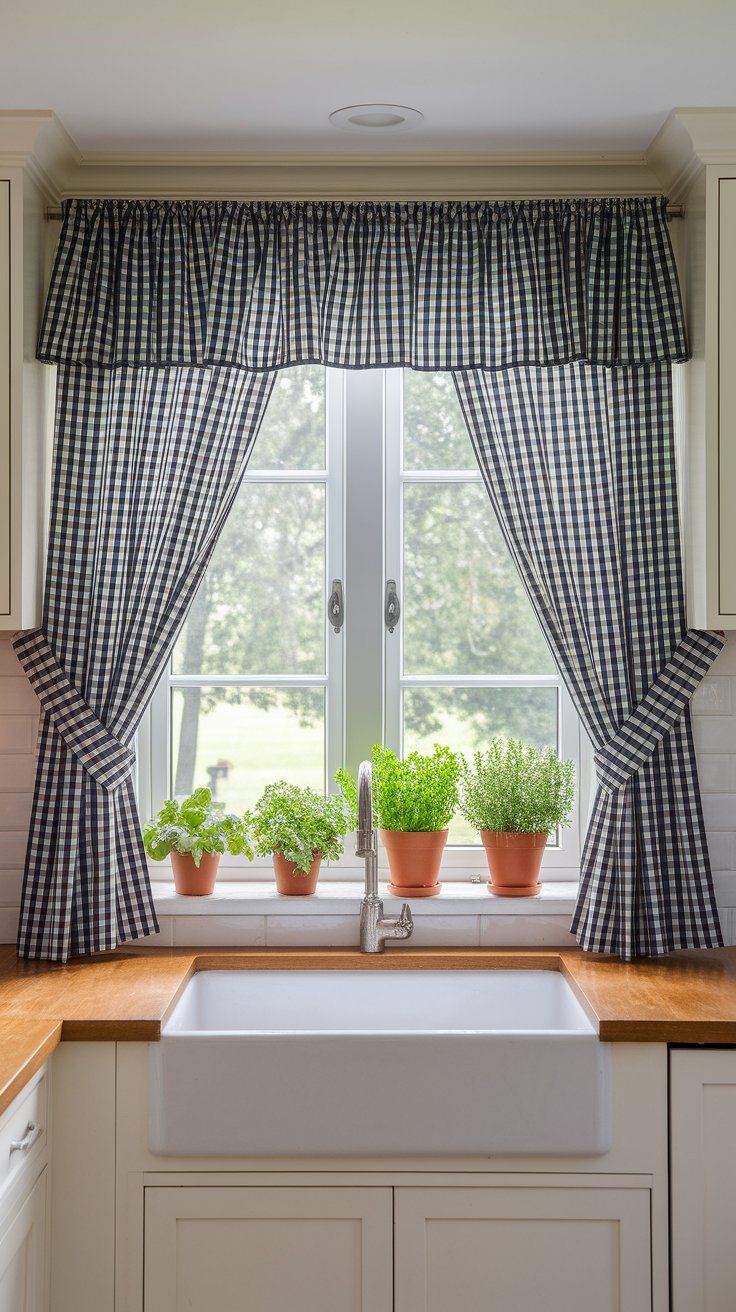
Café curtains cover only the bottom half of your window, perfect for letting in natural light while adding privacy.
What You Need:
- Tension rod
- Cotton, linen, or lace fabric
- Curtain clips or sew-on rod pocket (optional)
- Optional: matching valance for the top
DIY Instructions:
- Cut or fold fabric to match the lower half of your window.
- Hem edges with tape or leave raw for casual style.
- Clip to curtain rings or sew a simple pocket.
- Install tension rod inside the window frame and hang.
Style Tips:
- Use patterned fabrics for charm (gingham, florals, or ticking stripes)
- Add a matching top valance for more visual height
19. Magnetic Curtain Hack for Metal Doors
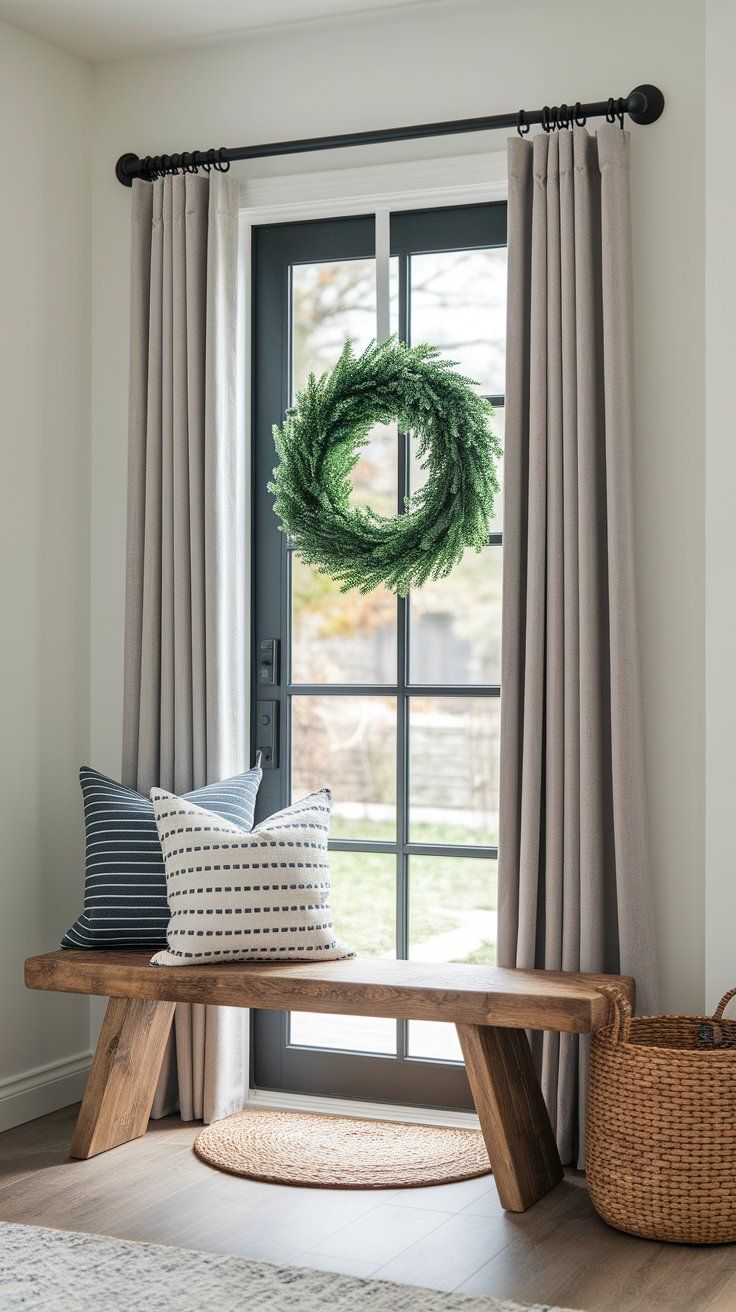
If you’ve got a back door or side entry with a window but no space to drill, magnets are your best friend.
Best For:
- Steel or metal doors
- Entryway privacy
- Quick seasonal swaps
You’ll Need:
- Magnetic curtain rod (widely available on Amazon)
- Fabric panel or half curtain
- Optional: blackout liner or patterned front fabric
Steps:
- Cut or choose a panel to fit the window
- Mount magnetic rod at top of window frame
- Hang curtain with clips or a rod pocket
Extra Tip: Layer fabric with different patterns for a reversible look, just flip when you’re ready to refresh the space.
20. Closet Curtains to Replace Doors
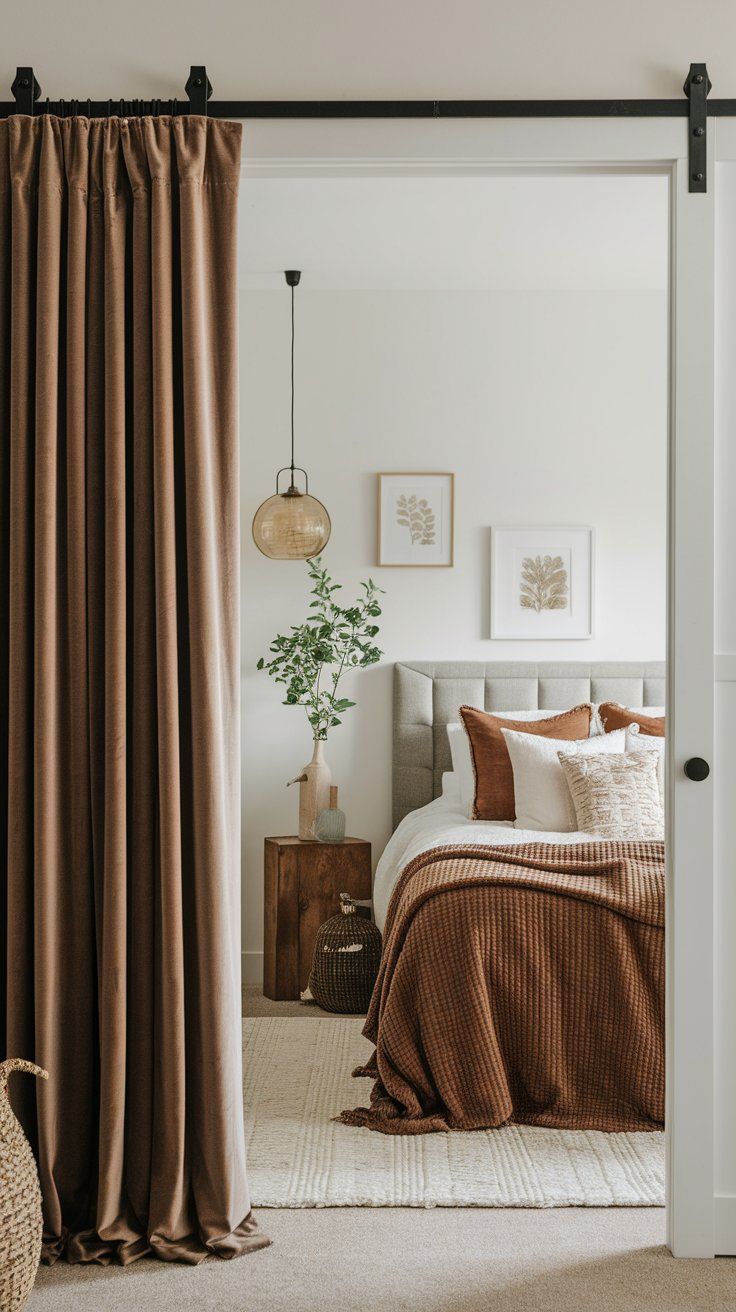
Curtains can instantly soften the look of a closet and make it easier to access than traditional doors, great for small bedrooms or kids’ spaces.
How to Make It Work:
- Measure your closet opening and pick fabric long enough to puddle slightly
- Use a tension rod or ceiling-mounted rod inside the frame
- Add clip rings or sew a pocket depending on your fabric weight
Fabric Ideas:
- Velvet for a luxurious bedroom feel
- Cotton canvas for durability
- Lightweight linen for a breezy, boho look
Bonus: You can also use a pair of sheer panels layered with blackout ones for a beautiful, functional closet cover.
Style + Hanging Tips
Finish strong with smart tips to make your DIY curtains look polished, hang properly, and match your space perfectly, even on a tight budget.
Choosing the Right Fabric for DIY Curtains
Not all fabrics are created equal. The right choice depends on your goals: do you want something airy and decorative or thick and functional?
| Fabric Type | Best For | Look & Feel |
|---|---|---|
| Cotton | All-purpose, beginner-friendly | Light, smooth, breathable |
| Linen | Living rooms, bedrooms, boho styles | Textured, flowy, upscale |
| Drop cloth | Rustic, farmhouse, neutral palettes | Heavy, matte, raw-edged |
| Velvet | Blackout, glam, dramatic windows | Rich, heavy, luxe |
| Muslin/Gauze | Canopies, kids’ rooms, relaxed styles | Sheer, soft, breezy |
| Burlap | Rustic, kitchen sinks, earthy rooms | Coarse, structured, casual |
Tips for Success:
- Wash and dry fabrics before cutting, they may shrink
- Use a steamer or iron to smooth before hanging
- Choose heavier fabrics if privacy or light-blocking is a priority
Curtain Rod Hacks That Save Money
Curtain rods don’t need to be expensive. With a little creativity, you can find or make alternatives that still look great.
Affordable Curtain Rod Alternatives:
- Wood dowels: Paint or stain to match your decor
- Copper pipes: Industrial-chic and strong enough for heavy panels
- Branches: Perfect for boho or rustic styles
- Tension rods: Great for rentals or tight spaces
- Magnetic rods: For metal doors or no-drill options
Mounting Tips:
- Hang your rod as high as possible to make ceilings look taller
- Let curtains touch the floor or puddle slightly for a luxurious look
- For wide windows, use three panels (left, center, right) for better coverage
Hemming & Finishing Touches (No Sewing Required)
Even without a sewing machine, you can get clean hems and custom finishes.
No-Sew Hemming Options:
- Iron-on hem tape: Easiest and most reliable
- Fabric glue: Good for heavy fabric and trims
- Staple gun: Works if hidden behind a fold
- Raw edge: Stylish for gauze, linen, or boho styles
Trim Ideas to Elevate Plain Curtains:
- Pom-pom fringe
- Lace edges
- Tassel tie-backs
- Painted patterns or stencils
Visual Tip: Always iron or steam before photographing or hanging your final result, it instantly elevates the appearance of even the cheapest fabric.
Conclusion: Beautiful, Budget-Friendly Curtains—Made By You
DIY curtains give you full control over the way light, texture, and privacy work in your home. They can be as simple as clip rings and a tablecloth or as polished as layered blackout panels with custom trim. And the best part? You don’t need to sew or spend a fortune.
With a little creativity, the right materials, and some budget-savvy hacks, you can turn any window into a statement, no matter your skill level. Start with one window, test your style, and soon you’ll want to tackle every room. It’s one of the simplest ways to transform your home, your way.
FAQ: DIY Curtains
What fabric works best for DIY curtains?
The best fabric depends on your goals. Cotton and linen are great for everyday panels because they’re breathable, washable, and hang well. Drop cloths are budget-friendly and textured for a rustic look. For blackout or insulating curtains, use heavier fabric like velvet or layer blackout lining with a decorative outer fabric.
Can I make curtains without a sewing machine?
Yes, absolutely. You can use iron-on hem tape, fabric glue, or even staples hidden in folds to finish your curtain edges. Many of the ideas in this guide, like no-sew grommet panels or ribbon-tied sheets, require zero sewing skills.
What’s the cheapest way to make curtains?
Some of the most budget-friendly DIY curtain options include:
- Drop cloths from the hardware store
- Flat sheets or tablecloths as curtain panels
- Fabric remnants from thrift stores or clearance bins
- Repurposing old shower curtains with tension rods
These options often cost less than $10 per panel.
How do I hang curtains without drilling?
There are several renter-friendly ways to hang curtains without drilling:
- Tension rods inside window frames
- Magnetic curtain rods for metal doors
- Adhesive command hooks or brackets
- Ceiling-mount kits that use adhesive anchors
These allow you to get stylish window treatments with zero damage to your walls.
Related Articles:
- 19 Cheap DIY Room Divider Ideas That Look Expensive
- DIY Floating Shelves Made Easy: Affordable Builds for Every Skill Level
- 15 Genius DIY Loft Bed Ideas to Save Space in Style